Introduction: Google Maps Ranking for Clinics & Hospitals Explained
When patients search for nearby medical care, Google Maps is often the first platform they use. For clinics and hospitals, appearing prominently in Google Maps results directly affects patient discovery, trust, and appointment decisions.
Google Maps ranking for clinics and hospitals determines which medical practices appear at the top of local results when users search for healthcare services. These rankings are not random—they are driven by specific local signals that Google evaluates continuously.
In real-world healthcare practices, strong Google Maps performance is closely tied to broader healthcare SEO services, which ensure accuracy, relevance, and trust across all local search touchpoints.
Read – Why Clinics Are Not Getting Patients (And What You Can Do About It)
What Is Google Maps Ranking for Clinics and Hospitals?
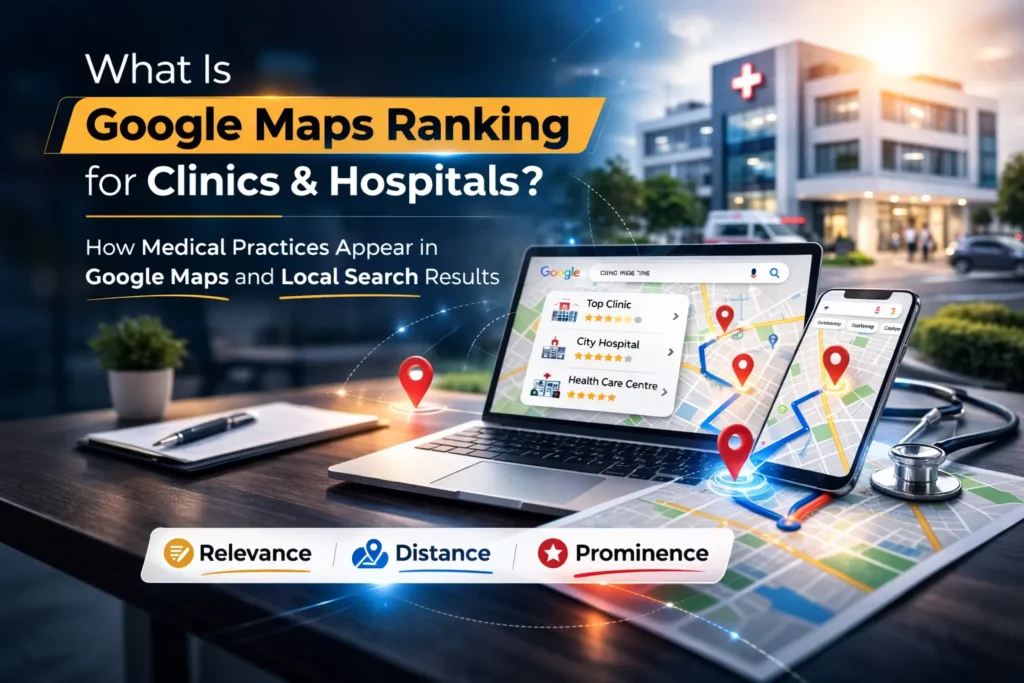
Google Maps ranking refers to how clinics and hospitals are positioned in local map results across:
- Google Maps
- Google Search Local 3-Pack
- “Clinic near me” and “hospital near me” searches
For healthcare providers, Google Maps often has a stronger impact than traditional website rankings because:
- Patients prioritize nearby care
- Mobile searches dominate medical discovery
- Maps results show reviews, directions, and contact actions instantly
In many medical local search results, patients never visit a website. This is why Google Maps optimization is a foundational component of healthcare SEO services.
How Google Maps Ranking for Clinics & Hospitals Works
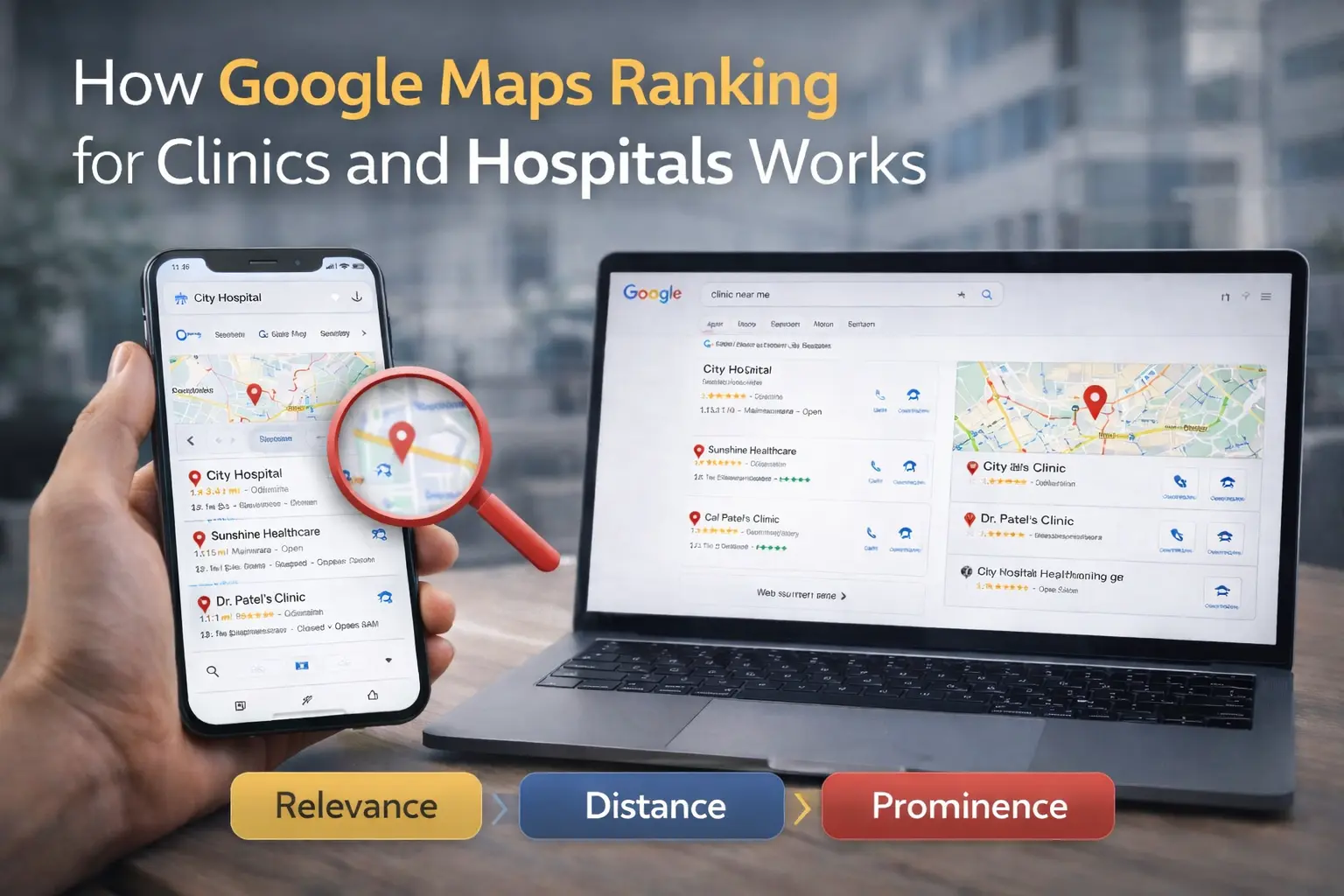
Google Maps uses three core local ranking factors—often summarized as relevance, distance, and prominence. Together, these determine healthcare local rankings.
Relevance in Google Maps SEO for Healthcare

Relevance measures how closely a clinic or hospital matches a patient’s search intent.
Google evaluates relevance using:
- Primary and secondary medical categories
- Services and treatments listed
- Profile descriptions
- Keywords naturally appearing in patient reviews
Example:
A clinic accurately categorized as “Cardiology Clinic” is more relevant for cardiology searches than a general “Medical Center” listing.
Most clinics face this challenge: services exist, but relevance signals are weak. Improving relevance is a core focus area in Google Maps SEO for healthcare and professional healthcare SEO services.
Distance and Local SEO for Clinics
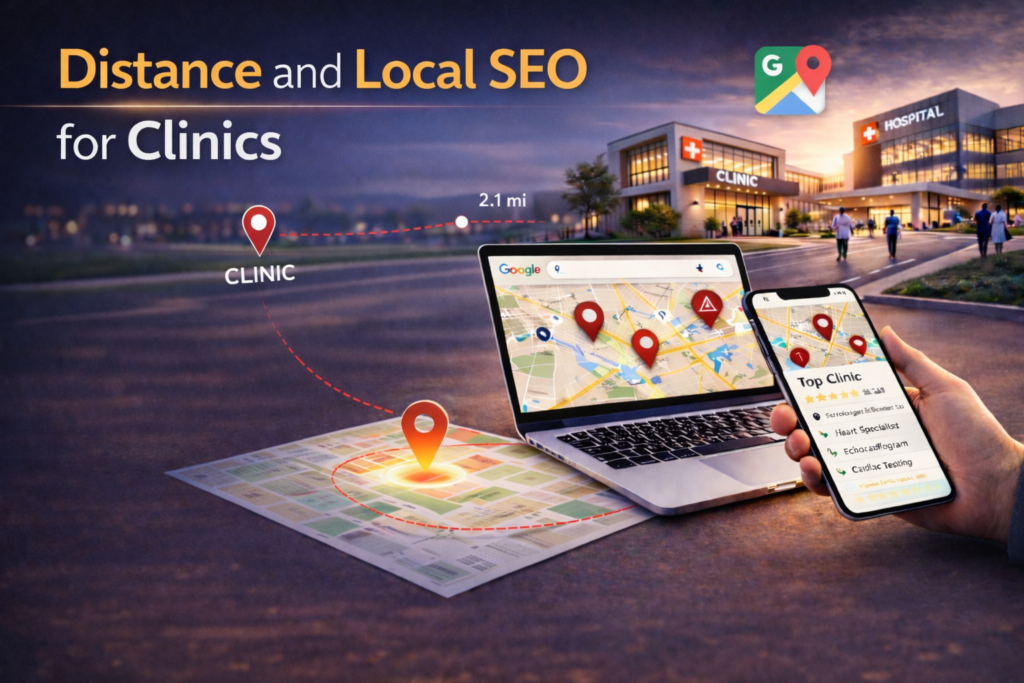
Distance refers to how close a clinic or hospital is to the user’s location at the time of the search.
Important points:
- Distance cannot be manipulated
- Accurate address data is essential
- Correct map pin placement matters
If a clinic’s address or pin is incorrect, Google may reduce clinic visibility on Google Maps, even if the practice is nearby.
Based on industry experience, distance-related errors are common in large hospitals and multi-location clinics and are frequently addressed during healthcare SEO services audits.
Prominence: Hospital Google Maps Ranking Factors
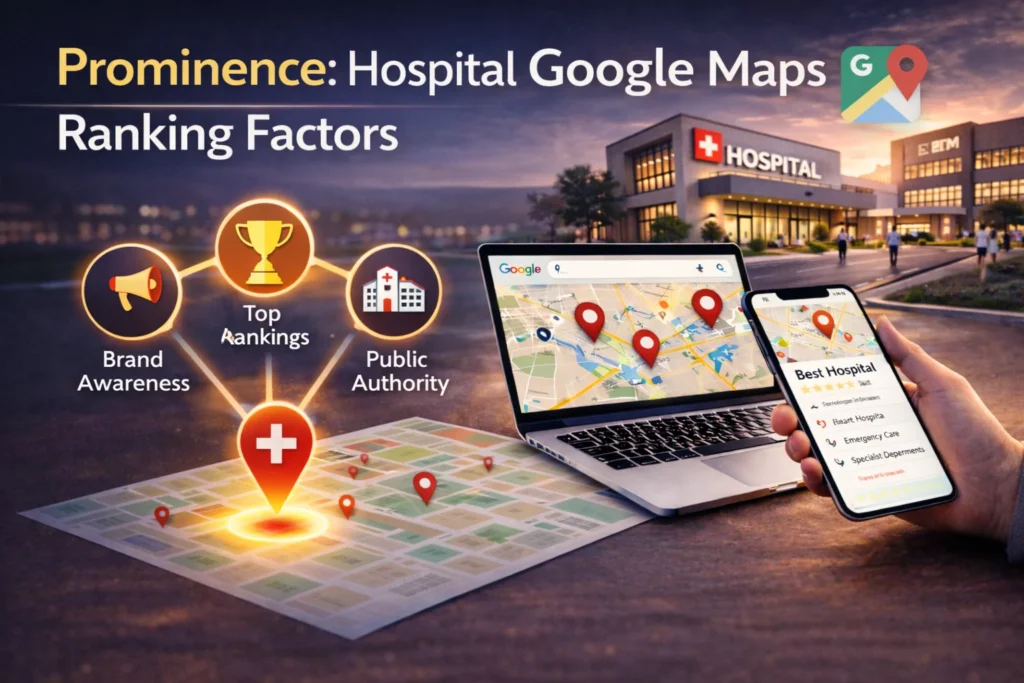
Prominence reflects how well-known and trusted a clinic or hospital appears online.
Google assesses prominence using:
- Volume and quality of patient reviews
- Review responses
- Profile completeness
- Mentions across trusted healthcare directories
- Overall digital reputation
In competitive cities, prominence becomes the deciding factor in hospital Google Maps ranking factors. Hospitals with strong offline reputations but weak digital signals often underperform.
Healthcare SEO services help align online prominence with real-world credibility.
Clinics looking for complete implementation can visit the official homepage of Raiseque Healthcare Digital Marketing to explore structured solutions for Google Maps ranking and local SEO.
Role of Google Business Profile for Clinics in Maps Ranking
A Google Business Profile for clinics is the primary data source Google uses for Maps rankings.
Google evaluates:
- Category accuracy
- Name, address, phone consistency
- Updated hours and attributes
- Photos and media
- Posts and profile activity
- Review engagement
Without an optimized Google Business Profile, even well-established clinics struggle in medical practice local search ranking.
Google Maps visibility improves significantly when healthcare providers follow structured Google Business Profile management practices. A detailed explanation of category selection, NAP consistency, review handling, and ongoing profile activity is covered in our dedicated guide on Google Business Profile Optimization for Healthcare, which explains how healthcare organizations can strengthen their presence on Google Maps step by step.
Why Clinics and Hospitals Struggle With Google Maps Rankings
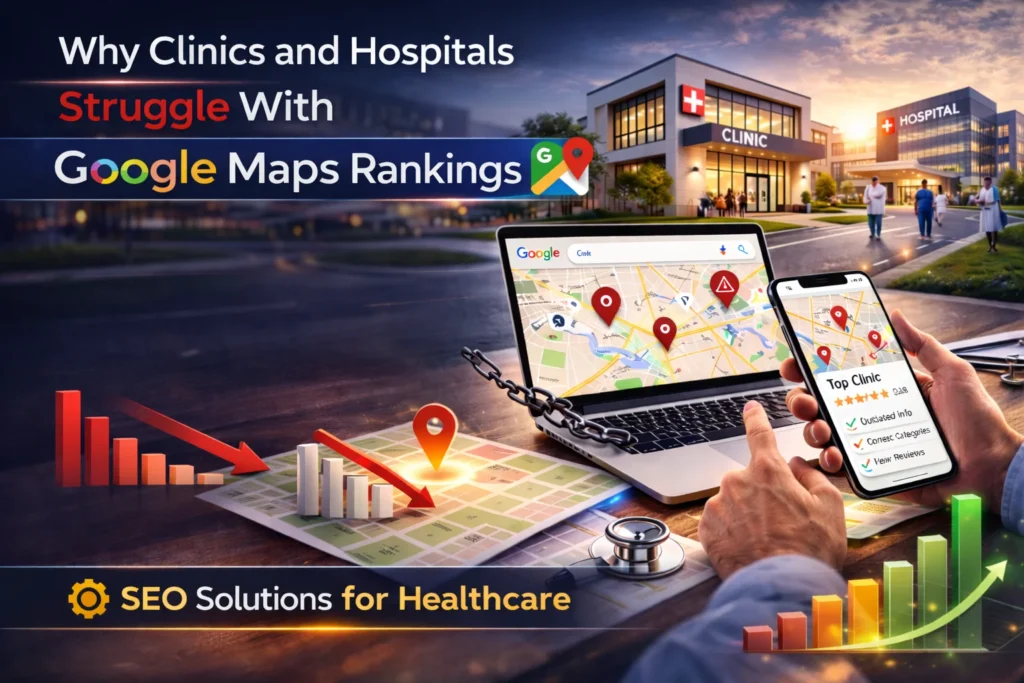
In real-world healthcare practices, ranking issues usually stem from small but compounding problems.
Common challenges include:
- Inconsistent NAP details
- Duplicate or unclaimed listings
- Incorrect categories
- Limited patient reviews
- Outdated profile information
These issues reduce Google’s confidence and weaken healthcare local rankings. Healthcare SEO services often begin by correcting these foundational gaps.
Google Local Pack Healthcare: Why Top Positions Matter
The Google Local Pack healthcare results capture the majority of patient attention.
Clinics appearing in the Local Pack benefit from:
- Higher visibility
- Increased calls and direction requests
- Stronger trust perception
Missing the Local Pack often means missing high-intent patient traffic, especially for hospital near me searches.
How Google Maps Rankings Influence Patient Decisions
Patients using Google Maps are typically ready to act. High-ranking clinics and hospitals see more:
- Direct calls
- Navigation requests
- Walk-in visits
Maps traffic represents high-intent users, not casual browsers. This is why healthcare SEO services prioritize Maps optimization as a conversion-focused channel.
How Google Maps Fits Into Healthcare SEO Services
Google Maps ranking does not work in isolation. It works as part of a broader local search ecosystem, which is explained in detail in our Local SEO Guide for Clinics and Doctors, covering everything from on-page SEO to local citations and trust signals.
It is closely connected with:
- Website content and on-page SEO
- Local citations and directories
- Review management
- Technical trust signals
When these elements align, clinics achieve consistent medical local search results across both Maps and organic listings.
For official guidance on managing listings, categories, verification, and profile updates, clinics and hospitals should refer to Google Business Profile Help, which outlines Google’s own recommendations for maintaining accurate and compliant healthcare listings.
To understand how Maps fits into a complete strategy, read our guide on : “Local SEO for Healthcare“
Read – Why New Clinics Fail in the First Year (And What Most Doctors Get Wrong)
FAQ Section
How does Google Maps ranking for clinics and hospitals work?
Google Maps ranking for clinics and hospitals is based on relevance, distance, and prominence.
Does Google Maps SEO for healthcare differ from normal SEO?
Yes. Google Maps SEO for healthcare relies more on location data, reviews, and profile signals than traditional SEO.
Why is Google Business Profile important for clinics?
It is the primary source Google uses to rank clinics in Maps and Local Pack results.
Do healthcare SEO services help with Maps rankings?
Yes. Healthcare SEO services align Maps optimization with website SEO, citations, and reviews.
How often should clinics update their Google Maps profile?
At least once or twice per month to maintain relevance and trust.