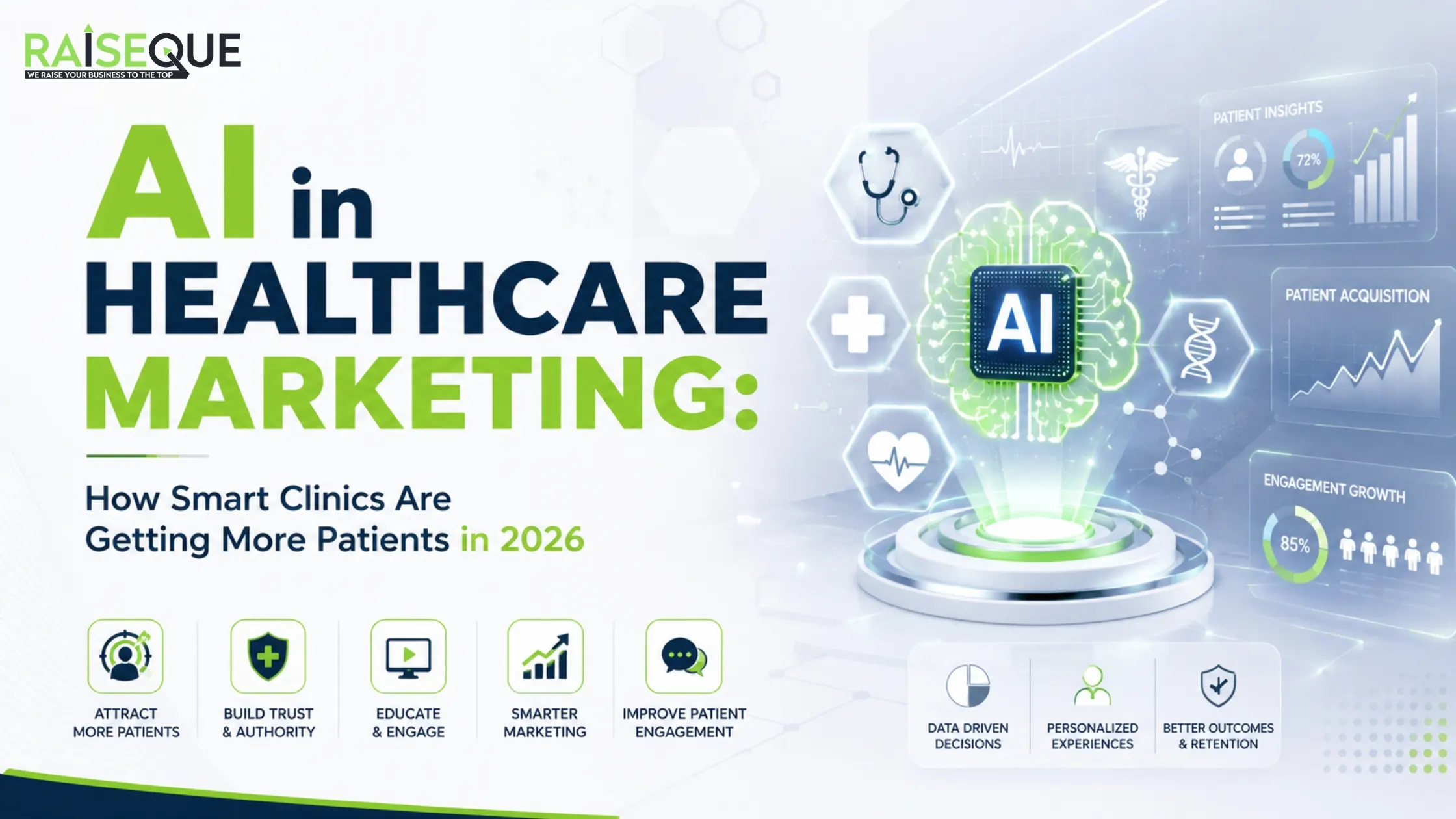
Artificial intelligence is changing healthcare faster than most clinics expected.
A few years ago, healthcare marketing mainly depended on referrals, banners, newspaper ads, or basic Facebook promotions. Today, patients search differently. They ask Google questions. They use voice search. They read reviews. Many even ask AI tools like ChatGPT for recommendations before choosing a doctor or clinic.
In 2026, smart clinics are transforming patient acquisition by moving beyond traditional marketing and adopting AI-powered healthcare ecosystems. Instead of relying on manual follow-ups and inconsistent outreach, healthcare providers are using AI-driven search optimization, automated patient communication, predictive analytics, and intelligent engagement systems to attract and convert high-intent patients more efficiently.
From optimizing visibility in Google AI search summaries to automating appointment workflows and analyzing patient behavior patterns, AI is helping clinics create faster, smarter, and more personalized patient experiences. This modern healthcare marketing approach not only improves operational efficiency but also helps clinics generate more qualified leads and build long-term patient trust. This shift is changing how healthcare providers attract patients.
Small clinics, physiotherapy centers, occupational therapy practices, dental clinics, multispecialty hospitals, and independent doctors can now use AI-powered tools to improve communication, automate follow-ups, rank higher on search engines, and convert more inquiries into appointments.
In this guide, you will learn how AI is transforming healthcare marketing, how patients are using AI-powered search today, which strategies actually work, and how clinics can stay ahead in 2026.
Quick Answer Summary
AI in healthcare marketing helps clinics improve patient acquisition, automate communication, optimize SEO, personalize patient engagement, and increase visibility across Google Search, voice search, and AI answer engines. Healthcare providers using AI strategically can improve efficiency, attract more qualified patients, and build stronger long-term patient relationships.
Why AI in Healthcare Marketing Matters More Than Ever
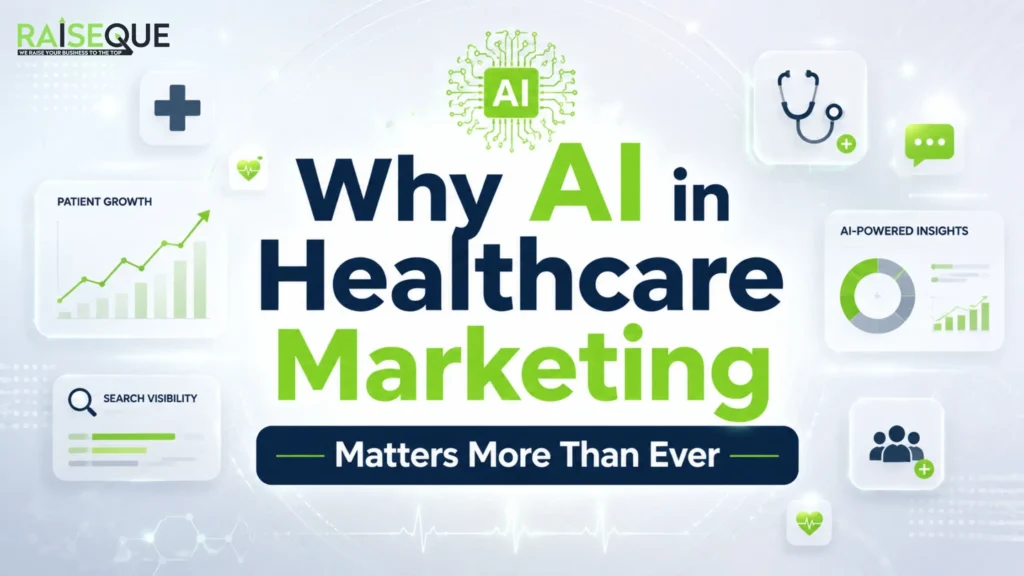
Healthcare marketing has changed dramatically over the last few years.
Patients no longer depend only on referrals from friends or family. Before booking an appointment, most people now search online, compare clinics, read reviews, check social media, and look for answers to their symptoms or treatment concerns.
This means your clinic’s digital presence has become one of the biggest factors influencing patient decisions.
Artificial intelligence helps healthcare providers manage this growing digital demand more effectively.
Instead of manually handling every inquiry, every reminder, every campaign, and every follow-up, AI systems can automate repetitive tasks while improving the patient experience.
For example, AI can help healthcare providers:
- respond instantly to patient inquiries
- automate appointment reminders
- improve Google rankings
- identify high-converting patient audiences
- personalize communication
- improve ad targeting
- optimize website content
- analyze patient behavior trends
This creates two major advantages.
First, clinics save time.
Second, they improve patient conversion rates.
Healthcare marketing is becoming more data-driven and patient-focused. AI allows clinics to make smarter decisions instead of relying on guesswork.
Many practices are now investing in healthcare SEO strategy for clinics because visibility on Google and AI search engines directly affects patient acquisition.
How Patients Are Searching for Healthcare Services Today
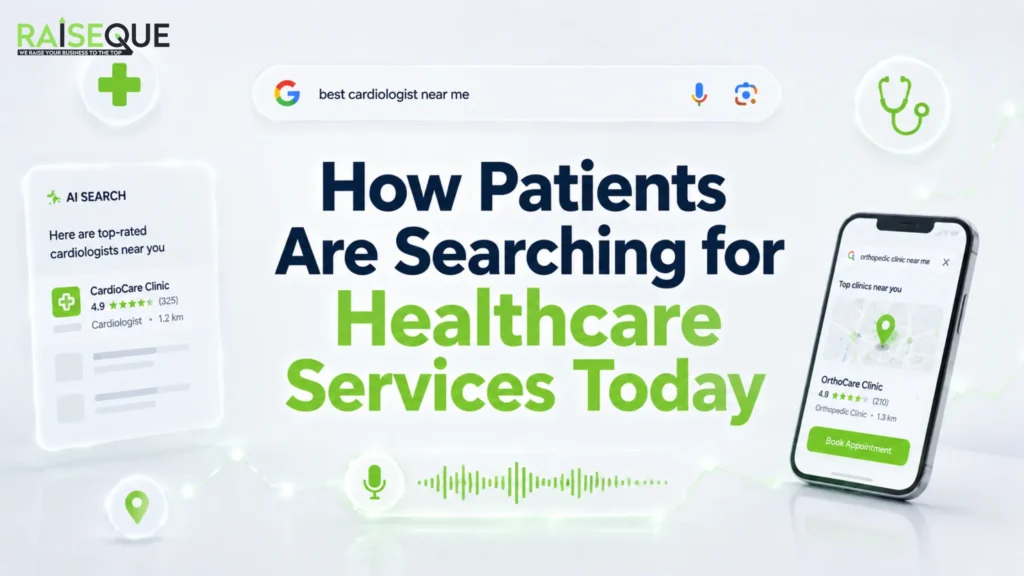
Understanding patient behavior is essential before implementing any AI strategy.
The modern patient journey usually starts online.
Someone experiencing back pain may search:
- “best physiotherapy clinic near me”
- “sports injury treatment near me”
- “how to recover from frozen shoulder”
Parents searching for developmental therapy may ask:
- “occupational therapy for autism”
- “ADHD therapy clinic near me”
- “speech and occupational therapy center”
These searches are becoming more conversational because people increasingly use voice assistants and AI-powered tools.
Instead of typing short keywords, patients now ask complete questions.
That is why healthcare SEO has evolved.
Traditional SEO focused mostly on keywords.
Modern AI-powered SEO focuses on:
- search intent
- conversational queries
- topical authority
- structured content
- semantic relevance
- trust signals
Google’s AI systems now prioritize content that directly answers patient questions clearly and accurately. Recent Search Engine Journal SEO research also highlights how AI-driven search experiences are changing modern SEO strategies.
This means healthcare websites must become more educational, more user-friendly, and more trustworthy.
Clinics improving their AI search optimization for healthcare websites are seeing stronger visibility across Google AI Overviews and voice search platforms.
AI Search Engines Are Changing Healthcare SEO
One of the biggest shifts happening right now is the rise of AI-powered search.
Google no longer simply shows a list of websites.
Now, Google AI Overviews often summarize answers directly inside search results.
Similarly, patients are using:
- ChatGPT
- Voice assistants
- AI search tools
- conversational browsers
This changes how healthcare content must be written.
Instead of stuffing keywords into blogs, healthcare websites now need to create content that is:
- easy to understand
- conversational
- trustworthy
- well-structured
- deeply informative
Search engines want content that demonstrates real expertise. Healthcare websites performing well in search usually follow the principles of the Google Helpful Content System by creating people-first content instead of purely SEO-focused articles.
This is especially important in healthcare because medical content falls under Google’s “Your Money or Your Life” category.
Google expects healthcare content to demonstrate:
- Experience
- Expertise
- Authoritativeness
- Trustworthiness
This is commonly called EEAT.
Healthcare providers that publish thin or generic AI-generated content without expert review may struggle to rank.
That is why clinics should combine AI tools with human expertise.
The best-performing healthcare websites use AI to support:
- topic research
- content optimization
- keyword analysis
- content structuring
- semantic SEO
But medical professionals should still review the final content.
Many growing clinics are now strengthening their content marketing strategies for healthcare clinics to improve long-term search visibility.
How AI Helps Clinics Get More Patients
Most healthcare providers care about one core question:
“How can we get more patients consistently?”
This is where AI becomes extremely valuable.
AI-powered healthcare marketing is not only about technology.
It is about improving patient acquisition.
AI helps clinics identify the right audience, communicate faster, and convert inquiries more effectively.
For example, AI tools can analyze patient behavior and identify:
- which services patients search for most
- which ads generate appointments
- which pages convert best
- which patient groups are most likely to book
Instead of spending blindly on ads, clinics can make smarter marketing decisions.
AI Improves Lead Response Time
One of the biggest reasons clinics lose potential patients is delayed communication.
If someone messages your clinic and waits hours for a reply, they often contact another provider.
AI chatbots solve this problem.
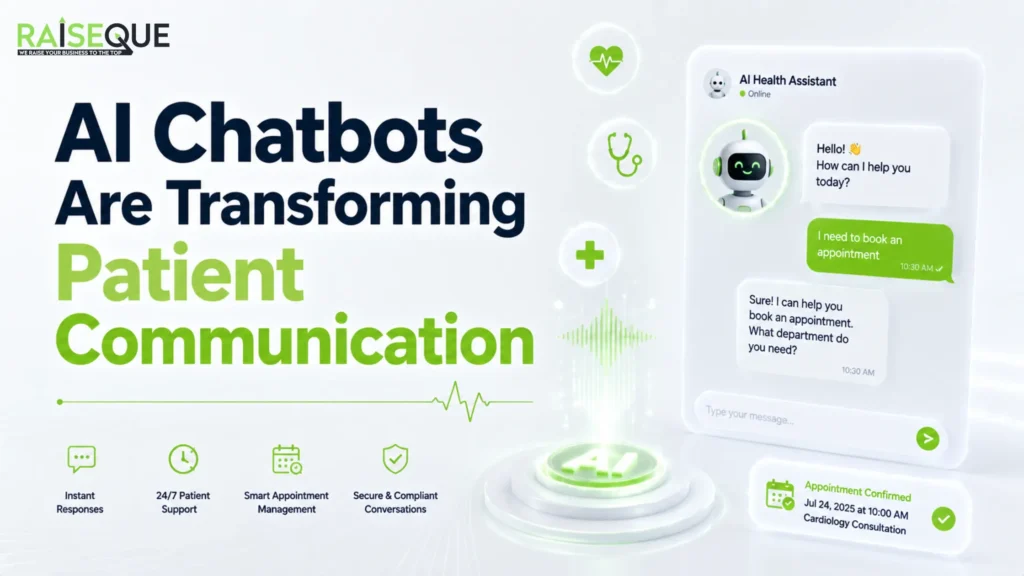
Modern healthcare chatbots can:
- answer common questions
- collect patient information
- book appointments
- share clinic timings
- guide users to services
- handle inquiries 24/7
This improves patient satisfaction while reducing pressure on reception staff.
Many practices now use AI-powered patient engagement systems to improve conversion rates and reduce missed opportunities.
AI Chatbots Are Transforming Patient Communication
Patients expect quick communication.
In healthcare, trust and responsiveness matter a lot.
When clinics fail to respond quickly, patients often assume the service quality may also be poor.
AI chatbots help healthcare providers maintain fast communication without increasing staffing costs.
The biggest advantage is availability.
Unlike front-desk teams, AI systems can respond instantly at any hour.
This is important because many healthcare searches happen late at night when patients are researching symptoms or treatment options.
What Healthcare Chatbots Can Do
Modern healthcare chatbots are far more advanced than simple automated replies.
Today’s AI systems can:
- answer FAQs
- qualify leads
- schedule consultations
- send reminders
- automate follow-ups
- personalize responses
- collect feedback
For example, a physiotherapy clinic can automatically send:
- exercise instructions
- follow-up reminders
- rehabilitation education
- appointment confirmations
This creates a smoother patient experience.
It also increases retention because patients feel more supported throughout their recovery journey.
Healthcare providers implementing healthcare marketing automation strategies are often seeing stronger patient engagement and improved operational efficiency.
Predictive Analytics Is Making Healthcare Marketing Smarter
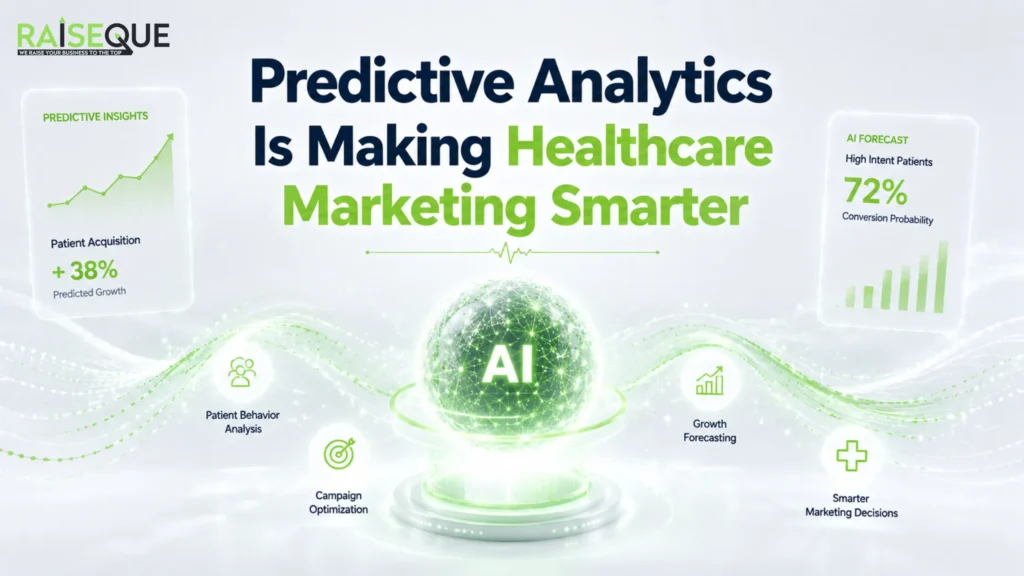
One of the most powerful AI applications in healthcare marketing is predictive analytics.
Predictive analytics helps clinics make data-driven decisions instead of relying on assumptions.
AI systems can analyze large amounts of patient and marketing data to identify patterns that humans may miss.
For example, predictive AI can help identify:
- which campaigns generate the highest-quality leads
- which patients are most likely to return
- which services are trending
- which demographics respond best to ads
This helps clinics improve marketing ROI.
Instead of targeting everyone, clinics can focus on the audiences most likely to convert.
Better Advertising Decisions
Healthcare advertising costs continue increasing across:
- Google Ads
- Meta Ads
- YouTube Ads
- local search campaigns
AI helps reduce wasted spending.
For example, AI can optimize:
- ad timing
- audience targeting
- messaging
- creative performance
- bidding strategies
This allows clinics to generate more qualified inquiries without dramatically increasing ad budgets.
Many healthcare providers are now implementing patient acquisition system for healthcare providers to create more predictable patient flow.
AI Content Creation for Healthcare Websites
Content marketing remains one of the most important parts of healthcare SEO.
Patients search for answers before they book appointments.
If your clinic consistently publishes helpful educational content, you build trust before the patient even contacts you.
AI tools now help healthcare marketers:
- identify trending topics
- organize content structures
- improve readability
- optimize keywords
- generate content briefs
- improve semantic SEO
However, there is an important warning.
Healthcare content should never rely entirely on AI-generated medical information.
Human Expertise Still Matters
Google strongly prioritizes trustworthy healthcare content.
Medical misinformation can damage both patient trust and search visibility.
That is why healthcare content should always include:
- expert review
- fact-checking
- editorial oversight
- accurate medical references
AI should support content creation — not replace professional expertise.
The best healthcare blogs combine:
- human experience
- patient-focused explanations
- SEO optimization
- AI-assisted research
Clinics investing in healthcare website design services and educational content ecosystems often see stronger long-term SEO growth.
Voice Search Is Becoming Important in Healthcare SEO
Voice search usage continues growing rapidly.
Patients increasingly use smartphones and voice assistants to search for healthcare services.
Instead of typing short phrases, they ask natural questions such as:
- “Which physiotherapy clinic is best near me?”
- “How long does stroke rehabilitation take?”
- “Best occupational therapy center for autism”
This changes how healthcare content should be written.
Healthcare websites now need conversational formatting.
How to Optimize for Voice Search
Healthcare providers should:
- answer questions clearly
- use natural language
- create FAQ sections
- optimize local SEO
- use schema markup
- improve mobile experience
Voice search optimization also improves visibility in AI-generated search summaries.
Clinics strengthening their local SEO services for doctors often gain more visibility in voice-based local healthcare searches.
According to Google Business Profile guidelines, optimized healthcare listings improve local discovery and patient trust.
Ethical Concerns and Compliance in AI Healthcare Marketing
AI creates enormous opportunities, but healthcare organizations must use it responsibly.
Healthcare involves sensitive patient information, so privacy and trust are critical.
Clinics using AI systems should carefully evaluate:
- data privacy
- security standards
- HIPAA compliance
- consent management
- patient transparency
Patients want convenience, but they also want trust. Healthcare providers should also review official HIPAA compliance guidelines before implementing AI-powered communication or patient data automation systems.
Transparency Builds Trust
Healthcare providers should clearly communicate when AI systems are being used.
For example:
- chatbot interactions
- automated appointment systems
- AI-generated communication
should be transparent to users.
Trust is one of the biggest factors influencing healthcare decisions.
Patients are more likely to choose providers they perceive as credible, professional, and transparent.
Healthcare brands improving Google Ads for clinics alongside trust-focused content strategies often see stronger conversion performance.
The Future of AI in Healthcare Marketing
AI adoption in healthcare marketing is only beginning.
Over the next few years, healthcare marketing will become even more personalized, automated, and data-driven.
We will likely see:
- AI-driven virtual assistants
- hyper-personalized patient journeys
- smarter predictive analytics
- conversational AI websites
- advanced voice search optimization
- automated reputation management
Clinics that adapt early will have a major advantage.
The healthcare industry is becoming more competitive every year.
Patients now expect:
- convenience
- instant communication
- personalized experiences
- educational content
- digital accessibility
Healthcare providers that combine AI technology with strong patient care will build stronger brands and attract more long-term patients.
Practices investing in AI SEO strategies for healthcare providers today are positioning themselves for the future of digital healthcare discovery.
Conclusion
AI is changing healthcare marketing faster than most clinics realize.
Patients are no longer choosing healthcare providers based only on referrals — they’re discovering clinics through Google, AI search, social media, reviews, and digital experiences.
Healthcare brands that fail to adapt will struggle to stay visible in the coming years.
At Raiseque, we help clinics and healthcare providers build modern patient acquisition systems powered by SEO, AI-driven marketing, content strategy, and digital trust.
Because in today’s healthcare landscape, growth doesn’t come from simply running ads…
It comes from becoming the clinic patients consistently find, trust, and choose online.
How is AI used in healthcare marketing?
AI is used in healthcare marketing to improve patient acquisition, automate communication, optimize SEO, personalize campaigns, and improve marketing efficiency. Clinics use AI-powered chatbots, predictive analytics, SEO tools, and automation systems to engage patients faster and improve conversion rates.
Can AI help clinics get more patients?
Yes. AI helps clinics attract more patients by improving online visibility, automating follow-ups, optimizing advertising campaigns, and improving response times. AI-powered systems also help healthcare providers identify high-converting patient audiences and improve lead nurturing.
Is AI-generated healthcare content good for SEO?
AI-generated healthcare content can support SEO when combined with expert human review. Healthcare websites should ensure all medical information is accurate, trustworthy, and reviewed by qualified professionals before publishing.
What are the best AI tools for healthcare marketing?
Popular AI tools for healthcare marketing include AI chatbots, CRM automation platforms, predictive analytics systems, SEO optimization tools, reputation management software, and AI-assisted content research platforms.
How does AI search affect healthcare SEO?
AI search changes how patients discover healthcare providers online. Search engines now summarize answers directly in search results, making structured, conversational, and trustworthy content more important than ever for healthcare SEO.