Artificial intelligence is changing healthcare faster than most clinics expected.
A few years ago, healthcare marketing mainly depended on referrals, banners, newspaper ads, or basic Facebook promotions. Today, patients search differently. They ask Google questions. They use voice search. They read reviews. Many even ask AI tools like ChatGPT for recommendations before choosing a doctor or clinic.
In 2026, smart clinics are transforming patient acquisition by moving beyond traditional marketing and adopting AI-powered healthcare ecosystems. Instead of relying on manual follow-ups and inconsistent outreach, healthcare providers are using AI-driven search optimization, automated patient communication, predictive analytics, and intelligent engagement systems to attract and convert high-intent patients more efficiently.
From optimizing visibility in Google AI search summaries to automating appointment workflows and analyzing patient behavior patterns, AI is helping clinics create faster, smarter, and more personalized patient experiences. This modern healthcare marketing approach not only improves operational efficiency but also helps clinics generate more qualified leads and build long-term patient trust. This shift is changing how healthcare providers attract patients.
Small clinics, physiotherapy centers, occupational therapy practices, dental clinics, multispecialty hospitals, and independent doctors can now use AI-powered tools to improve communication, automate follow-ups, rank higher on search engines, and convert more inquiries into appointments.
In this guide, you will learn how AI is transforming healthcare marketing, how patients are using AI-powered search today, which strategies actually work, and how clinics can stay ahead in 2026.
Quick Answer Summary
AI in healthcare marketing helps clinics improve patient acquisition, automate communication, optimize SEO, personalize patient engagement, and increase visibility across Google Search, voice search, and AI answer engines. Healthcare providers using AI strategically can improve efficiency, attract more qualified patients, and build stronger long-term patient relationships.
Why AI in Healthcare Marketing Matters More Than Ever
Healthcare marketing has changed dramatically over the last few years.
Patients no longer depend only on referrals from friends or family. Before booking an appointment, most people now search online, compare clinics, read reviews, check social media, and look for answers to their symptoms or treatment concerns.
This means your clinic’s digital presence has become one of the biggest factors influencing patient decisions.
Artificial intelligence helps healthcare providers manage this growing digital demand more effectively.
Instead of manually handling every inquiry, every reminder, every campaign, and every follow-up, AI systems can automate repetitive tasks while improving the patient experience.
For example, AI can help healthcare providers:
- respond instantly to patient inquiries
- automate appointment reminders
- improve Google rankings
- identify high-converting patient audiences
- personalize communication
- improve ad targeting
- optimize website content
- analyze patient behavior trends
This creates two major advantages.
First, clinics save time.
Second, they improve patient conversion rates.
Healthcare marketing is becoming more data-driven and patient-focused. AI allows clinics to make smarter decisions instead of relying on guesswork.
Many practices are now investing in healthcare SEO strategy for clinics because visibility on Google and AI search engines directly affects patient acquisition.
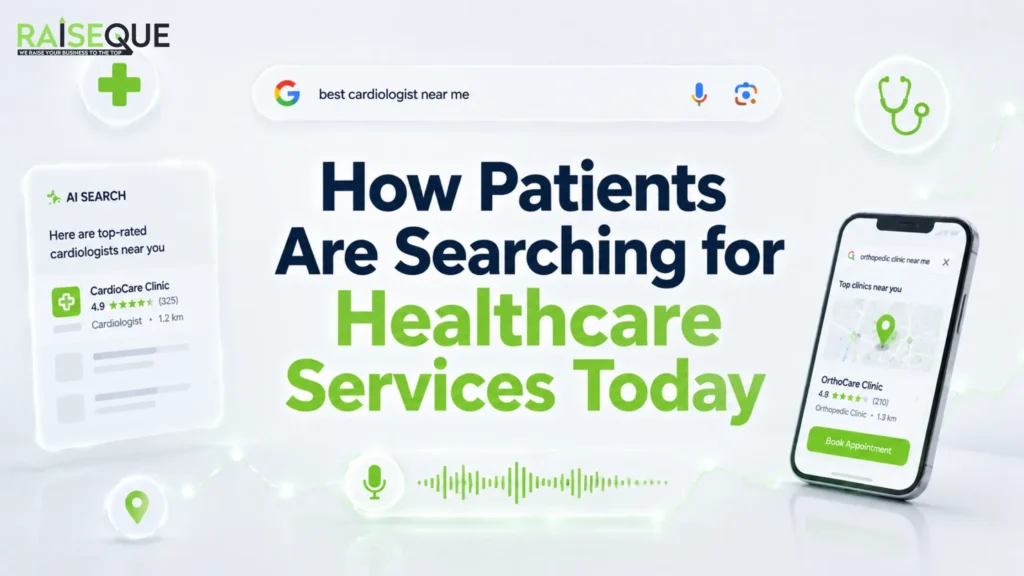
How Patients Are Searching for Healthcare Services Today
Understanding patient behavior is essential before implementing any AI strategy.
The modern patient journey usually starts online.
Someone experiencing back pain may search:
- “best physiotherapy clinic near me”
- “sports injury treatment near me”
- “how to recover from frozen shoulder”
Parents searching for developmental therapy may ask:
- “occupational therapy for autism”
- “ADHD therapy clinic near me”
- “speech and occupational therapy center”
These searches are becoming more conversational because people increasingly use voice assistants and AI-powered tools.
Instead of typing short keywords, patients now ask complete questions.
That is why healthcare SEO has evolved.
Traditional SEO focused mostly on keywords.
Modern AI-powered SEO focuses on:
- search intent
- conversational queries
- topical authority
- structured content
- semantic relevance
- trust signals
Google’s AI systems now prioritize content that directly answers patient questions clearly and accurately. Recent Search Engine Journal SEO research also highlights how AI-driven search experiences are changing modern SEO strategies.
This means healthcare websites must become more educational, more user-friendly, and more trustworthy.
Clinics improving their AI search optimization for healthcare websites are seeing stronger visibility across Google AI Overviews and voice search platforms.
AI Search Engines Are Changing Healthcare SEO
One of the biggest shifts happening right now is the rise of AI-powered search.
Google no longer simply shows a list of websites.
Now, Google AI Overviews often summarize answers directly inside search results.
Similarly, patients are using:
- ChatGPT
- Voice assistants
- AI search tools
- conversational browsers
This changes how healthcare content must be written.
Instead of stuffing keywords into blogs, healthcare websites now need to create content that is:
- easy to understand
- conversational
- trustworthy
- well-structured
- deeply informative
Search engines want content that demonstrates real expertise. Healthcare websites performing well in search usually follow the principles of the Google Helpful Content System by creating people-first content instead of purely SEO-focused articles.
This is especially important in healthcare because medical content falls under Google’s “Your Money or Your Life” category.
Google expects healthcare content to demonstrate:
- Experience
- Expertise
- Authoritativeness
- Trustworthiness
This is commonly called EEAT.
Healthcare providers that publish thin or generic AI-generated content without expert review may struggle to rank.
That is why clinics should combine AI tools with human expertise.
The best-performing healthcare websites use AI to support:
- topic research
- content optimization
- keyword analysis
- content structuring
- semantic SEO
But medical professionals should still review the final content.
Many growing clinics are now strengthening their content marketing strategies for healthcare clinics to improve long-term search visibility.
How AI Helps Clinics Get More Patients
Most healthcare providers care about one core question:
“How can we get more patients consistently?”
This is where AI becomes extremely valuable.
AI-powered healthcare marketing is not only about technology.
It is about improving patient acquisition.
AI helps clinics identify the right audience, communicate faster, and convert inquiries more effectively.
For example, AI tools can analyze patient behavior and identify:
- which services patients search for most
- which ads generate appointments
- which pages convert best
- which patient groups are most likely to book
Instead of spending blindly on ads, clinics can make smarter marketing decisions.
AI Improves Lead Response Time
One of the biggest reasons clinics lose potential patients is delayed communication.
If someone messages your clinic and waits hours for a reply, they often contact another provider.
AI chatbots solve this problem.
Modern healthcare chatbots can:
- answer common questions
- collect patient information
- book appointments
- share clinic timings
- guide users to services
- handle inquiries 24/7
This improves patient satisfaction while reducing pressure on reception staff.
Many practices now use AI-powered patient engagement systems to improve conversion rates and reduce missed opportunities.
AI Chatbots Are Transforming Patient Communication
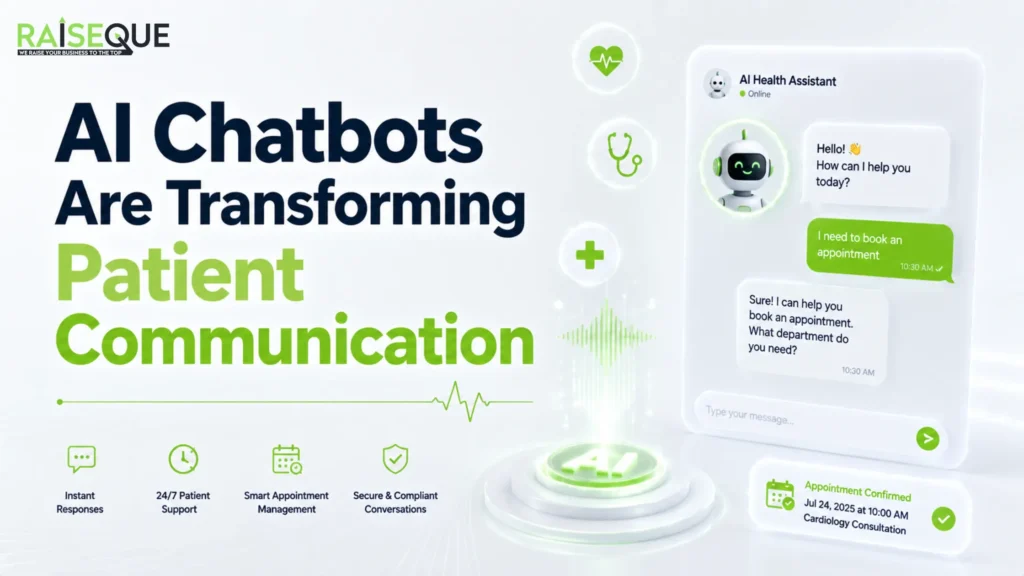
Patients expect quick communication.
In healthcare, trust and responsiveness matter a lot.
When clinics fail to respond quickly, patients often assume the service quality may also be poor.
AI chatbots help healthcare providers maintain fast communication without increasing staffing costs.
The biggest advantage is availability.
Unlike front-desk teams, AI systems can respond instantly at any hour.
This is important because many healthcare searches happen late at night when patients are researching symptoms or treatment options.
What Healthcare Chatbots Can Do
Modern healthcare chatbots are far more advanced than simple automated replies.
Today’s AI systems can:
- answer FAQs
- qualify leads
- schedule consultations
- send reminders
- automate follow-ups
- personalize responses
- collect feedback
For example, a physiotherapy clinic can automatically send:
- exercise instructions
- follow-up reminders
- rehabilitation education
- appointment confirmations
This creates a smoother patient experience.
It also increases retention because patients feel more supported throughout their recovery journey.
Healthcare providers implementing healthcare marketing automation strategies are often seeing stronger patient engagement and improved operational efficiency.
Predictive Analytics Is Making Healthcare Marketing Smarter
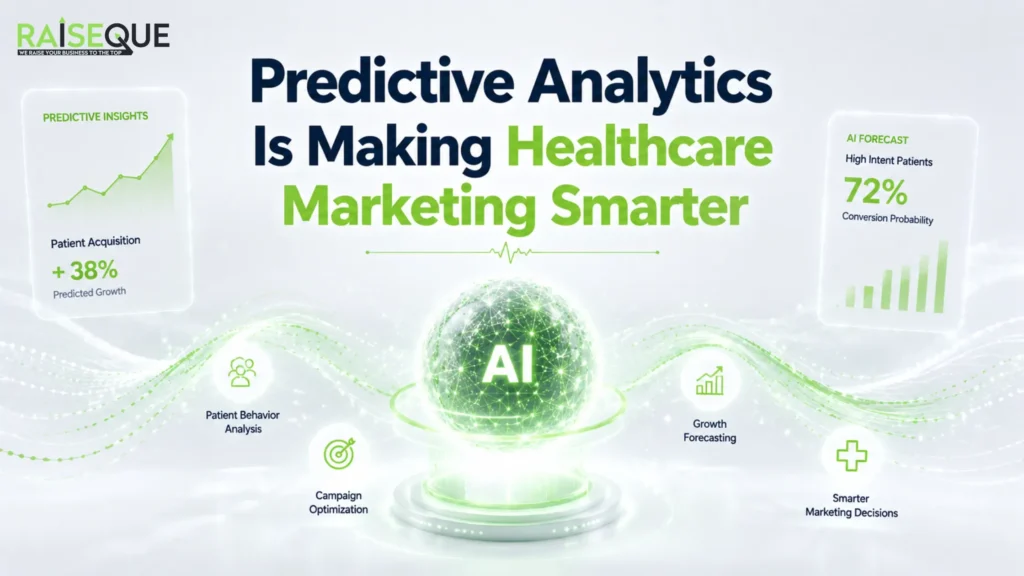
One of the most powerful AI applications in healthcare marketing is predictive analytics.
Predictive analytics helps clinics make data-driven decisions instead of relying on assumptions.
AI systems can analyze large amounts of patient and marketing data to identify patterns that humans may miss.
For example, predictive AI can help identify:
- which campaigns generate the highest-quality leads
- which patients are most likely to return
- which services are trending
- which demographics respond best to ads
This helps clinics improve marketing ROI.
Instead of targeting everyone, clinics can focus on the audiences most likely to convert.
Better Advertising Decisions
Healthcare advertising costs continue increasing across:
- Google Ads
- Meta Ads
- YouTube Ads
- local search campaigns
AI helps reduce wasted spending.
For example, AI can optimize:
- ad timing
- audience targeting
- messaging
- creative performance
- bidding strategies
This allows clinics to generate more qualified inquiries without dramatically increasing ad budgets.
Many healthcare providers are now implementing patient acquisition system for healthcare providers to create more predictable patient flow.
AI Content Creation for Healthcare Websites
Content marketing remains one of the most important parts of healthcare SEO.
Patients search for answers before they book appointments.
If your clinic consistently publishes helpful educational content, you build trust before the patient even contacts you.
AI tools now help healthcare marketers:
- identify trending topics
- organize content structures
- improve readability
- optimize keywords
- generate content briefs
- improve semantic SEO
However, there is an important warning.
Healthcare content should never rely entirely on AI-generated medical information.
Human Expertise Still Matters
Google strongly prioritizes trustworthy healthcare content.
Medical misinformation can damage both patient trust and search visibility.
That is why healthcare content should always include:
- expert review
- fact-checking
- editorial oversight
- accurate medical references
AI should support content creation — not replace professional expertise.
The best healthcare blogs combine:
- human experience
- patient-focused explanations
- SEO optimization
- AI-assisted research
Clinics investing in healthcare website design services and educational content ecosystems often see stronger long-term SEO growth.
Voice Search Is Becoming Important in Healthcare SEO
Voice search usage continues growing rapidly.
Patients increasingly use smartphones and voice assistants to search for healthcare services.
Instead of typing short phrases, they ask natural questions such as:
- “Which physiotherapy clinic is best near me?”
- “How long does stroke rehabilitation take?”
- “Best occupational therapy center for autism”
This changes how healthcare content should be written.
Healthcare websites now need conversational formatting.
How to Optimize for Voice Search
Healthcare providers should:
- answer questions clearly
- use natural language
- create FAQ sections
- optimize local SEO
- use schema markup
- improve mobile experience
Voice search optimization also improves visibility in AI-generated search summaries.
Clinics strengthening their local SEO services for doctors often gain more visibility in voice-based local healthcare searches.
According to Google Business Profile guidelines, optimized healthcare listings improve local discovery and patient trust.
Ethical Concerns and Compliance in AI Healthcare Marketing
AI creates enormous opportunities, but healthcare organizations must use it responsibly.
Healthcare involves sensitive patient information, so privacy and trust are critical.
Clinics using AI systems should carefully evaluate:
- data privacy
- security standards
- HIPAA compliance
- consent management
- patient transparency
Patients want convenience, but they also want trust. Healthcare providers should also review official HIPAA compliance guidelines before implementing AI-powered communication or patient data automation systems.
Transparency Builds Trust
Healthcare providers should clearly communicate when AI systems are being used.
For example:
- chatbot interactions
- automated appointment systems
- AI-generated communication
should be transparent to users.
Trust is one of the biggest factors influencing healthcare decisions.
Patients are more likely to choose providers they perceive as credible, professional, and transparent.
Healthcare brands improving Google Ads for clinics alongside trust-focused content strategies often see stronger conversion performance.
The Future of AI in Healthcare Marketing
AI adoption in healthcare marketing is only beginning.
Over the next few years, healthcare marketing will become even more personalized, automated, and data-driven.
We will likely see:
- AI-driven virtual assistants
- hyper-personalized patient journeys
- smarter predictive analytics
- conversational AI websites
- advanced voice search optimization
- automated reputation management
Clinics that adapt early will have a major advantage.
The healthcare industry is becoming more competitive every year.
Patients now expect:
- convenience
- instant communication
- personalized experiences
- educational content
- digital accessibility
Healthcare providers that combine AI technology with strong patient care will build stronger brands and attract more long-term patients.
Practices investing in AI SEO strategies for healthcare providers today are positioning themselves for the future of digital healthcare discovery.
Conclusion
AI is changing healthcare marketing faster than most clinics realize.
Patients are no longer choosing healthcare providers based only on referrals — they’re discovering clinics through Google, AI search, social media, reviews, and digital experiences.
Healthcare brands that fail to adapt will struggle to stay visible in the coming years.
At Raiseque, we help clinics and healthcare providers build modern patient acquisition systems powered by SEO, AI-driven marketing, content strategy, and digital trust.
Because in today’s healthcare landscape, growth doesn’t come from simply running ads…
It comes from becoming the clinic patients consistently find, trust, and choose online.
How is AI used in healthcare marketing?
AI is used in healthcare marketing to improve patient acquisition, automate communication, optimize SEO, personalize campaigns, and improve marketing efficiency. Clinics use AI-powered chatbots, predictive analytics, SEO tools, and automation systems to engage patients faster and improve conversion rates.
Can AI help clinics get more patients?
Yes. AI helps clinics attract more patients by improving online visibility, automating follow-ups, optimizing advertising campaigns, and improving response times. AI-powered systems also help healthcare providers identify high-converting patient audiences and improve lead nurturing.
Is AI-generated healthcare content good for SEO?
AI-generated healthcare content can support SEO when combined with expert human review. Healthcare websites should ensure all medical information is accurate, trustworthy, and reviewed by qualified professionals before publishing.
What are the best AI tools for healthcare marketing?
Popular AI tools for healthcare marketing include AI chatbots, CRM automation platforms, predictive analytics systems, SEO optimization tools, reputation management software, and AI-assisted content research platforms.
How does AI search affect healthcare SEO?
AI search changes how patients discover healthcare providers online. Search engines now summarize answers directly in search results, making structured, conversational, and trustworthy content more important than ever for healthcare SEO.
If your business not showing on Google Maps, the most common causes include verification issues, suspended listings, incorrect business categories, inconsistent NAP (Name, Address, Phone Number) details, and weak local SEO signals such as relevance, distance, and prominence.
Google prioritizes businesses with verified profiles, accurate information, active engagement, positive reviews, and consistent optimization—making a fully optimized Google Business Profile essential for improving local ranking and visibility in 2026, especially for businesses struggling with issues like “my business location not showing on Google Maps.”
Why Your Business Not Showing on Google Maps
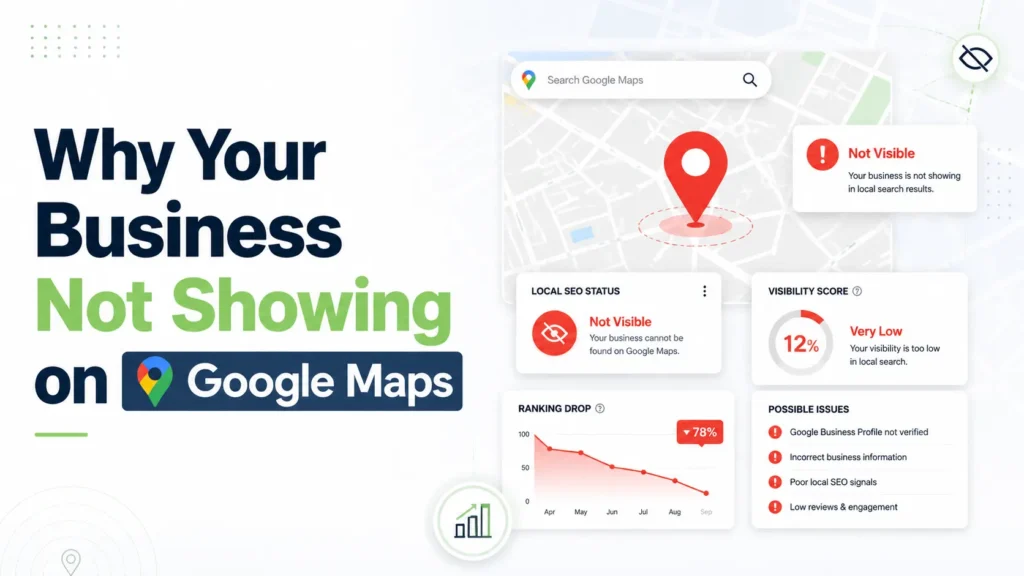
Let’s start with the core issue.
Google doesn’t show every business. It shows the most relevant and trusted ones. If your Google Business Profile not ranking or your GMB visibility issue, it means Google doesn’t see enough strong signals yet.
The 3 Key Ranking Factors
- Relevance
- Distance
- Prominence
If your Google Maps listing not showing, it’s likely you’re weak in one (or all) of these areas.
Real Example: Clinic Lost Google Maps Visibility Due to NAP Inconsistency
A physiotherapy clinic noticed a major drop in local traffic after patients reported they could no longer find the business on Google Maps. The issue started after the clinic updated its phone number and address on its website but failed to update the same details on its Google Business Profile, healthcare directories, and social media pages. As a result, Google found conflicting NAP (Name, Address, Phone Number) information across different platforms, which weakened the clinic’s local trust signals and reduced its visibility in nearby searches.
After auditing all listings and correcting the business details everywhere, the clinic’s profile gradually regained visibility within a few days. The business also started appearing again for important local keywords related to physiotherapy services in its area. This example highlights how even small inconsistencies in business information can negatively impact local SEO and Google Maps rankings.
Common Causes like:
- Business not verified
- Suspended or restricted Google Business Profile
- Wrong categories or irrelevant attributes
- Address conflicts or duplicate listings
- Weak local SEO or inconsistent citations
- Location outside the proximity of the searcher
- Missing relevance cues
- Low prominence due to lack of reviews or activity
- Content or policy violations
Fix 1: Verify Your Google Business Profile
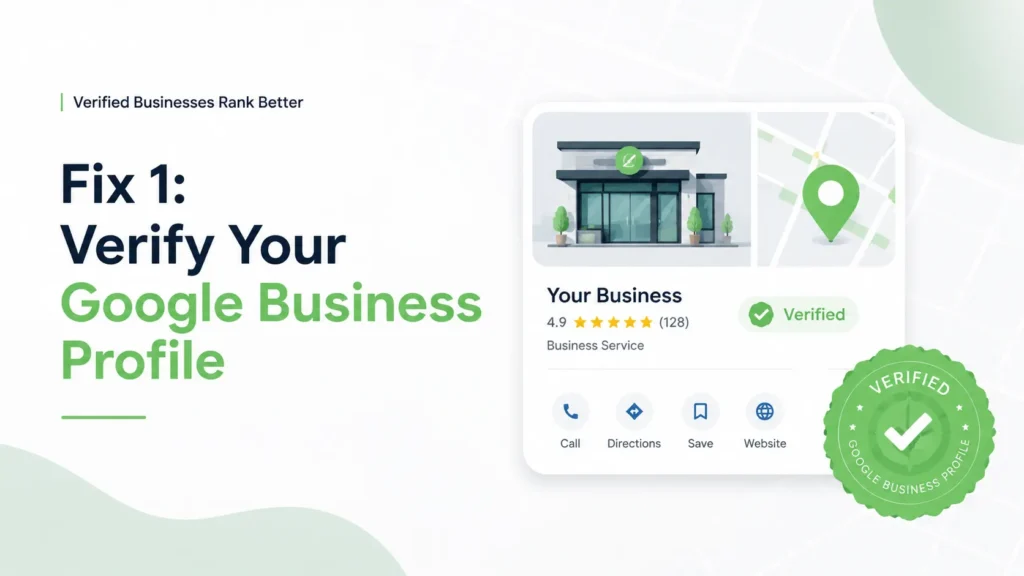
This is the most basic step—but surprisingly, many businesses skip it.
If your listing isn’t verified, your Google My Business not visible issue will never be fixed.
What You Should Do
- Complete verification immediately
- Avoid changing details during the process
- Ensure your address is correct
Without verification, your business not appearing in local search is guaranteed.
Fix 2: Fix NAP Consistency
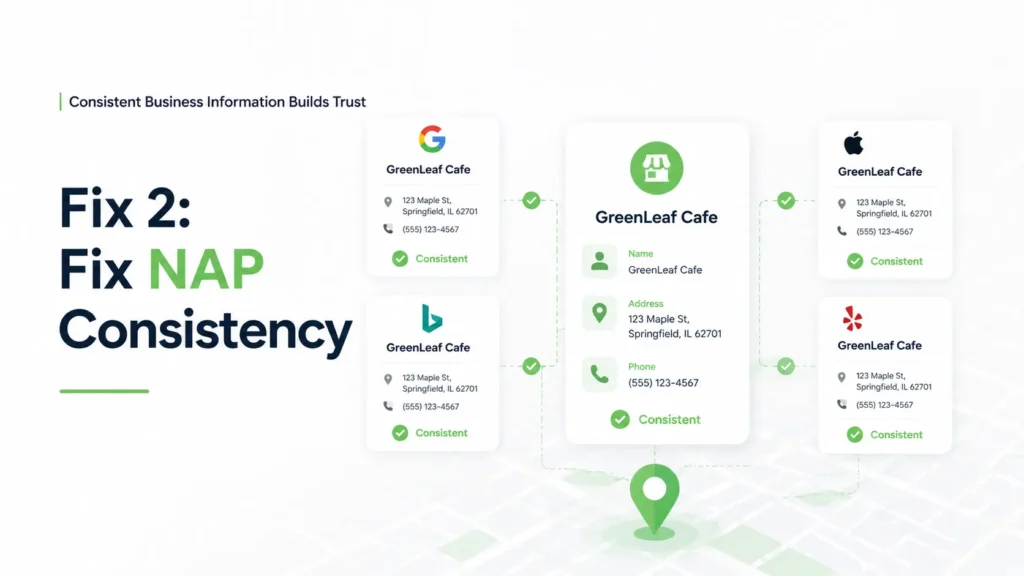
Your Name, Address, and Phone number must match everywhere.
Even small differences can cause your Google Maps listing not showing properly, which is one of the main reasons a business name not showing on Google Maps issue happens.
Why It Matters
Google relies on consistency to trust your business. If your data is inconsistent, your Google Maps ranking factors weaken.
Want a free Google Maps audit? Get a personalized visibility report for your business.
Click here 👉 Contact Us
Fix 3: Choose the Right Business Categories
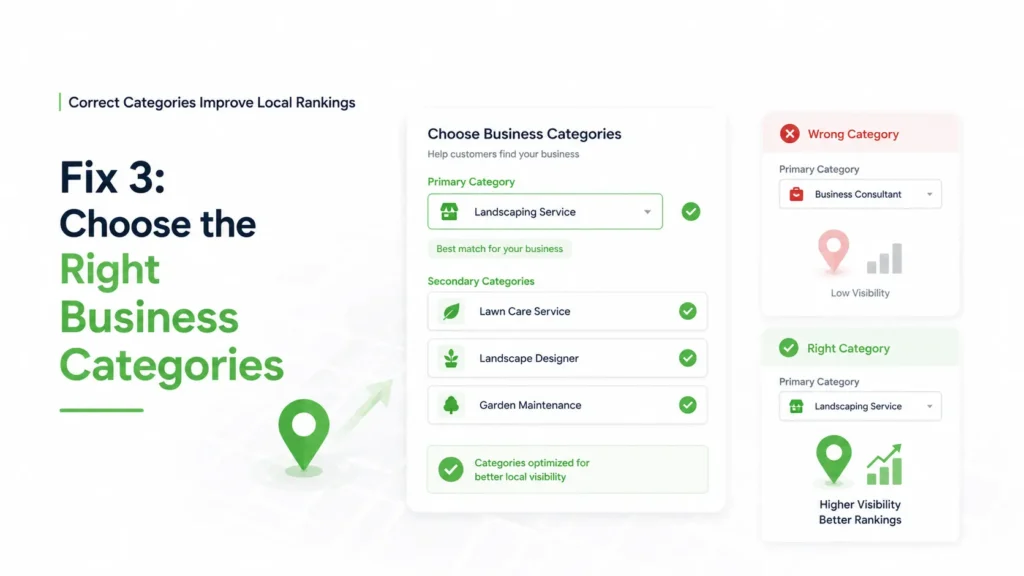
Choosing the wrong category is one of the biggest reasons your business not showing on Google Maps.
What You Should Do
- Pick a strong primary category
- Add relevant secondary categories
This improves your chances of appearing when people search.
Fix 4: Strengthen Local SEO
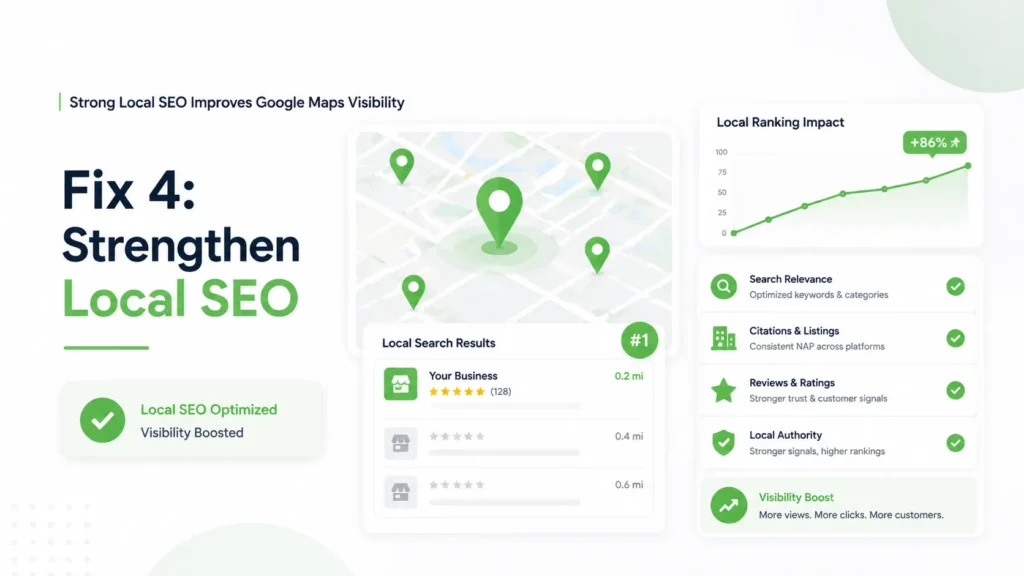
If you ignore local SEO for clinics, your visibility will stay low.
What to Focus On
- Location-based keywords
- Local content
- Directory listings
A strong local SEO strategy for clinics helps you improve your Google Maps SEO tips and visibility.
Fix 5: Get More Reviews
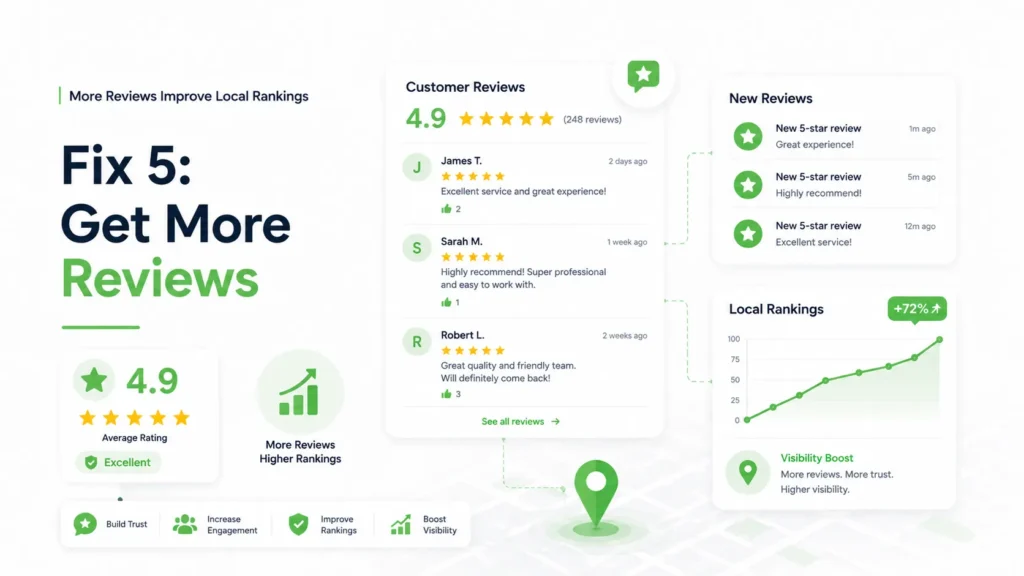
Reviews are critical for ranking.
If you want to increase visibility on Google Maps, you need more positive reviews.
Why Reviews Matter
- Build trust
- Improve ranking
- Increase clicks
This directly impacts your Google Maps algorithm ranking.
Fix 6: Add Photos & Stay Active
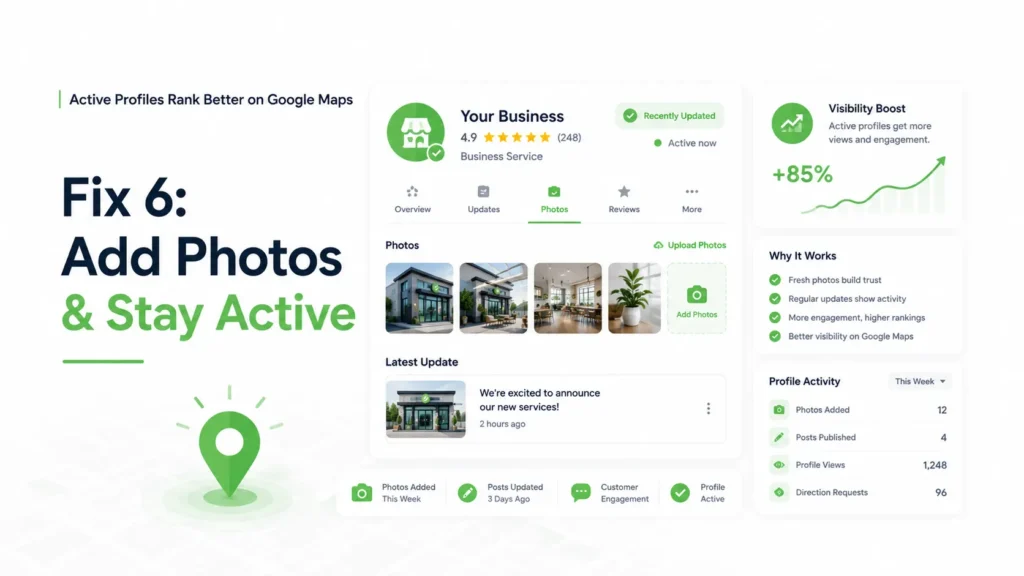
Inactive listings don’t rank.
If you want to improve local ranking Google, you need to stay active.
What to Upload
- Clinic images
- Staff photos
- Equipment
This improves engagement and supports your Google Maps SEO tips.
Fix 7: Optimize Your Description
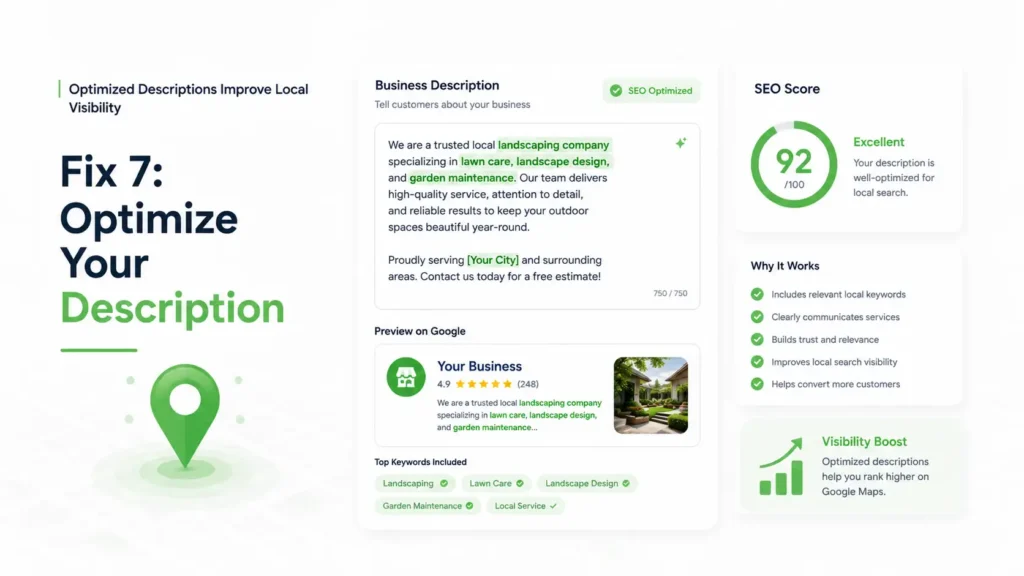
Your description helps Google understand your business.
Best Practice
Use keywords like:
- Google Business Profile optimization
- how to rank on Google Maps
But keep it natural—don’t overdo it.
Also check out our complete SEO Audit Guide & checklist to improve rankings, boost traffic, and optimize your website performance.
Fix 8: Build Local Citations
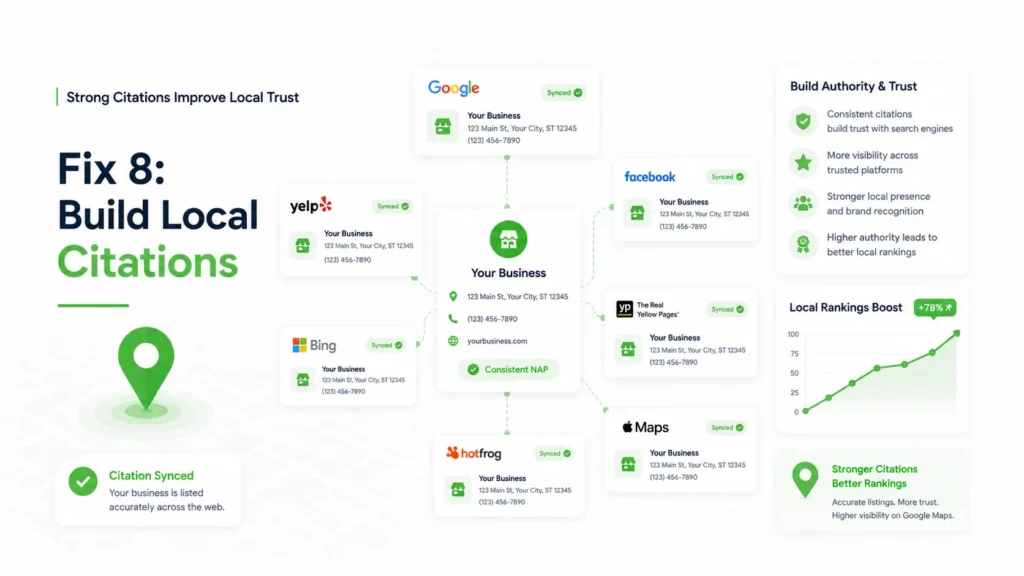
Citations are mentions of your business online.
They play a huge role in fixing your business not appearing in local search.
Where to List
- Local directories
- Healthcare portals
- Business listings
This strengthens your authority and improves your Google Maps ranking factors.
Fix 9: Improve Your Website SEO
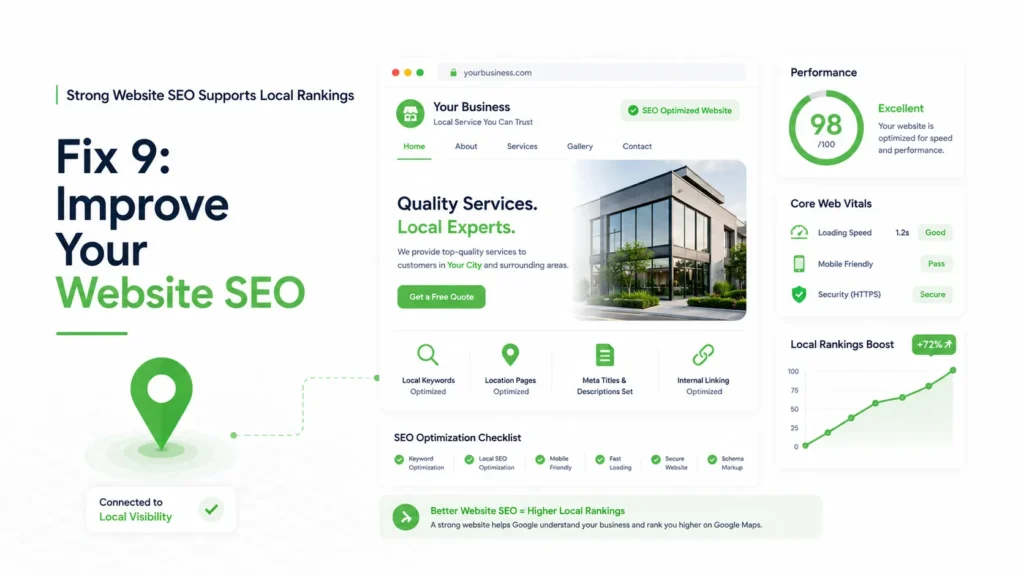
Your website directly impacts your Maps ranking.
If your site is weak, your business not showing on Google Maps problem will continue.
What to Improve
- Page speed
- Mobile optimization
- Local keywords
Focus on content around how to rank on Google Maps and improve local ranking Google.
Final Thoughts
If your business not showing on Google Maps, the issue is usually not the listing itself—it’s the overall Google Maps optimization system behind it. Businesses that consistently rank higher typically focus on proper Google Business Profile optimization, accurate business information, reviews, and a strong local SEO strategy for clinics to improve local visibility and trust signals.
At Raiseque, we help clinics and healthcare brands build structured local SEO systems that improve Google Maps rankings, visibility, and patient inquiries.
📩 Want a free Google Maps visibility audit?
Message us directly and discover what’s affecting your local rankings.
FAQ
1. Why is my verified business not showing on Google Maps?
If your business is not showing on Google Maps, it is usually due to incomplete verification, incorrect business information, or weak local SEO signals. Google prioritizes listings that are accurate, active, and trustworthy. Ensuring your Google Business Profile is fully verified and optimized can significantly improve visibility.
2. How do I make my business appear on Google Maps?
To make your business appear on Google Maps, you need to create and verify your listing, add complete business details, choose the right categories, and optimize your profile with relevant keywords. Consistency in your business information and regular updates also help improve your ranking.
3. How long does it take for a business to show on Google Maps?
After verification, your business can appear on Google Maps within 24 to 72 hours. However, ranking in top positions takes longer and depends on factors like competition, reviews, and local SEO optimization.
4. Why is my Google Business Profile not visible to customers?
Your Google Business Profile may not be visible due to suspension, incorrect categories, low activity, or lack of trust signals such as reviews and citations. Fixing these issues and maintaining an active profile can improve visibility.
5. What are the main reasons a business does not rank on Google Maps?
The main reasons include poor optimization, inconsistent NAP (Name, Address, Phone), lack of reviews, weak website SEO, and low engagement. Google ranks businesses based on relevance, distance, and prominence.
YouTube Marketing for Healthcare is becoming one of the most effective ways for doctors and clinics to attract patients in 2026.
But many clinics still struggle to get real results.
They upload videos, get a few views, and then stop because they don’t see immediate patient inquiries.
The reality is simple: success on YouTube is not about posting randomly—it’s about building trust over time.
To understand this shift, clinics must first build a strong foundation in Social Media for Healthcare, where patient behavior is now driven by digital discovery and trust.
Why Video Marketing is Important for Clinics
Among all Social Media Platforms for Healthcare, YouTube stands out for combining visibility with trust.

Here’s why it works:
- YouTube is the second-largest search engine
- Patients prefer watching over reading
- Doctors can simplify complex topics
- Content stays discoverable for a long time
A single well-optimized video can generate patient inquiries for months.
How Patients Use YouTube Before Choosing a Doctor
How Patients Use YouTube Marketing for Healthcare Before Choosing a Doctor
They:
- Search for symptoms
- Watch treatment explanations
- Compare doctors
- Build trust before booking
This is why Social Media Marketing for Doctors must now include video as a core strategy.
Common Mistakes in Healthcare Video Marketing
Many clinics struggle with YouTube Marketing for Healthcare because of simple but critical mistakes.
- Posting without a plan
- Inconsistent uploads
- Ignoring SEO basics
- Poor audio or clarity
- No clear call-to-action
These issues result in views without conversions.
Types of Content That Work Best

To get results, focus on content that provides value:
Educational Videos
Explain symptoms, treatments, and procedures.
FAQ Videos
Answer common patient concerns.
Doctor Introduction Videos
Build familiarity and trust.
Awareness Videos
Address myths and misconceptions.
Clinics already doing Instagram Marketing for Doctors can easily repurpose content into video format.
SEO Strategies for Better Visibility
To succeed with YouTube Marketing for Healthcare, optimization is essential.
Strong Social Media Marketing for Doctors includes:
- Keyword-rich titles
- Detailed descriptions
- Relevant tags
- High-quality thumbnails
Proper optimization helps videos rank on both YouTube and search engines.
How to Create High-Converting Videos
Use a simple structure:
1. Hook (First 5 seconds)
Grab attention
2. Problem
Address patient concern
3. Solution
Provide clarity
4. CTA
Encourage action
Video Tips:
- Clear audio
- Good lighting
- Simple explanations
Patients value clarity more than production quality.
Role of Video in Patient Acquisition

Video content works best as part of a system.
It should align with strategies like Facebook Marketing , where visibility, trust, and conversion work together.
Discovery → Video content
Trust → Reviews + authority
Conversion → Website / WhatsApp
This is how clinics turn viewers into patients.
Building Authority Beyond YouTube
Video alone is not enough.
Doctors should also focus on LinkedIn Branding to strengthen credibility and professional positioning.
Multi-platform presence increases patient trust.
Measuring Performance
Track:
- Watch time
- Engagement
- Audience retention
- Patient inquiries
Focus on real conversions, not vanity metrics.
FAQs
What is the 30 second rule on YouTube?
The 30-second rule means your video must capture attention within the first 30 seconds.
If viewers don’t find value quickly, they leave—reducing watch time and reach.
Focus on a strong hook + clear topic early.
Which social media platform is best for healthcare?
here is no single best platform—it depends on your goal:
Facebook → Patient acquisition & ads
Instagram → Engagement & awareness
YouTube → Trust & education
LinkedIn → Doctor branding
Best results come from using multiple platforms together.
What is social marketing in healthcare?
Social marketing in healthcare is the use of digital platforms to educate, engage, and influence patient behavior.
It focuses on awareness, trust-building, and encouraging healthier decisions
How do healthcare professionals use social media?
Healthcare professionals use social media to:
Share health education
Build personal and clinic branding
Engage with patients
Promote services
Manage online reputation
It helps improve visibility and patient trust.
What are the 5 pillars of social marketing?
The 5 key pillars are:
Audience Understanding
Value-Based Content
Consistent Communication
Trust & Credibility
Behavior Change Focus
These pillars ensure effective and ethical healthcare marketing.
Conclusion
YouTube Marketing for Healthcare is no longer optional.
YouTube Marketing for Healthcare is a powerful tool to build trust, educate patients, and grow your clinic.
Clinics that invest in structured video strategies will gain a clear competitive advantage.
At Raiseque, we’ve seen that clinics using integrated strategies across platforms—not just isolated efforts—consistently achieve better patient acquisition and long-term growth.
The future belongs to clinics that are not just visible…
But trusted everywhere patients look
📩 Want a personalized growth plan?
Comment “YOUTUBE” or message us today.
Facebook Ads for Clinics can be one of the most powerful ways to generate patient appointments—when done correctly.
But many clinics run ads and still struggle to get bookings.
Are you also getting clicks but no consultations?
The problem is not Facebook Ads.
It’s the system behind them.
Before running ads, clinics must build a strong foundation in Social Media for Healthcare and understand how digital patient journeys work.
Healthcare marketing is different. Patients don’t make instant decisions—they search, compare, evaluate, and build trust.
In this blog, we’ll explain how Facebook Ads for clinics actually work and how to turn them into a reliable patient acquisition channel.
Why Facebook Ads for Clinics Work for Patient Acquisition
Among all Social Media Platforms for Healthcare, Facebook remains one of the most powerful for patient acquisition.

1. Massive Audience Reach
Reach local patients actively looking for healthcare solutions.
2. Advanced Targeting
Target by:
- Location
- Age
- Interests
3. Cost-Effective Growth
Better ROI than traditional marketing.
4. Supports Full Patient Journey
From awareness to booking.
👉 Clinics already using Facebook Marketing for Clinics see better ad performance because of a strong organic presence.
Understanding Patient Behavior
Effective Social Media Marketing for Doctors starts with understanding how patients decide. To succeed with Facebook Ads for Clinics and doctors, understanding patient behavior is essential.
Patients:
- Search symptoms
- Check reviews
- Compare doctors
👉 They don’t book instantly.
This is why ads alone don’t work.
Common Mistakes Clinics Make

Many clinics repeat common Social Media Marketing Mistakes that reduce ad performance:
- Running ads without a strategy
- Sending traffic to the homepage
- No trust signals
- Poor targeting
- No follow-up system
👉 Result: wasted budget, low ROI
The Right Facebook Ads Strategy
A structured approach to Facebook Ads for Clinics ensures better patient conversion and ROI.
1. Awareness Campaigns
- Health tips
- Doctor introduction
👉 Builds visibility
2. Consideration Campaigns
- Testimonials
- Case studies
👉 Builds trust
3. Conversion Campaigns
- Book appointment ads
- WhatsApp CTA
👉 Drives action
How to Target the Right Patients

Location-Based Targeting
Focus on your service area.
Custom Audiences
- Website visitors
- Social media users
Lookalike Audiences
Find similar patients.
👉 Clinics active on Instagram Marketing for Doctors often perform better due to stronger audience data.
Creating High-Converting Ads
Ad Copy Tips
- Simple language
- Problem-focused
Creative Tips
- Real doctor images
- Testimonials
CTA Examples
- Book Appointment
- Call Now
Landing Page Optimization
Landing pages play a critical role in the success of Facebook Ads for Clinics.
Include:
- Doctor details
- Reviews
- Easy booking
👉 Building authority through LinkedIn Branding for Doctors also improves trust and conversions.
Budgeting & Optimization
- Start small
- Optimize continuously
- Focus on cost per patient, not clicks
Tracking & Analytics
Track:
- CTR
- Cost per lead
- Conversion rate
👉 Data-driven decisions = better results
Retargeting Strategy
Retarget:
- Visitors
- Engagers
Use:
- Testimonials
- Offers
👉 This increases conversion significantly.
Facebook Ads + System = Real Growth
Facebook Ads alone are not enough.
You need a system combining:
- SEO
- Reviews
- Website
- Social media
👉 This creates predictable patient acquisition.
While Facebook Ads can drive quick patient appointments, sustainable growth in the healthcare sector depends on a well-rounded digital presence. This includes optimizing your website, improving search engine rankings, and leveraging multiple online channels to build trust and visibility. A comprehensive digital marketing strategy ensures that patient acquisition is consistent rather than dependent on a single platform.
FAQs
1. Do Facebook ads work for clinics?
Yes, Facebook Ads for clinics work—but only with the right strategy.
They help attract patients, but results improve when combined with trust (reviews) and a proper booking system.
2. What budget is required?
There’s no fixed budget—clinics can start small (₹300–₹500/day) and scale based on results.
👉 Focus on cost per patient, not just ad spend.
3. Do I need a landing page?
Yes, a landing page is important.
It improves conversions by clearly guiding patients to book an appointment.
4. Can Facebook ads bring real patients?
Yes, Facebook ads can bring real patients when targeted correctly and supported with trust (reviews) and a clear booking process.
How much do 1000 Facebook ads cost?
The cost per 1,000 Facebook ad views (CPM) varies based on targeting, industry, and competition.
👉 Average cost:
Global: around $10–$15 (₹800–₹1,200) per 1,000 impressions
India: typically ₹80–₹300 per 1,000 impressions
What is the 20 rule on Facebook ads?
The 20% rule means that text should not cover more than 20% of your ad image.
Earlier, Facebook strictly limited ads with too much text. Now it’s more flexible, but:
👉 Ads with less text perform better
👉 Too much text can reduce reach and engagement
Conclusion
Facebook Ads don’t fail because of budget.
They fail because the system is incomplete.
Clinics that combine ads with structured digital strategies consistently grow faster.
At Raiseque, we’ve seen that clinics with strong digital systems—not just ads—achieve predictable and scalable patient growth.
The future of healthcare marketing belongs to clinics that build systems, not just campaigns. Facebook Ads for Clinics can be one of the most powerful tools for patient growth.
If your clinic is running ads but not getting appointments, it’s time to fix the system.
📩 Want a free audit of your current ads and funnel?
Comment “ADS” or message us directly.
An SEO audit is the foundation of every successful digital marketing strategy. If your website is not ranking well, losing traffic, or failing to convert visitors, an SEO audit helps you identify exactly what is holding it back. Instead of guessing what is wrong, an audit gives you a clear roadmap to improve search visibility, user experience, and business performance.
In simple terms, an SEO audit is a complete health check of your website. It reviews technical issues, on-page elements, content quality, backlinks, and overall website performance. Whether you run a small business website, an e-commerce store, or a service-based brand, regular audits are essential to stay competitive in search results.
What Is an SEO Audit?
An SEO audit is a process of evaluating how well your website performs in search engines. It helps uncover problems that may stop your pages from ranking, such as broken links, slow speed, poor mobile usability, missing metadata, weak content, or technical crawl errors.
A proper SEO audit does not just point out problems. It also helps prioritize the fixes that will have the highest impact on rankings and traffic.
Why SEO Audits Matter
A website may look good on the surface but still have hidden issues affecting performance. An SEO audit helps you:
- Improve crawlability and indexing
- Increase website speed and usability
- Fix content gaps and keyword issues
- Improve mobile experience
- Strengthen internal linking
- Build better authority and trust
- Increase leads and conversions
Regular audits also help businesses stay aligned with search engine updates and user expectations.
Types of SEO Audits
1. Technical SEO Audit
A technical SEO audit focuses on the backend health of your website to ensure search engines can crawl, index, and understand your pages efficiently. It involves checking site speed, mobile responsiveness, crawl errors, broken links, XML sitemap setup, robots.txt rules, HTTPS security, structured data, and indexing status. Technical issues often go unnoticed but can seriously affect rankings and user experience. A proper technical audit helps remove roadblocks, improve website performance, and create a strong foundation for better visibility in search results.
| Technical SEO Audit Checklist |
|---|
| Minification of JS, CSS, HTML Code, Font Face |
| Robots.txt File |
| Sitemap |
| Defer Code Loading |
| Lazy Load |
| Enable Caching |
| Use CDN |
| Next-Gen Image Format |
| Create the Robots Code |
| Use Google Verification Code |
| Implement Structured Data /Schema Markup |
| Check and Fix Crawl Errors |
| Monitor and Improve Bounce Rate |
| Improve User Experience (UX) |
| Optimize for Featured Snippets |
| Use Canonical Tags to Avoid Duplicate Content |
| Implement Breadcrumb Navigation |
| Enhance Site Navigation and User Flow |
| Track and Analyze SEO Performance Metrics |
| minimizing HTTP requests |
| AMP Version – Mobile Friendly Website |
2. On-Page SEO Audit
An on-page SEO audit evaluates how well individual pages are optimized for both users and search engines. This includes reviewing title tags, meta descriptions, heading structure, keyword placement, internal linking, image alt text, and overall page relevance. The goal is to make sure each page clearly communicates its topic, matches user intent, and follows SEO best practices. A strong on-page audit improves content clarity, boosts rankings for target keywords, and increases click-through rates from search results.
| On-Page SEO Audit Checklist |
|---|
| meta title and meta description |
| Broken Link |
| Optimize URL Structure |
| Internal Linking |
| Social Links |
| Integrate Facebook Pixel |
| Apply OG Tags on All Pages |
| List the Site on Webmaster Tools (Bing and other search engines) |
| Local Listing (National and International) |
| Create and Maintain a Blog |
| Regularly Update Content |
| Optimize Video Content |
| Integrate Google Analytics |
| Integrate Google Search Console |
| Integrate Google Tag Manager |
3. Content Audit
A content audit helps assess the quality, relevance, and performance of all the content on your website. It identifies outdated pages, duplicate content, thin articles, underperforming pages, and keyword cannibalization issues that may be limiting your SEO growth. It also highlights opportunities to refresh existing content, fill topic gaps, and strengthen topical authority. By improving weak content and aligning pages with search intent, a content audit can significantly increase organic traffic and engagement.
4. Backlink Audit
A backlink audit reviews the quality and trustworthiness of websites linking to your domain. It helps identify strong referring domains that boost authority, as well as toxic or spammy backlinks that may harm rankings. This process includes analyzing anchor text distribution, link relevance, lost links, and overall link profile health. A backlink audit is essential for maintaining domain credibility, avoiding penalties, and building a stronger off-page SEO strategy over time.
5. Local SEO Audit
A local SEO audit focuses on how well your business appears in location-based searches and map results. It involves checking your business listings, name-address-phone (NAP) consistency, customer reviews, Google Business Profile optimization, local citations, and location-specific landing pages. This audit helps ensure your business is easy to find for nearby customers searching for your products or services. A strong local SEO audit can improve local rankings, drive more calls and visits, and strengthen your visibility in your target area.
| Local SEO Audit Checklist | |
|---|---|
| Business name | |
| Business address | |
| Phone number | |
| Business hours | |
| Business description (750 characters) | |
| Business categories | |
| Get detailed business attributes & info | |
| Business opening / founding date | |
| Profile is claimed / verified | |
| Perform competitor audit | |
| Business logo (720 x 720 pixels) | |
| Business cover photo (1024 x 575 pixels) | |
| 3x interior photos | |
| 3x exterior photos | |
| 3x team photos | |
| Add correct Name, Address, & Phone Number | |
| Add / update primary & secondary business categories | |
| Add optimized business description | |
| Update business hours & add upcoming holiday hours | |
| Add website link | |
| Include additional links (appointment / menu) | |
| Add product / service information | |
| Update business description | |
| Upload logo | |
| Upload cover photo | |
| Upload additional photos (exterior, interior, and team) | |
| Respond to recent postive & negative reviews | |
| Create & publish offer | |
| Publish topically relevant posts w/ image (1200 x 900 pixels) | |
Step-by-Step SEO Audit Checklist
Step 1: Check Website Crawlability
Use tools like Google Search Console or Screaming Frog to find:
- Broken links
- Redirect loops
- 404 errors
- Blocked pages
Fixing crawl issues ensures search engines can properly access your content.
Step 2: Improve Website Speed
Website speed directly affects rankings and user experience. Review:
- Page load time
- Image sizes
- JavaScript issues
- Server response time
Compress images, enable caching, and reduce unnecessary scripts.
Step 3: Review Mobile Friendliness
Most users browse on mobile. Check:
- Responsive design
- Button spacing
- Readability
- Mobile speed
A poor mobile experience can hurt rankings and conversions.
Step 4: Audit On-Page SEO
Make sure every important page has:
- Unique title tags
- Clear meta descriptions
- Proper heading structure
- Relevant keyword placement
- Internal links
On-page optimization helps search engines understand your content better.
Step 5: Evaluate Content Quality
Review all pages for:
- Thin content
- Duplicate content
- Outdated information
- Keyword cannibalization
Update weak pages and improve depth, clarity, and user intent.
Step 6: Check Backlink Health
A strong backlink profile builds authority. Analyze:
- Quality of backlinks
- Spam links
- Lost links
- Anchor diversity
Disavow toxic links if needed and build quality links over time.
Step 7: Review User Experience
Search engines value user satisfaction. Check:
- Bounce rate
- Navigation clarity
- Core Web Vitals
- Conversion paths
A better user experience often improves rankings naturally.
Best SEO Audit Tools
Some useful tools include:
These tools help identify issues faster and track improvements.
Common SEO Audit Mistakes to Avoid
- Only checking rankings instead of technical issues
- Ignoring mobile optimization
- Not fixing broken links
- Publishing duplicate content
- Failing to prioritize high-impact issues
- Running audits once and forgetting follow-ups
How Often Should You Do an SEO Audit?
- Small websites: every 6 months
- Growing businesses: every 3 months
- E-commerce sites: monthly checks
- After redesigns or migrations: immediately
Consistent audits help prevent traffic drops and ranking losses.
Final Thoughts
An SEO audit is not just a checklist. It is a growth strategy. By regularly reviewing your website’s technical health, content quality, and user experience, you can improve rankings, attract better traffic, and increase conversions.
The best results come from acting on audit findings, tracking progress, and continuously improving your site.
FAQs
What is an SEO audit report?
An SEO audit report is a detailed analysis of your website’s performance in search engines. It highlights technical issues, content gaps, keyword problems, backlink concerns, and user experience factors that may affect rankings. It also provides clear recommendations to improve visibility, traffic, and conversions.
What are the 4 types of audit report?
The four main types of SEO audit reports are technical SEO audit, on-page SEO audit, content audit, and backlink audit. Each report focuses on a specific area of website performance and helps identify issues that impact search engine rankings.
What are the 7 steps in the audit process?
The seven key steps in the SEO audit process are checking crawlability, reviewing site speed, testing mobile-friendliness, auditing on-page SEO, analyzing content quality, reviewing backlinks, and evaluating user experience. These steps help create a structured plan for improvement.
What is an audit report in simple terms?
An audit report is a simple review document that shows what is working, what problems exist, and what improvements are needed. In SEO, it helps website owners understand how to improve their website’s search performance and user experience.
If you feel like digital marketing is changing too fast to keep up—you’re not alone.
In 2026, digital marketing in India isn’t just about running ads or posting on social media anymore. It’s about understanding how people search, what they trust, and how technology—especially AI—is shaping decisions.
For healthcare businesses, this shift is even more important. Patients today don’t just walk into a clinic randomly. They search on Google, watch videos, read reviews, and compare options before choosing a doctor or hospital.
That means your online presence isn’t just marketing—it’s your first impression.
In this blog, let’s break down the latest digital marketing trends in India 2026 in a simple, practical way so you can actually use them in your clinic, hospital, or healthcare brand.
What Are the Top Digital Marketing Trends in India in 2026?

Digital marketing trends in India in 2026 are heavily driven by AI-powered personalization, regional content marketing, short-form video, voice search, and hyper-local SEO strategies. Businesses are focusing on AI search optimization, WhatsApp marketing, Instagram Reels, healthcare digital marketing, and first-party data strategies to improve customer engagement and online visibility. With rapid growth in Tier 2 and Tier 3 internet users, brands using localized and AI-driven digital marketing strategies are expected to achieve higher ROI and stronger customer retention.
- AI-powered personalization
- Short-form video growth
- Voice & regional search
- Social commerce & WhatsApp
- First-party data & privacy
Top Digital Marketing Trends in India for 2026
The top digital marketing trends in India for 2026 are transforming how businesses attract customers, build trust, and grow online. From AI-powered marketing and Google AI search optimization to Instagram Reels, regional content, and healthcare digital marketing, brands are shifting toward smarter, data-driven, and highly personalized strategies to stay competitive in the evolving digital landscape.
1. AI-Powered Digital Marketing Is Becoming the Standard

Artificial Intelligence is transforming digital marketing in India. Businesses now use AI tools for content creation, SEO optimization, ad targeting, chatbot automation, predictive analytics, and customer engagement. AI-driven marketing helps brands reduce costs, personalize campaigns, and improve conversion rates.
Important AI marketing trends include:
- AI-generated content
- AI SEO optimization
- AI chatbots for lead generation
- Predictive customer behavior analysis
- Automated ad campaigns
- AI-powered email marketing
How AI Is Changing Content Creation
Earlier, writing blogs or social media posts took hours. Now, AI can help you create drafts in minutes.
But what works best is a mix:
AI for speed + Human touch for trust
Patients don’t connect with robotic content—they connect with real, helpful information.
2. Regional Language Content Is Dominating Indian Internet Growth

Regional language content marketing is one of the biggest digital marketing trends in India for 2026. Hindi, Telugu, Tamil, Bengali, Marathi, and Odia content are driving higher engagement compared to English-only campaigns.
Brands targeting Tier 2 and Tier 3 cities are investing in:
- Multilingual SEO
- Regional social media content
- Vernacular video marketing
- Localized Google Business optimization
Localized content improves trust, engagement, and organic visibility.
3. Short-Form Video and Instagram Reels Continue to Grow

Instagram Reels, YouTube Shorts, and short-form educational videos are dominating attention online. Businesses are using reels to increase:
- Brand awareness
- Organic reach
- Lead generation
- Engagement rates
Healthcare clinics, coaching institutes, local businesses, and personal brands are seeing strong results through educational short-form video content.
4. AI Search Optimization (GEO) Is Replacing Traditional SEO

Google AI Overviews are changing how users search online. Instead of only ranking webpages, Google now summarizes information directly inside search results.
Businesses must now optimize for:
- AI Overview rankings
- Conversational search queries
- Question-based keywords
- Entity SEO
- Topical authority
- Structured content formatting
Generative Engine Optimization (GEO) is becoming essential for ranking in AI-powered search results
5. Healthcare Digital Marketing Is Growing Rapidly in India

Healthcare businesses are increasingly investing in:
- Local SEO for clinics
- Google Business Profile optimization
- Healthcare content marketing
- Patient education videos
- Online reputation management
- Healthcare lead generation campaigns
Clinics with strong digital systems are attracting more patients through organic search, reels, and local SEO strategies.
6. Voice Search and Conversational Search Are Increasing

Indian users are increasingly using voice search in regional languages. Businesses must optimize content for conversational keywords such as:
- “Best digital marketing agency near me”
- “How to rank on Google Maps”
- “Top healthcare marketing strategies”
Voice-friendly content improves visibility in AI search results.
7. WhatsApp and Direct Communication Are Rising

Patients don’t always want to fill forms or wait for emails.
They want quick communication.
That’s why WhatsApp marketing is booming.
How Healthcare Can Use WhatsApp
- Appointment booking
- Follow-ups
- Sharing reports
- Sending reminders
It’s simple, direct, and highly effective.
Future of Digital Marketing in India

The future of digital marketing in India will be shaped by AI-driven automation, hyper-personalized experiences, regional language dominance, and conversational search optimization.
Businesses that adapt to AI search trends, video-first marketing, and local SEO strategies will gain a major competitive advantage in 2026 and beyond.
Conclusion
The digital marketing trends in India for 2026 clearly show that healthcare businesses can no longer rely only on traditional marketing methods. Clinics and healthcare brands that adapt to AI-powered marketing, local SEO, Google AI search optimization, Instagram Reels, and patient-focused content strategies will build stronger online visibility and long-term growth.
At Raiseque, we help healthcare businesses create scalable digital systems through healthcare digital marketing services for clinics, including SEO, Google Business Profile optimization, content marketing, local SEO strategies, and healthcare lead generation.
📩 Want to grow your clinic with future-ready digital marketing strategies? Connect with us and discover how your healthcare brand can stay ahead in 2026.
FAQ
1. What is the biggest digital marketing trend in India for 2026?
The biggest digital marketing trend in India for 2026 is AI-powered marketing combined with short-form video content and AI search optimization. Businesses are using AI tools, Instagram Reels, and conversational SEO strategies to improve visibility, customer engagement, and online lead generation.
2. How is AI changing digital marketing in India?
AI is changing digital marketing in India by helping businesses automate content creation, improve ad targeting, personalize customer experiences, and analyze user behavior. AI-powered SEO, chatbots, predictive analytics, and automation tools are becoming essential for faster and smarter marketing growth.
3. Why are Instagram Reels important for marketing in 2026?
Instagram Reels are important for marketing in 2026 because short-form videos generate higher engagement, better organic reach, and stronger audience retention. Businesses use reels to educate users, increase brand awareness, attract leads, and improve social media visibility at lower marketing costs.
4. What is GEO in digital marketing?
GEO stands for Generative Engine Optimization, a strategy focused on optimizing content for AI-powered search engines and Google AI Overviews. It helps businesses appear in conversational search results by using structured, informative, question-based, and highly relevant content formats.
5. Why is regional language content important in India?
Regional language content is important in India because millions of internet users prefer consuming content in Hindi, Telugu, Tamil, Bengali, Marathi, and other local languages. Multilingual marketing improves trust, engagement, customer connection, and visibility among Tier 2 and Tier 3 audiences.
Can doctors really build authority and trust through LinkedIn?
Yes — LinkedIn branding for doctors is one of the most effective ways to establish credibility, grow professional visibility, and position yourself as an expert in your field.
Unlike other social platforms, LinkedIn is built for professionals. It allows doctors to share knowledge, connect with peers, and build a strong personal brand that goes beyond their clinic.
LinkedIn Branding for Doctors is becoming essential for building authority, trust, and professional visibility in today’s digital healthcare landscape.
Why LinkedIn Branding for Doctors Matters Today
Is LinkedIn useful for healthcare professionals?
LinkedIn is often underestimated in healthcare marketing. However, it offers unique advantages that other platforms cannot match.

Here’s why LinkedIn is powerful:
- A professional and credibility-focused audience
- Less clutter compared to other social platforms
- High-value networking opportunities
- Ideal for thought leadership
In real-world healthcare practices, doctors who actively use LinkedIn are often perceived as more credible and knowledgeable.
Social media plays a major role in healthcare today. To understand the complete ecosystem, explore Social Media for Healthcare
How doctors benefit from LinkedIn branding
- Build authority in their specialization
- Attract collaborations and partnerships
- Increase recognition among peers
- Create opportunities for speaking and media features
LinkedIn is not just about visibility—it’s about positioning yourself as an expert. Many professionals struggle with LinkedIn Branding for Doctors due to a lack of clarity.
What is LinkedIn Branding for Doctors?
LinkedIn branding refers to how doctors present themselves professionally online.
It includes:
- Profile optimization
- Content creation
- Engagement and networking
- Thought leadership
Branding vs Marketing
- Marketing focuses on promoting services
- Branding focuses on building trust and authority
For doctors, branding is more important because patients and professionals trust expertise over promotion.
Optimizing Your LinkedIn Profile (Foundation)
Your profile is the foundation of your personal brand.

Key elements of a strong LinkedIn profile
1. Professional Profile Photo
- Use a clear, high-quality image
- Wear professional attire
- Maintain a confident and approachable look
2. Headline That Communicates Value
Avoid generic titles like “Doctor.”
Instead, use:
- “Cardiologist | Helping Patients Manage Heart Health.”
- “Dermatologist | Acne & Skin Care Specialist”
3. Compelling About Section
Your “About” section should:
- Explain your expertise
- Highlight your experience
- Show your approach to patient care
Keep it simple, clear, and human.
4. Experience and Achievements
- Add detailed experience
- Highlight key accomplishments
- Include certifications and specializations
5. Featured Section
Use this to showcase:
- Articles
- Media appearances
- Important posts
Common profile mistakes doctors should avoid
- Incomplete profiles
- Generic headlines
- Lack of clarity
- No personal touch
Choosing the wrong platform is one of the most common mistakes. To understand which platforms work best, refer to Social Media Marketing Mistakes
Your profile should clearly answer: Who are you and why should people trust you?
Content Strategy for LinkedIn (Core Section)
Content is what builds your authority.
What type of content should doctors post?
Focus on value-driven content:
- Educational posts about health topics
- Case-based insights (without revealing identity)
- Industry trends and updates
- Personal experiences and learnings
Content formats that work best
- Text-based posts (thought leadership)
- Carousel posts (step-by-step insights)
- Short videos
- Storytelling posts
Video content plays a major role, especially on Instagram. Learn more in Instagram Marketing for Doctors
Example content ideas
- “Common myths about diabetes”
- “When should you visit a specialist?”
- “Lessons from 10 years of practice”
Healthcare professionals often need a structured approach, as explained in Social Media Marketing for Doctors. Based on industry experience, content that educates and simplifies complex topics performs best.
Building Authority Through Consistency
How often should doctors post?
- 3–4 times per week
Why consistency matters
- Keeps you visible
- Builds recognition
- Strengthens credibility
In real-world scenarios, doctors who post consistently are more likely to gain trust and engagement. Consistency plays a key role in LinkedIn Branding for Doctors.
Engagement Strategy on LinkedIn

Posting content is only half the job.
How to increase engagement
- Reply to comments
- Engage with others’ posts
- Ask thoughtful questions
Networking strategies
- Connect with other professionals
- Join healthcare discussions
- Participate in conversations
LinkedIn rewards active participation, not just content creation. Many clinics struggle with engagement, particularly on Facebook. This is covered in Facebook Marketing for Clinics
Personal Branding vs Promotion
Why doctors should avoid over-promotion
- Reduces trust
- Feels sales-driven
- Turns the audience away
Focus on value-driven branding
- Share knowledge
- Provide insights
- Educate your audience
Trust grows when you consistently deliver value.
Common LinkedIn Branding Mistakes Doctors Make
- Inconsistent posting
- Lack of clear messaging
- Using overly technical language
- Ignoring engagement
- Treating LinkedIn like Instagram
Most doctors face this challenge—they start strong but fail to stay consistent.
How LinkedIn Builds Long-Term Authority
LinkedIn is not about instant results.
It is about:
- Building trust over time
- Sharing valuable insights
- Staying consistent
Over time, this leads to:
- Increased credibility
- More opportunities
- Strong professional reputation
Understanding LinkedIn Branding for Doctors helps doctors build long-term authority.
FAQ
1. Is LinkedIn useful for doctors?
Yes, LinkedIn helps doctors build professional credibility, connect with peers, and establish authority in their field.
2. What should doctors post on LinkedIn?
Doctors should post educational content, industry insights, and personal experiences that provide value to their audience.
3. How often should doctors post on LinkedIn?
Posting 3–4 times per week is ideal for maintaining consistency and visibility.
4. Can LinkedIn help doctors get patients?
Indirectly, yes. It builds trust and credibility, which can influence patient decisions.
5. How can doctors build a strong personal brand?
By optimizing their profile, posting consistently, engaging with others, and sharing valuable content.
Conclusion
LinkedIn branding for doctors is not about promotion—it’s about positioning. When used effectively, it helps doctors build authority, gain visibility, establish trust, and create long-term professional opportunities.
The key lies in staying consistent, sharing valuable insights, and actively engaging with your audience.
LinkedIn Branding for Doctors is not just about visibility—it is about building long-term authority and trust in a competitive healthcare space.
In practice, structured strategies and expert guidance, such as those followed by digital marketing agencies like Raiseque, can help doctors approach LinkedIn more effectively and achieve sustainable growth.
Related Blogs:
Social Media Platforms for Healthcare | Social Media Marketing for Doctors| Instagram Marketing for Doctors| Facebook Marketing for Clinics| Social Media Marketing Mistakes|Facebook Ads for Clinics| YouTube Marketing for Healthcare|Social Media for Healthcare
Why do some brands grow rapidly on social media while others struggle despite posting regularly?
The answer lies in avoiding critical mistakes in social media marketing.
Social Media Marketing Mistakes are among the biggest reasons businesses fail to grow online despite being active on platforms like Instagram, Facebook, and LinkedIn.
However, without the right strategy, content, and engagement approach, even consistent posting can fail to deliver results. These mistakes often go unnoticed, silently affecting reach, engagement, and conversions.
The good news is that once you identify and fix these issues, your social media performance can improve significantly.
Many of these issues are covered in detail in our complete guide on Social Media for Healthcare
Why Avoiding Social Media Marketing Mistakes Matters
Social media is one of the most powerful tools for brand growth—but only when used correctly.
When mistakes go unchecked, businesses often experience:
- Low engagement despite frequent posting
- Poor reach due to algorithm limitations
- Weak brand identity
- Missed opportunities for leads and conversions
In real-world scenarios, businesses often blame changing algorithms for poor performance. However, the root cause is usually an inconsistent strategy and a lack of audience understanding. Many businesses make social media marketing mistakes without realizing their impact.
Most Common Social Media Marketing Mistakes

1. Posting Without a Clear Strategy
One of the biggest mistakes is creating content without a defined plan.
Businesses often post randomly without understanding their goals or audience.
Common issues include:
- No content calendar
- No defined target audience
- No clear objectives
What you should do instead:
- Create a monthly content plan
- Define your audience segments
- Set specific goals such as engagement, awareness, or lead generation
Without a strategy, your efforts become inconsistent and ineffective. For healthcare professionals, avoiding these mistakes requires a structured approach, as explained in Social Media Marketing for Doctors
2. Ignoring Audience Engagement
Social media is not a one-way communication channel.
Many brands focus only on posting content but ignore interaction.
This leads to:
- Lower engagement rates
- Reduced visibility
- Weak audience connection
How to fix it:
- Respond to all comments and messages
- Ask questions in captions
- Use polls, quizzes, and interactive stories
Most businesses face this challenge—they post regularly but fail to build relationships. Choosing the wrong platform is one of the most common mistakes. To understand which platforms work best, read Social Media Platforms for Healthcare
3. Posting Only Promotional Content
Constantly promoting your products or services can push your audience away.
People follow brands for value, not just advertisements.
Common mistake:
- Every post is sales-focused
Better approach:
Follow the 80/20 content rule:
- 80% value-driven content (education, tips, insights)
- 20% promotional content
This balance helps maintain audience interest and trust.
4. Inconsistent Posting
Consistency is critical for visibility and growth.
Irregular posting confuses both your audience and the platform algorithm.
Common problems:
- Posting frequently one week and disappearing the next
- No fixed schedule
Solution:
- Post at least 3–5 times per week
- Maintain a consistent schedule
One of the most common social media marketing mistakes is inconsistent posting.
5. Not Understanding the Target Audience
Content that doesn’t resonate will not perform.
Many businesses create generic content without understanding their audience’s needs.
Mistakes include:
- No audience research
- Ignoring pain points
- Using irrelevant messaging
Fix:
- Identify your audience’s challenges
- Create content that solves real problems
- Use simple, relatable language
6. Ignoring Video Content
Short-form video content has become dominant across platforms.
Yet many businesses still rely only on static posts.
Mistake:
- Not using reels or short videos
Why this is a problem:
- Lower reach
- Missed growth opportunities
What to do:
- Create short, informative videos
- Share quick tips or insights
- Use trending formats
Based on industry experience, video content can generate significantly higher engagement compared to static posts. For example, platforms like Instagram heavily prioritize video content. Learn how to use it effectively in Instagram Marketing for Doctors
7. Poor Content Quality
Low-quality visuals and unclear messaging damage your brand image.
Common issues:
- Blurry or poorly designed images
- Overcrowded graphics
- Confusing captions
Solution:
- Use clean, professional designs
- Maintain consistent branding
- Keep messaging simple and clear
First impressions matter—especially on social media.
8. Not Tracking Performance
Many businesses post content without analyzing results.
This makes it impossible to improve.
Mistake:
- Ignoring analytics
Fix:
- Track key metrics such as reach, engagement, and clicks
- Identify high-performing content
- Adjust strategy based on data
Data-driven decisions lead to better outcomes.
9. Using Wrong or Excessive Hashtags
Hashtags improve discoverability—but only when used correctly.
Mistakes include:
- Using irrelevant hashtags
- Adding too many tags
Better approach:
- Use niche, relevant hashtags
- Focus on quality over quantity
10. Lack of Brand Consistency
Inconsistent branding creates confusion and reduces recognition.
Common issues:
- Different styles in every post
- No consistent tone or voice
Fix:
- Use consistent colors, fonts, and style
- Maintain a clear brand voice
Consistency builds familiarity and trust.
Avoiding these social media marketing mistakes can significantly improve your growth. Many clinics also fail to leverage Facebook for community engagement, which is explained in detail here: Facebook Marketing for Clinics
How to Identify These Mistakes in Your Strategy
Signs Your Social Media Is Not Working
- Low engagement despite regular posting
- Slow or no follower growth
- Poor reach and visibility
Simple Social Media Audit Checklist
- Do you have a content strategy?
- Are you engaging with your audience?
- Is your posting consistent?
- Are you tracking performance?
- Is your content valuable and relevant?
If the answer is “no” to multiple questions, your strategy needs improvement.
How to Fix Social Media Marketing Mistakes

Build a Clear Content Strategy
Define:
- Goals (awareness, engagement, leads)
- Target audience
- Content plan
Focus on Engagement
- Respond to comments and messages
- Encourage interaction
- Build conversations
Use a Balanced Content Mix
- Educational content
- Engagement posts
- Promotional content
Stay Consistent
- Follow a posting schedule
- Maintain regular activity
Use Data to Improve
- Analyze performance
- Optimize content strategy
- Focus on what works
Platform-Specific Social Media Mistakes
Instagram Mistakes
- Not using reels
- Poor visual content
- Inconsistent posting
Facebook Mistakes
- Ignoring comments and messages
- Not engaging with the local audience
- Posting only updates without interaction
LinkedIn Mistakes
- Overly promotional content
- Lack of value-driven posts
- No consistency
FAQ Section
1. What are the most common social media marketing mistakes?
The most common mistakes include a lack of strategy, inconsistent posting, ignoring engagement, and over-promoting content.
Q: How can I fix social media marketing mistakes?
You can fix social media marketing mistakes by creating a clear strategy, posting consistently, engaging with your audience, and tracking performance.
3. How can I improve my social media strategy?
Focus on clear goals, consistent posting, audience engagement, and data-driven decisions.
4. How often should I post on social media?
Posting 3–5 times per week is ideal for maintaining visibility and engagement.
5. Are hashtags still effective?
Yes, but only when they are relevant and targeted to your audience.
Conclusion
Social media success is not about posting more—it’s about posting smarter. Avoiding common social media marketing mistakes can transform your strategy by helping you increase engagement, improve reach, build a strong brand presence, and drive meaningful results. The key lies in maintaining consistency, understanding your audience deeply, and delivering valuable, relevant content that connects with them.
In practice, structured guidance and a clear strategy often make a significant difference. Digital marketing agencies such as Raiseque focus on identifying gaps in content, engagement, and consistency, helping businesses approach social media with a more data-driven and systematic framework.
Related Blogs:
Social Media for Healthcare|Social Media Platforms for Healthcare | Social Media Marketing for Doctors| Instagram Marketing for Doctors| Facebook Marketing for Clinics| LinkedIn Branding for Doctors| Facebook Ads for Clinics| YouTube Marketing for Healthcare
Are clinics and hospitals still getting patients from Facebook?
Yes — Facebook marketing for clinics and hospitals remains one of the most effective ways to build local visibility, engage with patients, and share real-time updates.
Even today, many patients check a clinic’s Facebook page before visiting. An active presence builds trust and keeps your practice connected with the local community. If you want to understand the complete approach, explore our guide on Social Media for Healthcare
Many clinics today are also turning to healthcare social media marketing services to manage their online presence effectively and stay competitive.
Why Facebook Still Matters for Clinics and Hospitals

Is Facebook still relevant for healthcare?
Despite the rise of newer platforms, Facebook continues to dominate local engagement.
Here’s why it still works:
- Strong local audience targeting
- High engagement in community groups
- Easy communication through comments and messages
- Built-in review and rating system
In real-world healthcare practices, Facebook remains a primary platform for connecting with nearby patients.
Learn more about different platforms here: Instagram Marketing for Doctors
How patients use Facebook to find clinics
Patients often use Facebook to:
- Search for nearby clinics and hospitals
- Read reviews and ratings
- Check recent updates and activity
- Message clinics directly for queries
Key Benefits of Facebook Marketing for Clinics
- Improved local visibility
- Better patient communication
- Stronger community trust
- Cost-effective marketing
Based on industry experience, clinics that actively post and engage on Facebook often see higher patient retention.
Optimizing Your Facebook Page for Maximum Impact
Essential elements every clinic page must have
- Accurate clinic name, address, and contact details
- Services and specializations are clearly listed
- Updated clinic timings
- Google Maps location integration
- Call-to-action button (Call Now / Book Now)
Profile and cover image best practices
- Use a professional logo or a doctor’s image
- Add a cover image with key services
- Maintain consistent branding
Content Strategy for Clinics and Hospitals

What type of content should you post?
To succeed, focus on value-driven content:
- Health awareness posts
- Preventive care tips
- Doctor introductions
- Patient testimonials (with consent)
- Clinic updates and announcements
Content plays a major role in patient engagement across all platforms. For a deeper understanding of strategies specifically designed for doctors, check out Social Media Marketing for Doctors
Creating accurate and reliable health content is essential for building patient trust. Clinics should ensure that the information they share aligns with global health standards.
Content mix strategy
- 40% educational content
- 30% engagement-focused content
- 20% trust-building content
- 10% promotional content
Community Engagement Strategies (Core Focus)
How to engage your local audience
Engagement is what makes Facebook powerful.
Practical strategies:
- Reply to every comment and message
- Ask simple questions in posts
- Use polls and interactive content
- Share patient feedback
Most clinics face this challenge:
They post regularly but fail to engage, which limits their reach and growth.
Clinics that lack time or expertise often rely on healthcare social media marketing services to create consistent and engaging content.
Using Facebook Groups for healthcare engagement
- Join local community groups
- Share helpful advice (not promotional content)
- Answer health-related questions
This builds authority and trust organically. While Facebook is excellent for community engagement, platforms like Instagram are highly effective for visual storytelling and short-form content
Learn how doctors are using it successfully: Instagram Marketing for Doctors
Using Facebook for Clinic Updates and Announcements
What updates should clinics share?
- New services or treatments
- Health camps and awareness drives
- Holiday schedules
- Doctor availability
Why consistency builds trust
- Keeps patients informed
- Shows professionalism
- Improves credibility
Patients trust clinics that communicate regularly.
Improving Local Visibility with Facebook
How Facebook helps in local SEO
- Location tagging in posts
- Patient check-ins
- Reviews and ratings
- Geo-targeted content
Tips to appear in local searches
- Use location-based keywords
- Encourage satisfied patients to leave reviews
- Stay active and consistent
Facebook Ads for Clinics (Optional but Powerful)
When should clinics run ads?
- Launching a new clinic
- Promoting special services
- Running health awareness campaigns
Types of effective Facebook ads
- Local awareness ads
- Lead generation ads
- Appointment booking ads
Common Mistakes Clinics Should Avoid

- Posting only promotional content
- Ignoring comments and messages
- Using complex medical jargon
- Inconsistent posting
- Poor page optimization
In real-world scenarios, these mistakes often reduce engagement and patient trust.
FAQ
1. Is Facebook marketing effective for clinics and hospitals?
Yes, Facebook is highly effective for building local visibility, engaging patients, and sharing updates with your community.
2. How often should clinics post on Facebook?
Clinics should post 3–4 times per week and stay active with comments and messages for better engagement.
3. What type of content works best for hospitals?
Educational posts, health tips, patient awareness content, and updates perform best.
4. Can Facebook help in getting local patients?
Yes, Facebook helps clinics reach nearby audiences through location targeting, reviews, and engagement.
5. Are Facebook ads necessary for clinics?
Not always, but they are useful for promotions, awareness campaigns, and reaching a larger local audience.
Conclusion
Facebook marketing for clinics and hospitals is not just about posting content—it is about building meaningful relationships with patients. When used correctly, it helps clinics stay connected with their audience, improve local visibility, and build long-term trust within the community. Consistency, active engagement, and value-driven content are the key factors that drive success. Many clinics also choose professional healthcare social media marketing services to ensure consistent growth and effective strategy execution.
Related Blog:
Social Media for Healthcare| Social Media Platforms for Healthcare | Social Media Marketing for Doctors| Facebook Marketing for Clinics| Social Media Marketing Mistakes| LinkedIn Branding for Doctors| Facebook Ads for Clinics| YouTube Marketing for Healthcare
Introduction
Starting your own practice is a big achievement, but many doctors quickly realize why new clinics fail in the first year is not about medical skills—it’s about strategy. Many clinic owners underestimate the importance of clinic marketing strategies, proper planning, and consistent patient flow.
If you don’t understand the real reasons clinics fail, you may unknowingly repeat the same clinic startup mistakes that cause early shutdowns. Today’s healthcare environment is competitive, and without strong healthcare digital marketing and visibility, even skilled doctors struggle to survive.
Patients no longer rely only on word-of-mouth. They search online, compare reviews, and choose clinics based on trust and presence. That’s why learning how to grow a medical practice from day one is critical.
This guide explains exactly why new clinics fail in the first year and how you can avoid these mistakes using proven medical practice management tips and growth strategies.
Quick Answer
The main reason why new clinics fail in the first year is lack of planning, weak patient acquisition strategies, and poor digital marketing for doctors. Clinics that invest in local SEO for doctors, branding, and consistent marketing are more likely to increase patient footfall and succeed.
Why New Clinics Fail in the First Year Due to Poor Planning

One of the biggest reasons clinics fail is starting without a structured healthcare business plan. Many doctors focus only on clinical setup and ignore business fundamentals.
No Clear Target Audience
A common clinic startup mistake is trying to serve everyone. Without defining your audience, your messaging becomes weak and ineffective.
Importance of Niche Positioning
When you focus on a niche, your clinic marketing strategies become sharper. This helps in better targeting, improved patient trust, and higher conversions.
Why New Clinics Fail in the First Year Without Marketing

Another major reason why new clinics fail in the first year is the belief that marketing is optional. In reality, healthcare digital marketing is essential.
Patients Search Online First
Modern patients rely on Google. Without visibility, your clinic loses potential patients daily.
Google Presence is Critical
An optimized Google Business Profile for clinics improves local visibility. Combined with local SEO for doctors, it helps you attract nearby patients actively searching for services.
Weak Patient Acquisition Strategies That Limit Growth
Lack of structured patient acquisition strategies is a major factor behind why new clinics fail in the first year.
No Consistent Patient Flow
Relying only on referrals leads to unpredictable growth.
How to Increase Patient Footfall in Clinic
To increase patient footfall clinic, you need:
- Strong clinic marketing strategies
- Paid ads and SEO
- Referral systems
- Social media engagement
These methods are essential for how to grow a medical practice sustainably.
Poor Location and Accessibility Issues
Sometimes the reasons clinics fail are not related to service quality but accessibility.
Low Visibility Locations
Clinics located in low-traffic areas struggle to attract patients.
Accessibility Factors
Parking, signage, and convenience play a major role in patient decisions and overall clinic success.
Weak Clinic Branding Strategies and Trust Issues
Without strong clinic branding strategies, patients struggle to trust new clinics.
Lack of Identity
Branding is not just a logo—it’s your reputation and communication.
Building Patient Trust
Trust improves when you focus on:
- Reviews
- Online presence
- Consistent messaging
This directly supports private practice growth tips and long-term success.
Financial Mismanagement and Budget Mistakes
Financial errors are among the top reasons clinics fail early.
Overspending on Setup
Many clinics invest heavily without ROI planning.
Cash Flow Management
Following proper medical practice management tips ensures financial stability. Tracking expenses and planning revenue is critical.
Ignoring Patient Experience
Poor patient experience is another reason why new clinics fail in the first year.
Operational Issues
Long waiting times and poor communication reduce satisfaction.
Retention and Referrals
Good experience improves retention and supports clinic revenue growth strategies through repeat visits and referrals.
No Online Reputation Management
Ignoring reviews is a serious clinic startup mistake.
Reviews Influence Decisions
Patients trust online reviews before visiting a clinic.
Reputation Strategy
Encourage feedback, respond professionally, and maintain a strong digital presence using digital marketing for doctors.
Lack of Growth Strategy
Without clear direction, clinics struggle to scale.
No Long-Term Vision
Many clinics fail because they don’t apply structured private practice growth tips.
Scaling Your Clinic
Using proven clinic revenue growth strategies helps expand services, improve marketing, and increase revenue.
Why New Clinics Fail in the First Year Despite Good Doctors

Even skilled doctors fail because they ignore business fundamentals like healthcare digital marketing, proper planning, and execution.
Understanding why new clinics fail in the first year helps avoid these mistakes and build a sustainable practice.
Must Read –
What Is Local SEO for Healthcare? and Why It Matters for Clinics and Hospitals
Google Business Profile Optimization for Doctors: A Complete Guide
How Google Maps Ranking for Clinics and Hospitals Works
Local SEO Guide for Clinics and Doctors
Why Clinics Are Not Getting Patients (And What You Can Do About It)
SEO Audit Guide: A Complete Step-by-Step Checklist to Improve Rankings, Traffic, and Website Performance
Conclusion
Now you clearly understand why new clinics fail in the first year—it’s a combination of poor planning, weak clinic marketing strategies, lack of patient acquisition strategies, and ineffective execution.
If you want to succeed, focus on:
- Strong healthcare business plan
- Effective digital marketing for doctors
- Consistent clinic branding strategies
- Smart medical practice management tips
Clinics that apply these strategies not only survive but grow successfully.
If you want expert help implementing these strategies, explore
healthcare digital marketing services for clinics
FAQs
1. Why do most new clinics fail so quickly?
Most clinics fail due to lack of visibility, poor planning, and inconsistent patient flow. Doctors often underestimate marketing and overestimate organic growth, which leads to low footfall.
2. How important is marketing for a new clinic?
Marketing is critical. Without visibility on Google and social platforms, patients won’t discover your clinic, no matter how good your services are.
3. What is the fastest way to grow a new clinic?
The fastest way is combining local SEO, Google Ads, and strong patient experience. This creates both immediate and long-term growth.
4. Do reviews really impact clinic success?
Yes, reviews build trust. Patients rely heavily on ratings before choosing a clinic, making reputation management essential.
5. Can a clinic survive without digital marketing?
In today’s environment, it’s extremely difficult. Most patient journeys start online, so digital presence is crucial for survival.