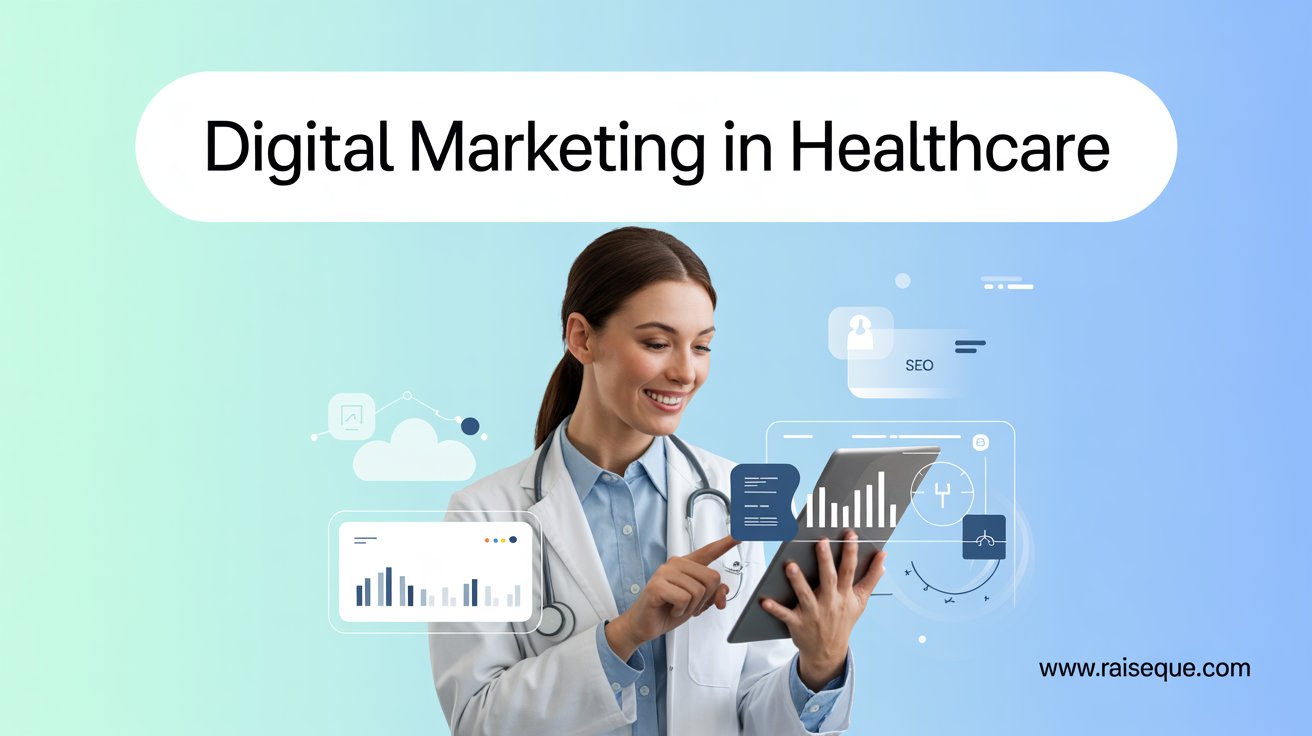
Healthcare communication has changed dramatically in the digital era. Today, patients often search online before choosing a doctor or clinic. Because of this shift, social media marketing for doctors has become an important tool for patient education, trust building, and online visibility.
Social media marketing for doctors helps medical professionals connect with patients and build trust online. When used responsibly, it supports patient awareness and strengthens the credibility of medical practices.
In real-world healthcare practices, many clinics struggle with online visibility simply because they do not use digital platforms effectively. A structured and ethical approach to social media can help doctors build a strong and trustworthy digital presence.
Read More: Social Media for Healthcare
Why Social Media Marketing for Doctors Is Important
Patients today prefer to learn about health conditions, treatments, and preventive care online. Social media provides a platform where doctors can share reliable information and counter misinformation.
Social media marketing for doctors helps in several ways:
- Educating patients about medical conditions
- Sharing preventive health tips
- Building trust through professional visibility
- Improving awareness about treatments and procedures
- Strengthening the online reputation of clinics
Based on industry experience, doctors who consistently share educational content often gain greater patient trust and visibility in their communities.
How Patients Use Social Media When Choosing Doctors
Patients often explore multiple sources before booking appointments. Social media platforms play a role in this decision-making process.
Common ways patients use social media in healthcare include:
- Learning about symptoms and treatment options
- Understanding a doctor’s expertise
- Watching educational medical videos
- Reading health tips and preventive advice
- Following doctors who share trustworthy content
In many cases, social media becomes the first point of interaction between a patient and a healthcare professional.
Not all platforms serve the same purpose. Each social media platform supports a different type of healthcare communication.
Instagram for Patient Education
Instagram is widely used for visual and short-form content.
Doctors often use Instagram for:
- Short educational reels
- Preventive health tips
- Awareness campaigns
- Doctor introduction videos
- Infographics explaining medical topics
Patients prefer content that is simple and easy to understand, which makes Instagram an effective platform for healthcare communication.
Facebook for Community Engagement
Facebook remains a strong platform for clinics that serve local populations.
Doctors and clinics use Facebook for:
- Clinic updates and announcements
- Health awareness posts
- Community interaction
- Patient education content
- Health campaign promotions
For local clinics, Facebook works well alongside Google Business Profile activity.
YouTube for Medical Education
YouTube supports long-form video content, which makes it ideal for medical explanations.
Doctors commonly use YouTube to share:
- Procedure explanations
- Condition-specific education
- Pre-treatment and post-treatment guidance
- Medical myth-busting videos
Hospitals and specialists benefit from YouTube because it allows doctors to explain complex medical topics in detail.
LinkedIn for Professional Authority
LinkedIn is a professional networking platform that supports medical credibility and professional branding.
Doctors and hospitals often use LinkedIn for:
- Professional achievements
- Medical thought leadership
- Institutional updates
- Healthcare industry discussions
Although LinkedIn is not primarily patient-focused, it helps strengthen professional reputation and authority.
Read More: Social Media Platforms for Healthcare
How to Start Building Your Social Media Presence
Starting Social Media Marketing for Doctors requires a clear strategy and consistent effort.
Follow these steps:
- Identify your target audience (age group, location, healthcare needs).
- Create professional profiles on major social media platforms.
- Use your clinic name, logo, contact details, and services in your profile.
- Post educational content like health tips and preventive care advice.
- Share clinic updates, events, and awareness campaigns.
- Introduce doctors and clinic staff to build trust with patients.
- Post patient success stories (while maintaining privacy rules).
- Maintain a consistent posting schedule to stay visible.
- Respond to comments, messages, and patient queries quickly.
- Use images, reels, and short videos to increase engagement.
A strong and active presence improves the effectiveness of Social Media Marketing for Doctors.
What Type of Content Works Best for Doctors
The most effective healthcare social media content focuses on education rather than promotion.
Some examples include:
- Preventive health tips
- Myth-busting medical information
- Awareness campaigns
- Patient guidance content
- Doctor introduction videos
- Public health updates
Most clinics face the challenge of deciding what to post. A simple rule is to focus on helpful and informative content that answers common patient questions.
Ethical Guidelines for Social Media Marketing in Healthcare
Ethical responsibility is essential when doctors communicate through social media. Healthcare information must be shared carefully to protect patients and maintain professional standards.
Doctors should follow these principles:
- Avoid diagnosing patients online
- Protect patient confidentiality
- Avoid exaggerated medical claims
- Use disclaimers where appropriate
- Share evidence-based medical information
Ethical communication builds long-term patient trust and ensures compliance with healthcare guidelines.
Common Challenges Doctors Face in Social Media Marketing
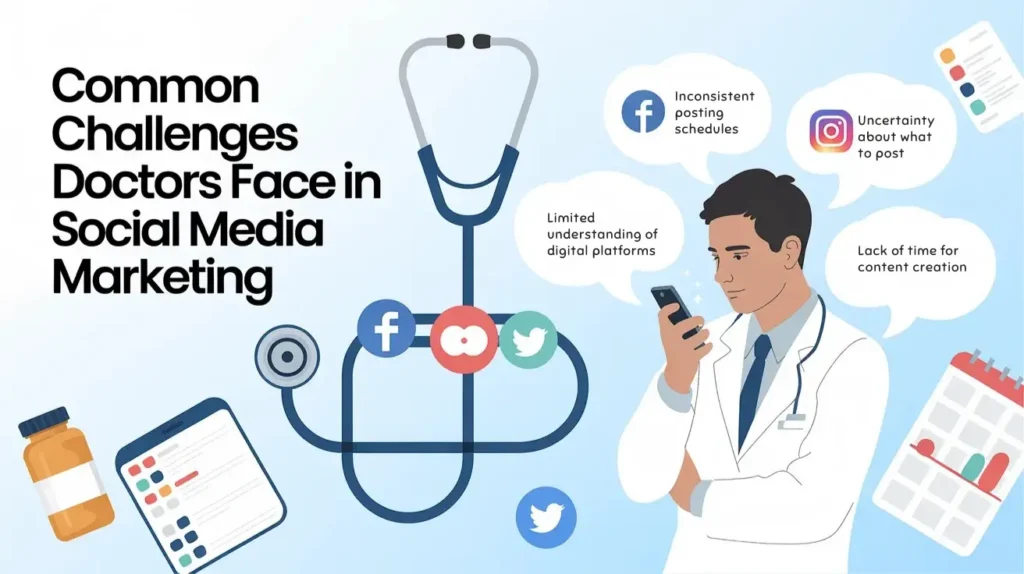
Despite the benefits, many doctors struggle with social media marketing due to several challenges.
Common issues include:
- Lack of time for content creation
- Uncertainty about what to post
- Concerns about ethical communication
- Inconsistent posting schedules
- Limited understanding of digital platforms
Based on industry experience, the biggest issue is not the lack of effort but the absence of a structured strategy.
How Doctors Can Build a Simple Social Media Strategy
A clear strategy helps doctors use social media effectively without overwhelming their schedules.
A simple approach includes:
- Selecting 1–2 relevant platforms
- Posting educational content regularly
- Sharing preventive health tips
- Creating short videos explaining common conditions
- Maintaining ethical communication standards
Consistency is more important than posting frequently across many platforms.
The Future of Social Media in Healthcare
Healthcare communication is increasingly moving toward digital channels. Social media will continue to play an important role in patient education and healthcare awareness.
Future healthcare social media trends may include:
- Increased use of video-based education
- Greater emphasis on preventive healthcare content
- AI-supported patient engagement tools
- Improved digital communication between doctors and patients
Doctors who adapt to these changes can strengthen their digital presence while continuing to provide trustworthy medical information.
Conclusion
Social media marketing for doctors is not about promotion; it is about education, communication, and trust building. By sharing accurate medical information and engaging responsibly with patients online, doctors can expand healthcare awareness and strengthen their professional credibility.
Social media marketing for doctors is one of the most powerful ways to build trust, improve visibility, and attract new patients online.
Related Blog:
Social Media Platforms for Healthcare |Social Media Platforms for Healthcare| Instagram Marketing for Doctors| Facebook Marketing for Clinics| Social Media Marketing Mistakes| LinkedIn Branding for Doctors| Facebook Ads for Clinics| YouTube Marketing for Healthcare