Instagram has become one of the most powerful platforms for doctors to connect with patients, build trust, and educate the public.
With the rise of short-form video and visual content, Instagram marketing for doctors is no longer optional—it is essential for visibility and patient engagement.
In real-world healthcare practices, patients often check a doctor’s online presence before booking an appointment.
A strong Instagram strategy helps clinics showcase expertise, simplify medical information, and build credibility.
Why Instagram for Doctors?
Instagram has become one of the most effective platforms for doctors to connect with modern patients.
With increasing digital awareness, patients are no longer relying only on offline referrals—they actively search, evaluate, and trust doctors based on their online presence.
Why Instagram works well for doctors:
- Visual communication simplifies healthcare
Medical topics can be complex, but Instagram lets doctors explain them with visuals, reels, and infographics in a simple, engaging way. - Patients prefer short and quick information
Most users consume content in short formats. Instagram reels and posts make it easier to deliver quick health tips and awareness content. - Builds trust before consultation
When patients regularly see a doctor sharing helpful and consistent content, it builds familiarity and credibility even before the first visit. - High engagement compared to other platforms
Instagram offers better interaction through likes, comments, shares, and DMs, helping doctors directly engage with their audience. - Supports awareness and preventive healthcare
Doctors can educate a large audience about preventive care, symptoms, and early diagnosis, which improves overall patient awareness.

In real-world healthcare practices, clinics that actively use Instagram often see better patient trust and engagement compared to those with no digital presence.

It is not just a marketing tool—it is a communication and education platform for modern healthcare.This is why Instagram Marketing for Doctors has become an essential part of modern healthcare communication.

Choosing the right platforms is critical — here’s a complete guide on Social Media Platforms for Healthcare
Instagram Reels for Doctors: Best Practices
Reels are the most powerful growth tool on Instagram today. They allow doctors to reach a wider audience organically.
Best practices for reels:
- Keep videos short (15–45 seconds)
- Focus on one clear topic per reel
- Use simple language
- Add captions for clarity
- Use trending audio carefully
Content ideas:
- Quick health tips
- Myth vs fact videos
- “Do’s and Don’ts”
- Common symptoms explained
- Preventive care tips
Based on industry experience, reels that educate in a simple format perform significantly better than promotional content.
Patient Engagement Strategies on Instagram
Engagement is not just about likes—it’s about building relationships.

Effective strategies:
- Respond to comments and messages
- Use polls and Q&A in stories
- Ask simple health-related questions
- Share relatable patient scenarios
- Encourage interaction through captions
Patients are more likely to trust doctors who communicate actively and clearly. Clinics that invest in Instagram Marketing for Doctors often see better visibility, trust, and patient interaction over time.
Medical Awareness Content That Works
Educational content is the backbone of healthcare Instagram marketing.
High-performing content types:
- Preventive health tips
- Awareness campaigns (e.g., diabetes, heart health)
- Symptom education
- Lifestyle advice
- Seasonal health alerts
Instead of focusing on promotions, clinics should focus on value-driven content.
Doctor Branding on Instagram
Instagram helps humanize doctors, which builds trust.
Ways to build a strong personal brand:
- Share doctor introduction videos
- Post behind-the-scenes clinic moments
- Highlight qualifications and expertise
- Share patient success stories (with consent)
- Maintain consistent visual identity
Patients connect more with people than institutions.
If you’re a doctor looking to grow your practice, read our detailed guide on Social Media Marketing for Doctors
Common Mistakes in Instagram Marketing for Doctors
Many clinics fail to get results due to common mistakes.
Avoid these:
- Posting only promotional content
- Inconsistent posting
- Ignoring comments and messages
- Using complex medical language
- Not using video content

Most clinics struggle due to a lack of strategy, not effort. A strong Instagram Marketing for Doctors approach focuses on simplifying medical information and building consistent patient engagement.
Role of Healthcare Social Media Marketing Services
Managing Instagram effectively requires time, consistency, and strategy.
Professional healthcare social media marketing services help clinics:
- Create structured content plans
- Maintain consistency
- Ensure ethical communication
- Optimize engagement
- Align content with patient behavior
This is especially useful for busy doctors who cannot manage social media daily.
Ethical Guidelines for Instagram Use in Healthcare
Ethics is critical in healthcare communication.
Doctors should:
- Avoid giving direct medical advice online
- Protect patient privacy
- Avoid misleading claims
- Use disclaimers where needed
Ethical communication builds long-term trust and credibility.
How Instagram Fits into Healthcare Strategy
Instagram works best when integrated into a broader strategy.
Platform roles:
- Instagram → Awareness and engagement
- YouTube → Detailed education
- Facebook → Community communication
A structured approach improves overall results.
FAQ Section
1. Is Instagram useful for doctors?
Yes, Instagram helps doctors build trust, educate patients, and increase visibility through visual and video content.
2. What type of content works best for doctors on Instagram?
Educational content, such as reels, health tips, and awareness posts, performs best.
3. How often should doctors post on Instagram?
Doctors should post at least 3–4 times per week for consistent engagement and growth.
4. Can doctors get patients through Instagram?
Yes, consistent and informative content can attract patients and build credibility over time.
5. Are Instagram reels important for doctors?
Reels are highly effective for reach and engagement, especially for short educational content.
Conclusion
Instagram is no longer just a social platform—it has become a powerful tool for doctors to educate, engage, and build lasting patient relationships.
From reels and awareness posts to consistent engagement, Instagram marketing for doctors helps simplify medical communication and strengthen trust in a highly competitive digital space.
In real-world healthcare scenarios, patients often choose doctors who are visible, informative, and approachable online.
By focusing on educational content, maintaining ethical communication, and staying consistent, doctors can turn Instagram into a long-term growth channel rather than just a promotional platform.
For clinics that lack time or strategy, professional healthcare social media marketing services can provide the structure and consistency needed to achieve meaningful results.
When used correctly, Instagram not only improves visibility but also supports patient awareness and overall healthcare communication.
Overall, Instagram Marketing for Doctors plays a crucial role in modern patient communication and digital growth.
Related Blogs:
Social Media for Healthcare | Social Media Platforms for Healthcare | Social Media Marketing for Doctors| Facebook Marketing for Clinics| Social Media Marketing Mistakes| LinkedIn Branding for Doctors| Facebook Ads for Clinics| YouTube Marketing for Healthcare
Most clinics struggle with inconsistent patient flow because they rely on random marketing instead of a structured system. This guide explains 7 proven patient acquisition strategies that help clinics generate 100+ patients every month using ads, SEO, and conversion-focused systems.
clinics struggle with inconsistent patient flow. Some days are fully booked, while others are empty. This happens because there is no structured system in place.
A patient acquisition system solves this problem by creating a predictable flow of new patient inquiries and converting them into confirmed appointments.
If you want to understand the full growth roadmap, read our detailed guide on clinic marketing strategy for patient growth.
What is a Patient Acquisition System?
A patient acquisition system is a step-by-step marketing process that helps clinics attract potential patients, capture their details, and convert them into booked appointments using digital channels.
It combines traffic generation, lead capture, and conversion into one structured system.
Why Most Clinics Fail to Get Consistent Patients
Most clinics depend on:
- Word-of-mouth referrals
- Random social media posting
- Unplanned marketing
This leads to:
- Irregular patient flow
- Low appointment bookings
- Revenue instability
Without a system, growth becomes unpredictable.
How a Patient Acquisition System Works
1. Traffic Generation
The first step is bringing potential patients to your clinic online.
This can be done through:
- Google Ads (instant visibility)
- Local SEO (Google Maps ranking)
- Social media advertising
This ensures a steady flow of interested users.
2. Lead Capture
Once users visit, they should not be sent to a homepage.
Instead, use a landing page designed to:
- Highlight your service clearly
- Build trust
- Capture patient details
This increases the chances of conversion.
3. Conversion System
Leads are converted into patients through:
- Fast response (calls or WhatsApp)
- Appointment booking system
- Follow-up process
Speed is critical. The faster you respond, the higher the conversion.
What Makes a High-Performing Patient Acquisition System
A strong system includes:
- Clear service positioning
- Targeted audience
- High-converting landing page
- Fast follow-up mechanism
All components must work together.
Best Channels for Patient Acquisition
- Google Search Ads (high intent traffic)
- Google Maps SEO (local visibility)
- Landing pages (conversion)
- Retargeting ads (follow-up traffic)
These channels create both short-term and long-term growth.
Common Mistakes Clinics Make
- Sending traffic to homepage instead of landing page
- Not responding to leads quickly
- No clear marketing strategy
- Running ads without proper funnel
These mistakes reduce patient conversions.
How Raiseque Builds Patient Acquisition Systems
Raiseque helps clinics and hospitals grow by building structured systems focused on:
- Consistent lead generation
- Conversion optimization
- Scalable patient growth
The goal is predictable and measurable results.
Final Summary
A patient acquisition system helps clinics generate consistent leads and convert them into patients using a structured and repeatable marketing process.
Frequently Asked Questions (FAQs)
What is a patient acquisition system?
A patient acquisition system is a structured process that helps clinics attract potential patients and convert them into appointments using digital marketing strategies.
How can clinics get more patients consistently?
Clinics can get more patients by using Google Ads, local SEO, and conversion-focused landing pages combined with a fast follow-up system.
How can clinics get more patients consistently?
Clinics can get more patients by using Google Ads, local SEO, and conversion-focused landing pages combined with a fast follow-up system.
What is the best way to generate patient leads?
The best way is to run targeted ads and send traffic to a landing page that collects patient details and encourages appointment booking.
Why is my clinic not getting leads?
Common reasons include poor targeting, weak landing pages, lack of marketing strategy, and slow response time.
Do clinics need landing pages?
Yes, landing pages improve conversion rates by focusing on a single service and guiding users to take action.
How fast should clinics respond to leads?
Clinics should respond within 1–5 minutes to maximize conversion chances.
What platforms work best for patient acquisition?
Google Ads, Google Maps SEO, and retargeting ads are highly effective channels.
Is SEO important for clinics?
Yes, SEO helps clinics gain long-term visibility and consistent patient flow.
How does a marketing system improve clinic growth?
A structured system ensures consistent lead generation, better conversion rates, and predictable revenue.
How does Raiseque help clinics grow?
Raiseque builds complete patient acquisition systems that generate leads and convert them into patients consistent.
Healthcare SEO improves patient acquisition by increasing search engine rankings, driving targeted website traffic, and generating more appointment bookings. By optimizing for local searches and patient-focused queries, it enhances online visibility, builds trust, and delivers a high return on investment compared to paid advertising.
Think about how people find doctors today.
They don’t flip through directories anymore. They open Google and search things like “best dentist near me” or “child specialist in my area.”
If your clinic or hospital doesn’t show up in those results, you’re practically invisible.
That’s exactly where the benefits of healthcare SEO come in. SEO (Search Engine Optimization) helps your practice appear in front of the right patients at the exact moment they’re searching for help.
And the best part? These are not random visitors. These are people already looking for treatment, consultation, or medical advice.
In this blog, let’s break down—clearly and practically—how healthcare SEO helps you grow your practice, attract patients, and build long-term trust online.
In Simple Terms
Healthcare SEO helps medical practices grow by improving online visibility, attracting relevant patients, and increasing appointment bookings. It is a long-term, cost-effective strategy that builds trust and authority in the healthcare industry.
Key Benefits of Healthcare SEO

Healthcare SEO offers multiple advantages that help clinics and hospitals grow in a competitive digital space. It not only improves online visibility but also attracts the right patients and builds long-term trust. Here are the key benefits of healthcare SEO:
Key Benefits of Healthcare SEO
1. Increased Patient Acquisition
Healthcare SEO helps clinics rank higher on search engines, making it easier for patients to find and book appointments.
2. Improved Local Visibility
Optimizing for local SEO ensures your clinic appears in “near me” searches and Google Maps results.
3. Builds Trust and Credibility
Top-ranking healthcare websites are perceived as more trustworthy by patients.
4. Cost-Effective Marketing Strategy
Unlike paid ads, SEO provides long-term results without continuous spending.
5. Targeted Patient Traffic
SEO attracts users actively searching for specific treatments or services.
6. Better Patient Engagement
Optimized websites provide a smooth experience, increasing conversions and inquiries.
Want to know how visible your clinic really is on Google? Get a free healthcare SEO audit from Us.
1. More Visibility = More Patients

One of the most impactful benefits of healthcare SEO is increased visibility, which directly leads to more patient inquiries and appointments. Today, most patients begin their journey with a Google search, looking for symptoms, treatments, or nearby clinics. If your website is not ranking on the first page, you are likely missing valuable opportunities.
Healthcare SEO helps your clinic appear in front of the right audience at the right time. By optimizing your website for relevant keywords, you can rank higher in search results and attract patients who are actively seeking medical care. This visibility not only increases traffic but also improves conversions.
How Visibility Drives Patient Growth
- Higher rankings increase online exposure
- More visibility leads to more website visits
- Increased visits generate patient inquiries
- Better visibility builds trust and credibility
Importance of Local Visibility
- Appears in Google Maps and local results
- Targets “near me” patient searches
- Drives more walk-ins and calls
In simple terms, better visibility brings more qualified traffic—and more patients.
2. Local SEO and Patient Acquisition

One of the most valuable benefits of healthcare SEO is its ability to attract nearby patients through local search optimization. Most patients prefer healthcare providers close to their location, especially when searching for immediate care or regular consultations. If your clinic is not visible in local search results, you are missing highly relevant patient opportunities.
Local SEO helps your clinic appear in searches like “doctor near me” or “clinic in [city].” By optimizing your Google Business Profile, location-based keywords, and online listings, you ensure your practice is easily discoverable by people in your area. This not only increases visibility but also improves trust and accessibility.
How Local SEO Drives Patient Acquisition
- Ranks your clinic in local search results
- Increases visibility for nearby patients
- Generates more calls and appointment bookings
- Improves credibility through reviews and ratings
Importance of Local Presence
- Appears in Google Maps and local listings
- Targets high-intent “near me” searches
- Drives more walk-ins and direct inquiries
In simple terms, local SEO connects your clinic with patients who are ready to visit, making it a powerful growth driver.
3. Enhanced Trust and Credibility

Another key benefits of healthcare SEO is its ability to build trust and credibility among potential patients. In healthcare, trust plays a critical role in decision-making. Patients are more likely to choose a clinic or hospital that appears reliable, authoritative, and visible on search engines.
When your website ranks higher on Google, patients naturally perceive your practice as more trustworthy. SEO helps you achieve this by improving your content quality, showcasing expertise, and maintaining a strong online presence. Informative blogs, service pages, and accurate information all contribute to building confidence before a patient even visits your clinic.
How SEO Builds Trust
- Higher rankings create a sense of authority
- Quality content showcases medical expertise
- Consistent online presence increases reliability
- Positive reviews improve patient confidence
Importance of Credibility in Healthcare
- Patients prefer trusted and well-reviewed clinics
- Strong online reputation influences decisions
- Accurate information builds patient confidence
In simple terms, SEO not only helps patients find you but also gives them the confidence to choose your services.
4. Cost-Effective, Sustainable Growth

Unlike paid advertising, which stops delivering results the moment your budget runs out, SEO continues to generate traffic and patient inquiries over time. This makes it a powerful long-term growth strategy for clinics and hospitals.
As part of effective healthcare digital marketing strategies, SEO focuses on building a strong online presence through optimized content, targeted keywords, and a well-structured website. Once your pages start ranking on Google, they keep attracting patients without requiring constant spending.
How SEO Supports Sustainable Growth
- Generates long-term organic traffic
- Reduces dependency on paid advertising
- Delivers consistent results over time
- Improves overall return on investment (ROI)
Why SEO is Cost-Effective
- You invest once, benefit long-term
- Rankings continue bringing traffic
- No cost per click
Over time, SEO gives a much better ROI compared to ads.
That’s why smart clinics invest in healthcare digital marketing strategies that include SEO.
5. Improved User Experience (UX)

A well-optimized website does more than just rank on Google—it creates a smooth and satisfying experience for patients. This is one of the often-overlooked benefits of healthcare SEO, as it focuses on making your website faster, easier to use, and more accessible across devices.
When patients visit your website, they expect quick loading, clear information, and simple navigation. If your site is slow or confusing, they are likely to leave and choose another clinic. SEO helps eliminate these issues by improving technical performance and usability.
How SEO Improves User Experience
- Enhances website speed and performance
- Makes the site mobile-friendly
- Improves navigation and structure
- Helps patients find information quickly
Why UX Matters for Patient Conversion
- Better experience keeps users engaged
- Reduces bounce rates
- Increases chances of appointment bookings
Using Google Maps ranking for clinics and hospitals techniques can directly increase patient visits.
In simple terms, a better user experience not only improves rankings but also turns visitors into actual patients.
Key Components of Healthcare SEO

Healthcare SEO is built on several core components that work together to improve visibility, search rankings, and patient acquisition. Each element plays a specific role in ensuring that healthcare websites are discoverable, user-friendly, and aligned with search engine requirements.
The following are the key components of healthcare SEO that contribute to better visibility, patient reach, and overall digital performance:
Local SEO: Focuses on optimizing your Google Business Profile and local listings to appear in “near me” searches and map results.
On-page SEO: Involves optimizing keywords, headings, meta tags, and content to match patient search intent.
Technical SEO: Ensures the website is fast, mobile-friendly, secure, and easy for search engines to crawl.
Content Marketing: Includes blogs, FAQs, and educational resources that inform patients and build topical authority.
Schema Markup: Uses structured data to help search engines understand your content and display rich results.
Final Thoughts
The benefits of healthcare SEO go far beyond just improving search rankings. It plays a crucial role in helping your clinic get discovered, build trust, and attract patients who are actively searching for your services.
When implemented effectively, SEO builds a strong digital foundation that consistently drives high-intent traffic while supporting long-term, sustainable growth. It helps position your clinic as a reliable and authoritative choice in an increasingly competitive healthcare space.
In today’s digital-first world, patients rely heavily on Google to make healthcare decisions. This makes SEO not just important, but essential for clinics and hospitals that want to grow and stay visible.
If your clinic is not showing up online, you are not just missing traffic—you are losing real patients every single day. At Raiseque, we focus on helping healthcare providers turn their online presence into a consistent and scalable patient acquisition channel.
FAQs
Why is healthcare SEO important?
Healthcare SEO is important because it helps your clinic or hospital appear when patients search online for medical services. Today, most patients use Google to find doctors, treatments, and nearby clinics. If your website is not visible in search results, you are missing potential patients. SEO improves your rankings, builds trust, and brings high-intent traffic to your website. It also helps establish your authority through informative content and strong local presence. In a competitive healthcare market, SEO ensures that your services reach the right audience at the right time, leading to consistent patient growth.
How long does SEO take for clinics?
SEO is a long-term strategy, and it typically takes around 3 to 6 months to see noticeable results for clinics. However, the exact timeline depends on factors like competition, website quality, and how well the SEO strategy is implemented. In the beginning, improvements such as better indexing and slight ranking boosts can be seen within a few weeks. Over time, as content grows and authority builds, your website starts ranking higher and attracting more traffic. While SEO requires patience, the results are sustainable and continue to bring patients even without ongoing advertising costs.
Is SEO better than ads for healthcare?
SEO and paid ads both have their advantages, but SEO is better for long-term growth. Paid ads provide immediate visibility and quick results, but they stop working once you stop spending money. SEO, on the other hand, builds organic visibility over time and continues to bring traffic without ongoing costs. For healthcare providers, SEO also builds trust, as patients often trust organic results more than ads. Ideally, a combination of both works best, but SEO ensures a steady flow of patients and better return on investment in the long run.
What is local SEO in healthcare?
Local SEO in healthcare focuses on optimizing your online presence to attract patients from your nearby area. It helps your clinic appear in location-based searches like “doctor near me” or “clinic in [city].” This includes optimizing your Google Business Profile, using local keywords, and managing online reviews. Local SEO is especially important because most patients prefer healthcare providers close to their location. By improving your visibility in Google Maps and local search results, local SEO drives more calls, inquiries, and walk-in patients, making it a key part of any healthcare marketing strategy.
Can small clinics benefit from SEO?
Yes, small clinics can benefit greatly from SEO, often even more than larger hospitals in local areas. SEO allows small clinics to target specific locations and services, helping them appear in relevant searches. With the right strategy, a small clinic can rank higher for local keywords and attract nearby patients without spending heavily on ads. It also helps build trust through reviews, content, and online presence. Over time, SEO enables small clinics to compete effectively, grow their patient base, and establish a strong reputation within their community.
Let’s Talk About What Actually Drives Growth
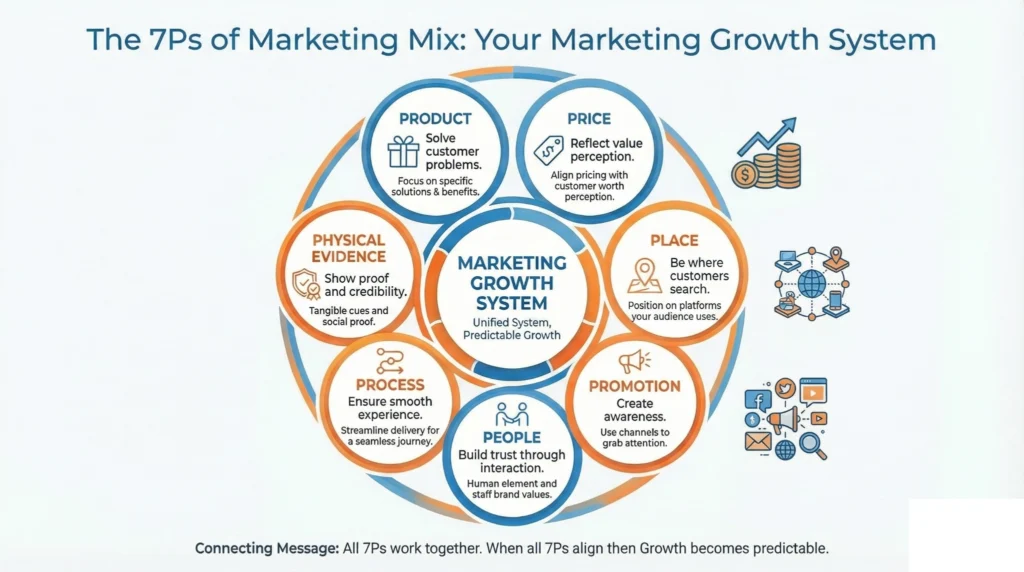
This guide breaks down the 7Ps of marketing mix in a simple, practical way. Instead of theory, you’ll understand how each element actually works in real business situations.
Understanding The 7Ps of Marketing can transform your approach to growth.
If you’ve been running a business for a while, you’ve probably noticed something:
You can run ads.
You can post on social media.
You can even rank on Google.
But still… growth feels inconsistent.
Some months are great.
Some months are slow.
What you need to know about The 7Ps of Marketing is that implementation requires careful consideration of each aspect.
Incorporating The 7Ps of Marketing into your strategy will enhance your overall effectiveness.
And you keep thinking:
“What am I missing?”
Here’s the answer — and it’s not another “hack” or tool.
You’re missing a system.
The framework of The 7Ps of Marketing includes various key components that drive business success.
That system is the 7Ps of Marketing Mix.
This isn’t theory. This is the framework behind:
- Successful brands
- Scalable agencies
- High-converting businesses
Once you understand it properly, everything in the definition of marketing starts making sense.
Marketing today is not just about running ads or posting on social media. If that worked consistently, every business would be growing fast. But that’s not the case.
Some businesses grow steadily, while others struggle even after spending money on marketing. The difference is not effort—it’s structure.
This is where the 7Ps of marketing mix come in. Think of it as a complete system that guides how your business attracts, converts, and retains customers.
In this blog, instead of confusing theory, we’ll break it down in a way that actually makes sense and is easy to apply.
What is The 7Ps of Marketing Mix?
Let’s explore the significance of The 7Ps of Marketing in today’s competitive landscape.
Here, you’ll understand how each “P” plays a role in shaping customer decisions and why combining all seven creates a complete and effective marketing approach.
By understanding The 7Ps of Marketing, businesses can develop stronger marketing strategies.
The 7Ps of Marketing guide marketers through essential decision-making processes.
The 7Ps of Marketing Mix is a framework that helps businesses design and execute effective marketing strategies.
It includes:
Understanding how to implement The 7Ps of Marketing effectively can lead to significant advantages.
- Product
- Price
- Place
- Promotion
- People
- Process
- Physical Evidence
Think of it like this:
👉 These are the 7 decision areas that directly affect whether a customer:
- Notices you
- Trusts you
- Buys from you
- Comes back again
While many strategies exist, none are as comprehensive as The 7Ps of Marketing.
The 7Ps of marketing mix is a framework that helps businesses understand what influences customer decisions, based on the marketing mix concept explained Instead of focusing only on promotion or advertising, it looks at the entire system behind how a business operates and presents itself.
These seven elements—Product, Price, Place, Promotion, People, Process, and Physical Evidence—work together to shape how customers perceive your brand. When all seven are aligned, marketing becomes more effective and predictable. When even one is weak, it affects the overall results. This is why businesses that understand the 7Ps don’t just market better—they build stronger, more sustainable growth.
Why The 7Ps Matter More in 2026 (Than Ever Before)
With increasing competition and digital transformation, businesses must focus on customer experience, trust, and consistency—areas where the 7Ps framework provides clarity.
Let’s be practical.
Today’s customer:
- Googles everything
- Reads reviews before buying
- Compares 5 options instantly
- Trusts experience over ads
So if your marketing only focuses on promotion, you’ll struggle.
Because now:
Marketing = Experience + Trust + System
That’s exactly what the 7Ps cover.
If you compare today’s market with even five years ago, the difference is huge. Customers are smarter, more informed, and have more options than ever before. Before buying anything, they check reviews, compare alternatives, and look for proof. This means marketing is no longer just about grabbing attention—it’s about building trust and delivering a smooth experience.
The 7Ps framework becomes important here because it doesn’t just focus on visibility. It focuses on the complete journey. In 2026, businesses that win are not the ones who shout the loudest, but the ones who deliver the best overall experience.
The Evolution: From 4Ps to 7Ps
This section highlights how marketing has evolved from product-focused strategies to experience-driven approaches, making the additional 3Ps essential.
Originally, marketing had only 4Ps:
- Product
- Price
- Place
- Promotion
That worked when businesses sold physical products only.
But now:
- Services dominate
- Digital experiences matter
- Customer journey is complex
So 3 more Ps were added:
Even when pressure mounts, The 7Ps of Marketing provide a framework for steady growth.
- People
- Process
- Physical Evidence
👉 These 3 are what separate average businesses from premium brands
Earlier, businesses relied on the 4Ps of marketing: Product, Price, Place, and Promotion. This worked well when most businesses were selling physical products and competition was limited. But as markets evolved, especially with the rise of service industries and digital platforms, customer expectations changed. People started valuing experience, convenience, and trust more than just the product itself.
That’s when three more elements—People, Process, and Physical Evidence—were added. These additions made the model more practical for modern businesses. Today, ignoring these three can seriously limit your growth, especially if you are in a service-based or digital business.
Let’s Break It Down — The 7Ps in Real Life
1. Product — The Core of Everything7
Let’s start with a simple truth:
👉 If your product is weak, marketing cannot fix it.
It can bring attention.
But it cannot create satisfaction.
When we talk about product, most people think about features or what they are selling. But in reality, a product is much more than that. It includes the entire experience a customer gets from using your service or buying your offering.
A strong product solves a real problem and delivers clear value. If your product is not aligned with customer needs, no amount of marketing can sustain long-term growth. This is why successful businesses focus deeply on understanding their audience and continuously improving their product to meet expectations.
What “Product” Actually Means
It’s not just what you sell.
It includes:
- Features
- Quality
- Design
- Results
- Customer experience
Real Example:
- A hospital is not selling treatment
→ It’s selling trust, safety, and recovery - A marketing agency is not selling SEO
→ It’s selling leads and business growth
Key Insight:
Customers don’t buy products.
They buy:
👉 Solutions to their problems
By embracing The 7Ps of Marketing, you align various elements of your business for success.
Questions You Should Ask:
- What problem am I solving?
- Why should someone choose me?
- What makes my offer different?
A product is not just a physical item or a service—it’s the outcome people expect. For example, when someone buys a fitness program, they are not buying exercises; they are buying results like weight loss or better health. Similarly, when someone hires a marketing agency, they are not buying services like SEO or ads—they are buying growth. Understanding this shift is important because it helps you position your offering correctly.
When you focus on outcomes instead of features, your marketing becomes clearer and more effective.
2. Price — More Than Just a Number
Pricing is one of the most misunderstood parts of marketing.
Most people think:
👉 “Lower price = more sales”
But reality is different.
Price = Perception
- High price → Premium brand
- Low price → Budget option
Example:
Two clinics:
- One charges ₹300
- Another charges ₹1500
Still, the ₹1500 one is fully booked.
Why?
👉 Trust + positioning + perceived value
Common Pricing Strategies:
- Premium pricing (high quality perception)
- Penetration pricing (low entry price)
- Subscription pricing (monthly recurring)
- Freemium model (free + paid upgrades)
Key Insight:
👉 People don’t buy the cheapest.
👉 They buy what feels worth it
Pricing is not just about affordability. It plays a major role in how customers perceive your brand. Many businesses try to compete by lowering prices, thinking it will attract more customers.
But this often leads to reduced margins and weaker brand positioning. Price should reflect the value you provide. When customers see your offering as valuable, they are willing to pay more.
This is why some brands charge premium prices and still have high demand. Pricing is not just a financial decision—it is a strategic one, and understanding pricing strategies in marketing can help you position your brand effectively.
3. Place — Visibility Decides Everything
Place is about where and how customers access your product or service. In today’s digital world, this goes far beyond physical locations.
It includes your website, search engine presence, social media platforms, and online marketplaces. If your business is not visible where your customers are searching, you are missing opportunities. Even a great product cannot succeed if it is not easily accessible.
That’s why understanding your customer’s behavior and choosing the right channels is critical.
You might have the best service.
But if people can’t find you…
👉 You don’t exist.
What “Place” Means Today:
Today, place is largely digital. Customers search on Google, browse social media, and rely on online reviews before making decisions
- Google search
- Website
- Social media
- Marketplaces
- Physical location
Real Example:
- A clinic must appear on “doctor near me” searches
- A business must rank on Google + Maps
Biggest Mistake:
Businesses build services…
But ignore visibility.
Key Insight:
👉 Marketing starts where customers search.
Visibility directly impacts growth. If customers cannot find you easily, they will choose competitors who are more accessible. Ensuring strong presence across relevant platforms is one of the most important steps in building a successful marketing strategy.
4. Promotion — Getting Attention the Right Way
Promotion is how you communicate your value to your audience. A strong digital marketing strategy helps you attract attention and generate consistent leads. It includes all the activities you use to attract attention and generate interest.
This can be through SEO, social media, advertising, or content marketing. However, promotion is only effective when it is supported by a strong foundation. If your product, pricing, or process is weak, promotion will not deliver the desired results. It will only bring traffic without conversions.
This is what most people think marketing is. But it’s only one piece.
Promotion Includes:
- SEO
- Social media
- Google Ads
- Content marketing
- Email campaigns
Reality Check:
Running ads without system = wasted budget.
Example:
If:
- Your website is weak
- No reviews
- No clear offer
Then even the best ads won’t convert.
Key Insight:
👉 Promotion amplifies what already exists.
If your base is strong → results scale
If your base is weak → money burns
Promotion amplifies what already exists. If your business is strong internally, promotion will accelerate growth. If not, it will expose weaknesses. That’s why it’s important to fix foundational issues before investing heavily in promotional activities.
5. People — The Human Factor
People play a crucial role in shaping customer experience. No matter how good your product or marketing is, the way your team interacts with customers can make or break your business. From the first point of contact to after-sales support, every interaction matters. Customers remember how they are treated more than what they are sold.
Let’s be honest.
Most businesses don’t lose customers because of product.
They lose them because of people.
People Includes:
- Staff
- Sales team
- Support team
- Founders
This includes everyone involved in your business—sales representatives, support staff, and even leadership. Each person contributes to the overall perception of your brand. Proper training, communication, and attitude are essential to ensure consistent and positive customer experiences.
Real Example:
- Slow response → lost lead
- Rude behavior → lost customer
- Poor communication → no trust
Important Truth:
👉 Customers remember experience more than price
Strong relationships build trust. When customers feel valued and respected, they are more likely to return and recommend your business. Investing in your team is one of the most effective ways to improve customer satisfaction and long-term growth.
6. Process — The Hidden Growth Lever
Process refers to the systems and steps involved in delivering your product or service. A smooth and efficient process makes it easy for customers to interact with your business. On the other hand, a complicated or slow process can drive them away. Customers prefer convenience, and businesses that provide it have a clear advantage.
Imagine this:
A customer wants to buy.
But:
- Website is confusing
- Booking takes time
- No follow-up
Ultimately, The 7Ps of Marketing serve as a cornerstone for sustainable growth.
What happens?
👉 They leave.
Process = Customer Journey
It includes:
- Discovery
- Inquiry
- Purchase
- Delivery
- Follow-up
Every stage—from discovery to purchase to follow-up—is part of the process. Mapping this journey helps identify gaps and improve efficiency. Automation tools and clear workflows can significantly enhance the customer experience.
In conclusion, mastering The 7Ps of Marketing can significantly impact your overall business strategy.
Example:
Good process:
- Click → Book → Confirm → Reminder → Service
Bad process:
- Click → Confusion → Exit
Key Insight:
👉 Smooth process = higher conversions
A well-structured process reduces friction and increases conversions. When customers can move through each step without confusion, they are more likely to complete the purchase and return in the future.
7. Physical Evidence — Trust Builder
Physical evidence provides proof of your credibility. Since services are intangible, customers look for tangible indicators before making decisions. This includes your website, reviews, testimonials, and even your physical environment.
Services are intangible.
So customers look for proof.
Physical Evidence Includes:
- Website
- Reviews
- Testimonials
- Office design
- Branding
Elements like branding, office design, and online presence all contribute to how customers perceive your business. Positive reviews and professional presentation build confidence.
Example:
- 5-star reviews → trust
- Clean clinic → confidence
- Professional branding → credibility
Key Insight:
👉 People don’t buy services
👉 They buy confidence in results
Trust is built through proof. When customers see evidence of quality and reliability, they feel more comfortable choosing your business over competitors.
How the 7Ps Work Together
Now this is where things become really important. Most people understand each “P” individually, but the real power of the 7Ps comes when they work together as a system. Think of it like this—if your promotion is strong but your product is weak, customers will come but won’t stay.
If your product is great but your process is confusing, people will drop before buying. Every “P” supports the other. Product creates value, price positions it, place ensures visibility, promotion attracts attention, people build relationships, process ensures smooth delivery, and physical evidence builds trust. When all seven are aligned, marketing becomes predictable instead of random. That’s when you start seeing consistent growth instead of ups and downs.
The 7Ps are not separate.
They are connected.
Example (Hospital):
| P7 | Example |
|---|---|
| Product | Specialized treatments |
| Price | Affordable packages |
| Place | Google + Maps |
| Promotion | SEO + Ads |
| People | Doctors + Staff |
| Process | Easy booking |
| Physical Evidence | Reviews + Clean space |
If even one fails → growth slows.
Case Study Thinking (Simple but Powerful)
Instead of just understanding theory, it helps to think in real scenarios. Imagine two businesses offering the same service. One focuses only on running ads, while the other works on improving product quality, customer experience, and trust before promoting itself.
The first business may get leads, but conversions will be low and inconsistent. The second business, however, will not only attract customers but also convert and retain them. This is the difference the 7Ps create. When you start analyzing businesses using this framework, you’ll notice patterns. Successful businesses don’t rely on one strength—they build a balanced system across all seven elements.
Let’s compare two businesses:
Business A:
- Runs ads
- Has average service
- No reviews
- Poor process
👉 Result: Low ROI
Business B:
- Strong product
- Premium pricing
- Good reviews
- Smooth process
- Then runs ads
👉 Result: High ROI + growth
Common Mistakes Businesses Make
One of the biggest mistakes businesses make is focusing only on promotion. They invest in ads, social media, or SEO but ignore other important factors like process, people, or trust signals. As a result, they get traffic but struggle with conversions.
Another common mistake is underestimating customer experience. Slow responses, complicated processes, or lack of reviews can drive potential customers away. Some businesses also price incorrectly, either too low or too high without proper positioning. These mistakes often lead to inconsistent growth. The solution is simple—look at your business as a system and fix weak areas before trying to scale.
- Only focusing on ads
- Ignoring customer experience
- Weak website/process
- No trust signals
- Poor communication
👉 This leads to inconsistent growth
How to Apply the 7Ps (Step-by-Step)
Understanding the 7Ps is one thing, but applying them is what actually drives results. The first step is to audit your current business. Look at each “P” and identify where you are strong and where you are weak. The second step is to fix the weak areas.
For example, improve your website, simplify your process, or build more trust through reviews. Only after strengthening your foundation should you focus on scaling promotion. This step-by-step approach ensures that your marketing efforts don’t go to waste. When your system is strong, every effort you put into marketing delivers better results and long-term growth becomes easier.
Step 1: Audit Your Business
Ask:
- Is my product strong?
- Is pricing aligned?
- Am I visible online?
- Are promotions effective?
- Is my team trained?
- Is my process smooth?
- Do I have trust signals?
Step 2: Fix Weak Areas First
Don’t scale if:
- Website is poor
- Reviews are missing
- Process is broken
Step 3: Scale Marketing
Now:
- Run ads
- Do SEO
- Build content
👉 Results will multiply
FAQs
What are the 7Ps of marketing?
The 7Ps of marketing are Product, Price, Place, Promotion, People, Process, and Physical Evidence. These seven elements form a complete framework that helps businesses plan and execute their marketing strategy effectively. Instead of focusing only on advertising or sales, the 7Ps cover everything that influences a customer’s decision—from what you offer to how you deliver it.
For example, your product must solve a real problem, your pricing should reflect value, and your process should make it easy for customers to buy. When all these elements work together, marketing becomes more structured and results become more consistent.
Why are the 7Ps important?
The 7Ps are important because they help businesses avoid a common mistake—focusing only on promotion while ignoring other critical areas. Many businesses invest heavily in ads or social media but fail to convert leads due to weak processes or lack of trust.
The 7Ps provide a complete system that ensures every part of your business supports growth. By improving each element, you create a better customer experience, stronger brand perception, and higher conversions. This framework also helps in identifying gaps and making better strategic decisions, which leads to more sustainable and predictable results over time.
What is the difference between 4Ps and 7Ps?
The main difference between the 4Ps and 7Ps is the addition of three new elements: People, Process, and Physical Evidence. The original 4Ps—Product, Price, Place, and Promotion—focus mainly on selling products. However, as businesses evolved, especially in service and digital industries, customer experience became more important.
The additional 3Ps address this gap. People focus on interactions, process ensures smooth delivery, and physical evidence builds trust. Together, the 7Ps provide a more complete and practical approach to marketing, especially in today’s competitive and experience-driven market.
Are 7Ps useful for digital marketing?
Yes, the 7Ps are highly useful for digital marketing. In fact, they are even more relevant today because online businesses rely heavily on customer experience and trust. For example, promotion may bring traffic through SEO or ads, but process ensures a smooth website experience, and physical evidence like reviews builds credibility.
People play a role through customer support, while pricing and product positioning affect conversions. Without aligning all these elements, digital marketing efforts may fail to deliver results. The 7Ps help create a balanced and effective strategy that improves both traffic and conversions.
Final Conclusion (Read Carefully)
Marketing is not about doing more. It’s about doing the right things together.
When your:
- Product solves real problems
- Price reflects value
- Place ensures visibility
- Promotion creates awareness
- People build relationships
- Process removes friction
- Physical evidence builds trust
👉 Growth becomes predictable.
If you look closely, marketing is not about doing more activities—it’s about doing the right things in the right way. The 7Ps of marketing mix give you a clear structure to understand what actually drives results. Instead of guessing or relying on random tactics, you can focus on improving each part of your system step by step.
When your product delivers value, your pricing reflects that value, your visibility is strong, and your customer experience is smooth, growth becomes much easier to achieve. The key is consistency. When all 7Ps are aligned, your marketing stops feeling unpredictable and starts delivering reliable, long-term results.
If you’re running a clinic and struggling with low patient flow, you’re not alone. One of the most common concerns among doctors today is simple but frustrating: why clinics are not getting patients despite providing good treatment.
The reality is, healthcare has changed. Patients no longer rely only on referrals or nearby options—they research, compare, and decide online before ever stepping into a clinic.
So even if you’re an excellent doctor, your clinic might still be invisible to potential patients.
In this blog, we’ll break down the real reasons behind low patient footfall and, more importantly, what you can do to fix it. No fluff—just practical, real-world insights that actually work.
Quick Answer Summary
Clinics are not getting patients mainly because they lack online visibility, have poorly optimized Google listings, weak branding, and no clear marketing strategy. Improving local SEO, building trust, and enhancing patient experience can significantly increase patient flow.
Poor Online Visibility: If Patients Can’t Find You, They Can’t Visit You

Let’s start with the biggest issue.
Most clinics don’t have a visibility problem—they have a discovery problem.
Today, patients search things like:
- “best doctor near me”
- “clinic in [area]”
- “specialist for [problem]”
If your clinic doesn’t appear in those results, you simply don’t exist for them.
That’s where local SEO strategy for clinics becomes critical.That’s where local SEO strategy for clinics becomes critical.
Google shows a “map pack” (top 3 listings). These get the majority of clicks and calls. If you’re not there, your competitors are getting your patients.
Your Google Business Profile Is Either Helping You… or Killing Your Growth

Your Google listing is often the first impression a patient has of your clinic.
And many clinics get this completely wrong.
Common issues include:
- Incomplete profile
- Wrong contact details
- No clinic photos
- No services listed
These mistakes hurt your visibility and your credibility.
Optimizing your Google Business Profile optimization for doctors can dramatically improve calls, directions, and bookings.
Google Business Profile guidelines
Reviews Matter More Than You Think
Here’s the truth: patients trust other patients more than they trust you.
If your clinic has:
- Few reviews
- Low ratings
- No recent feedback
…it creates doubt.
Building strong NAP consistency and trust signals along with positive reviews can directly increase conversions.
Weak Branding Makes Patients Hesitate
Let’s be honest—patients judge.
Before visiting, they subconsciously ask:
- Does this clinic look professional?
- Can I trust this doctor?
- Is this place reliable?
If your clinic lacks:
- A proper website
- Clear doctor profile
- Professional branding
…it creates friction.
Strong clinic branding strategies don’t just make you look good—they make patients feel safe choosing you.
No Digital Marketing Strategy = No Growth
Many clinics still depend only on word-of-mouth.
That used to work. Not anymore.
If you’re not actively marketing your clinic, you’re losing patients daily to competitors who are.
A solid approach includes:
- SEO for long-term growth
- Paid ads for instant leads
- Content for trust-building
That’s why digital marketing for healthcare is no longer optional—it’s essential.
And What About Social Media?
Ignoring social media is another missed opportunity.
Patients spend hours daily on platforms like Instagram and YouTube. Clinics that educate and engage there build familiarity—and familiarity builds trust.
Poor Patient Experience Is Quietly Driving Patients Away
Sometimes, the problem isn’t attracting patients—it’s keeping them.
Even one bad experience can cost you multiple future patients.
Common issues:
- Long waiting times
- Rude staff interaction
- No proper communication
These lead to:
- Negative reviews
- No referrals
- Low repeat visits
Improving patient retention strategies clinic is just as important as attracting new patients.
No Follow-Up = Lost Patients
If you’re not following up, you’re losing patients.
Simple systems like:
- WhatsApp reminders
- Appointment follow-ups
- Health check alerts
…can significantly improve retention and loyalty.
Competition Is Increasing—But Differentiation Is Missing
Healthcare is becoming more competitive every year.
In many areas, multiple clinics offer similar services. So why should a patient choose you?
If you don’t have a clear answer, that’s the problem.
Successful clinics stand out through:
- Specialization
- Better patient experience
- Clear positioning
Without differentiation, even good clinics struggle with patient acquisition strategies healthcare.
No Website (or a Bad One) Is Costing You Patients
Think of your website as your digital clinic.
If you don’t have one, or if it’s poorly designed, you’re losing patients before they even contact you.
A good website helps with:
- Trust building
- Online visibility
- Appointment bookings
On the other hand, a bad website:
- Confuses visitors
- Loads slowly
- Doesn’t work on mobile
Optimizing your clinic website optimization for conversions can directly increase inquiries.
You’re Not Tracking What’s Working (or What’s Not)
Here’s a big mistake most clinics make—they don’t track anything.
Without data, you’re guessing.
You should know:
- Where your patients are coming from
- Which channels are working
- What’s converting
Tracking tools like Google Analytics help you make smarter decisions and improve continuously.
Conclusion
So, why clinics are not getting patients?
It’s rarely because of poor medical care.
The real reasons are:
- Lack of visibility
- Weak online presence
- Poor trust signals
- No structured marketing
The good news? All of these are fixable.
When you focus on visibility, trust, and patient experience together, growth becomes predictable—not accidental.
If you want expert help implementing these strategies, explore
healthcare digital marketing services for clinics
Must Read –
Google Business Profile Optimization for Doctors: A Complete Guide
What Is Local SEO for Healthcare? and Why It Matters for Clinics and Hospitals
Why New Clinics Fail in the First Year (And What Most Doctors Get Wrong)
SEO Audit Guide: A Complete Step-by-Step Checklist to Improve Rankings, Traffic, and Website Performance
How Google Maps Ranking for Clinics and Hospitals Works
FAQ Section
Why is my clinic not getting patients even after good service?
Because patients don’t discover you easily. Today, visibility matters as much as quality. Without a strong online presence, reviews, and proper Google optimization, even the best clinics struggle to attract patients.
How can I quickly increase patient flow in my clinic?
Start with optimizing your Google Business Profile, collecting patient reviews, and running targeted local ads. These can bring faster results compared to long-term SEO strategies.
Is SEO really important for clinics?
Yes, SEO helps your clinic appear when patients search online. It drives consistent, long-term patient flow without relying heavily on paid ads.
Do reviews really impact patient decisions?
Absolutely. Reviews act as social proof. Clinics with better ratings and more reviews attract significantly more patients.
What is the biggest mistake clinics make?
The biggest mistake is ignoring digital presence. Many clinics focus only on treatment but neglect visibility, branding, and marketing.
Introduction
If your clinic is not showing up on Google when patients search nearby, you are losing patients every single day.
Today, patient behavior has completely shifted. Before visiting any doctor, people search online:
- “best doctor near me”
- “clinic in [city]”
- “specialist near me”
Today’s patients don’t rely only on referrals. They search online first. Whether it’s “doctor near me,” “best clinic in Delhi,” or “gastroenterologist in Ranchi,” search engines have become the first point of contact between patients and healthcare providers.
This is where a Local SEO Guide for Clinics and Doctors becomes essential.
Local SEO is not just about rankings—it is about visibility, trust, and patient acquisition. It ensures that your clinic appears when someone is actively searching for medical help in your area.
In real-world healthcare practices, most clinics face a common problem: strong medical expertise but weak online presence. Even highly skilled doctors struggle to attract new patients simply because they are not visible on Google.
This guide will help you:
- understand how local SEO works in healthcare
- optimize your clinic for Google search and maps
- build trust through reviews and content
- attract consistent patient inquiries
If implemented correctly, local SEO can become your most powerful long-term growth strategy.
This Local SEO Guide for Clinics and Doctors will help you build a strong and sustainable online presence.
Quick Answer Summary (Featured Snippet Ready)
Local SEO helps clinics and doctors appear in Google Maps and local search results by optimizing Google Business Profile, maintaining NAP consistency, building reviews, and creating location-based content. It improves visibility, trust, and patient inquiries from nearby searches.
What Is Local SEO for Clinics and Doctors?

Local SEO is the process of optimizing your clinic’s online presence so that it appears in location-based search results when patients look for nearby healthcare services.
These searches include:
- doctor near me
- clinic in [city]
- specialist in [location]
Unlike general SEO, local SEO focuses on location relevance, proximity, and trust signals, making it highly important for doctors and clinics.
This is why following a structured Local SEO Guide for Clinics and Doctors becomes essential for long-term growth.
In simple terms, local SEO ensures that when someone searches for a doctor in your area, your clinic appears among the top results.
How Local SEO Works in Healthcare
Local SEO works by helping search engines understand your clinic’s identity, services, and location. Google collects data from multiple sources such as your website, Google Business Profile, reviews, and directory listings.
Core Ranking Factors
Google ranks clinics based on three main factors:
- Relevance:
How well your clinic matches the search query. - Distance:
How close your clinic is to the user’s location. - Prominence:
Your clinic’s online reputation, including reviews and mentions.
Local Pack Visibility
The Local Pack is the top 3 listings shown with a map on Google.
It is highly valuable because:
- it appears above organic results
- it shows ratings and reviews
- it allows direct calls and navigation
Clinics ranking here receive the highest engagement.
Why Local SEO Is Critical for Doctors
Patient Search Behavior
Modern patients:
- search online before visiting
- compare multiple doctors
- read reviews and ratings
This makes your online presence your first impression.
Competitive Advantage
Clinics using local SEO for doctors gain better visibility, more trust, and higher patient flow compared to competitors who ignore SEO.
Google Business Profile Optimization (Core Ranking Factor)

Your Google Business Profile is the most important component of local SEO.
A well-optimized profile is a core part of any effective Local SEO Guide for Clinics and Doctors.
It acts as your digital clinic listing on Google.
Basic Optimization Checklist
Accurate Business Information
Ensure your:
- clinic name
- address
- phone number
- working hours
are correct and consistent.
Category and Services
Selecting the right category helps Google understand your specialization.
Adding services increases visibility for specific treatments.
Photos and Visual Trust
Upload real images of your clinic and staff. This builds trust and improves engagement.
Advanced GBP Optimization
Keyword Optimization
Use location-based keywords in your description to improve relevance.
Google Posts
Regular posts signal activity and improve visibility.
Q&A Section
Answer common patient questions to improve engagement and AI visibility.
NAP Consistency and Trust Signals

NAP consistency is a foundational element of local SEO that ensures your clinic’s Name, Address, and Phone Number remain accurate across all platforms. It builds trust with search engines, improves rankings, and helps patients find correct information easily.
Why NAP Consistency Matters
Search engines verify your business through consistent information across platforms.
Common Errors
- inconsistent phone numbers
- outdated addresses
- spelling differences
SEO Impact
Consistency improves trust, rankings, and patient experience.
Local Citations for Doctors
Local citations help search engines verify your clinic’s existence and credibility across the web. Consistent mentions on trusted platforms strengthen your online authority, improve rankings, and increase local visibility.
Types of Citations
Structured Citations
Listings on directories like healthcare platforms.
Unstructured Citations
Mentions in blogs, news, and social media.
Citation Strategy
High Authority Platforms
Focus on trusted directories.
Consistency Rule
Ensure identical information across all listings.
Online Reviews and Reputation Management
Online reviews play a crucial role in shaping your clinic’s reputation and visibility. They not only influence search rankings but also impact patient trust, decision-making, and overall credibility in your local area.
Importance of Reviews
Patients trust reviews as much as recommendations.
Review Collection
Ask patients politely and follow up.
Responding to Reviews
Always respond professionally to build trust.
Advanced Review Strategy
Keyword Reviews
Encourage detailed patient feedback.
Review Frequency
Consistent reviews improve credibility.
Reviews play a crucial role in every successful Local SEO Guide for Clinics and Doctors.
On-Page SEO for Clinics
A well-planned content strategy helps clinics educate patients, build trust, and improve search visibility. Creating relevant, informative content consistently can attract and convert high-intent local patients.
Content Optimization
Location Pages
Create city-specific pages.
Service Pages
Each treatment should have a dedicated page.
Technical SEO
Schema Markup
Use structured data to help search engines understand your content.
Website Speed
Fast loading improves user experience and rankings.
Content Strategy for Clinics
A well-planned content strategy helps clinics educate patients, build trust, and improve search visibility. Creating relevant, informative content consistently can attract and convert high-intent local patients.
Content Types
Content creation is a foundational step in any Local SEO Guide for Clinics and Doctors.
Symptom-Based Blogs
Answer patient queries.
Treatment Guides
Explain procedures simply.
NLP Optimization
Semantic Keywords
Use related terms naturally.
AI Optimization
Write clear, structured answers.
Backlinks and Authority Building
Backlinks are a key factor in building your clinic’s online authority and trust. A strong backlink strategy helps improve search rankings, increase credibility, and drive more targeted traffic from reliable sources.
Link Building
Guest Blogging
Publish on relevant sites.
Local Partnerships
Collaborate with local businesses.
AI SEO and Voice Search Optimization
Modern search trends make it important to include AI strategies in your Local SEO Guide for Clinics and Doctors.
Voice Search
Conversational Queries
Use natural language.
Direct Answers
Provide clear responses.
AI Overview Optimization
Structured Content
Use bullet points and summaries.
Entity Signals
Mention doctor name, location, and specialization.
Common Local SEO Mistakes
Even well-established clinics can struggle with visibility due to common local SEO mistakes. Identifying and fixing these errors is essential to improve rankings, build trust, and attract consistent patient inquiries.
Common Issues
Incomplete Profile
No Reviews
Weak Content
Poor UX
Fix Strategy
Regular Audits
Continuous Updates
Performance Tracking
Topical Authority and Cluster Strategy
Building strong visibility in search is not just about optimizing a single page—it requires establishing topical authority. A cluster strategy helps organize related content around a core topic, signaling expertise and improving rankings.
Pillar Topic
Local SEO Guide for Clinics and Doctors
Cluster Topics
Google Business Profile Optimization
Local Citations for Doctors
Medical SEO Strategies
Patient Acquisition Strategies
Healthcare Digital Marketing
By following this complete Local SEO Guide for Clinics and Doctors, you can significantly improve your clinic’s visibility and patient acquisition.
Must Read –
How Google Maps Ranking for Clinics and Hospitals Works
What Is Local SEO for Healthcare? and Why It Matters for Clinics and Hospitals
Why New Clinics Fail in the First Year (And What Most Doctors Get Wrong)SEO Audit Guide: A Complete Step-by-Step Checklist to Improve Rankings, Traffic, and Website Performance
CTA
If you want expert help implementing these strategies, explore
healthcare digital marketing services for clinics
FAQ
How long does local SEO take?
A well-implemented Local SEO Guide for Clinics and Doctors typically shows results within 3–6 months.
Why is my clinic not ranking?
Your clinic may not rank due to poor SEO, incomplete Google profile, inconsistent NAP details, low reviews, or weak content that fails to match local search intent.
Do doctors need SEO?
Yes, doctors need SEO to appear in local searches, attract nearby patients, build trust online, and stay competitive in areas where multiple clinics offer similar services.
Are reviews important?
Yes, reviews are crucial as they build patient trust, influence decisions, and act as a key Google ranking factor, helping improve both visibility and credibility.
What matters most?
Google Business Profile optimization and patient reviews matter most, along with consistent NAP details and quality content to improve visibility and attract local patients.
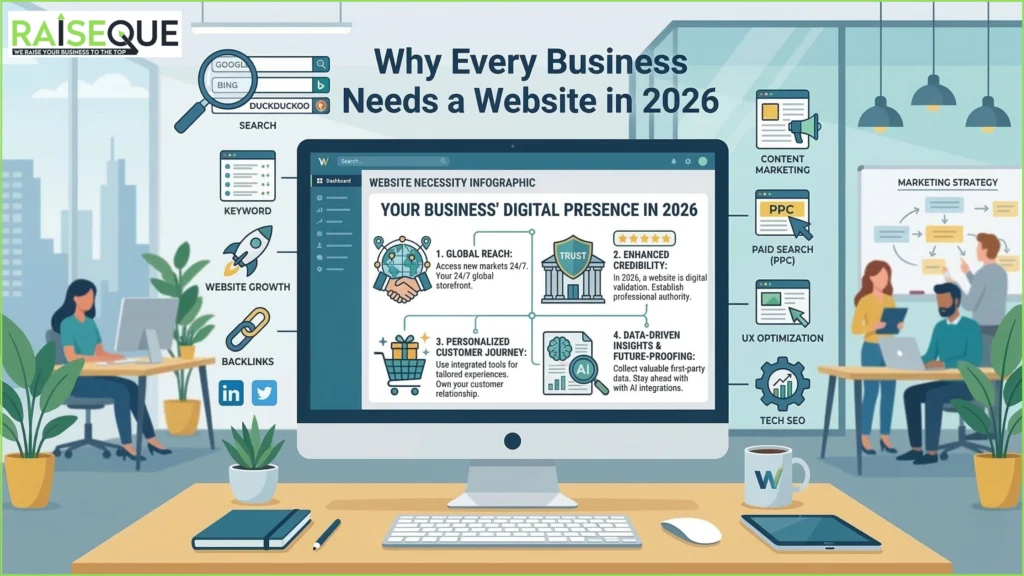
Why every business needs a website in 2026 is a question many entrepreneurs and business owners are asking as the digital economy continues to evolve. Today, customers rely heavily on the internet to research products, services, and companies before making purchasing decisions. If a business cannot be found online, potential customers may quickly move to competitors that provide accessible information through a website.
A professional website acts as the foundation of a company’s online presence. It allows businesses to present their brand, communicate their value, and attract customers through search engines. Platforms like Google have become primary tools for discovering services, making search visibility essential for modern businesses.
While social media platforms are valuable marketing tools, they cannot replace the stability and control offered by a website. Businesses that rely solely on social platforms often face limitations due to algorithm changes or reduced organic reach.
A well-optimized website supports Search Engine Optimization, content marketing, and customer engagement, helping companies reach new audiences and generate consistent leads.
In this guide, we will explore why websites remain essential for businesses in 2026 and how they contribute to credibility, visibility, and long-term growth.
Quick Summary
Every business needs a website in 2026 because it provides credibility, improves search visibility, and enables consistent lead generation. A website acts as the central hub for marketing activities, allowing businesses to control their brand message, attract customers through search engines, and build long-term digital authority.
Why Every Business Needs a Website in 2026
The digital landscape has transformed how customers interact with businesses. Most consumers now begin their purchasing journey by searching online for information.
A website ensures that a business can be discovered through online searches and provides customers with accurate information about products, services, and contact details.
Without a website, businesses risk losing visibility in search results. This limits their ability to attract customers who actively search for services in their industry.
A professional website also strengthens brand positioning by presenting:
- clear service descriptions
- pricing or product information
- testimonials and case studies
- contact details and location
Businesses that invest in professional website development services for businesses gain a strong foundation for digital marketing and customer engagement.
Importance of Website for Business Credibility
The importance of a website for business credibility is one of the strongest reasons companies invest in online platforms.
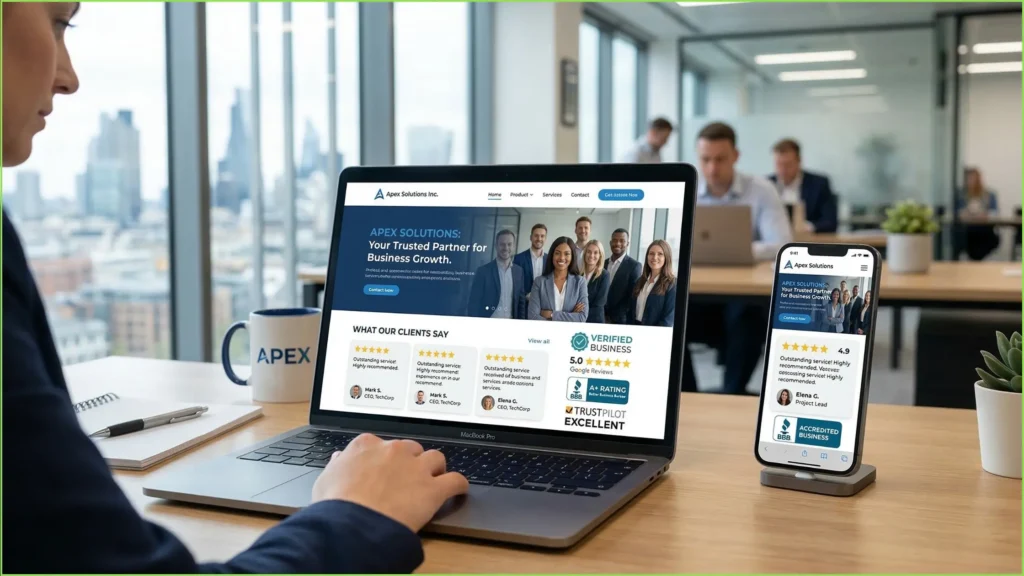
When potential customers search for a company and find a well-designed website, they perceive the brand as trustworthy and professional.
A business website allows organizations to showcase:
- client testimonials
- industry certifications
- portfolios and case studies
- company history and mission
These elements help demonstrate expertise and reliability.
Businesses without websites often struggle to establish trust with new customers. Many people assume that legitimate companies maintain a professional online presence.
A well-structured website therefore supports strong online branding strategies and enhances a company’s reputation.
Business Website Benefits for Online Visibility
One of the most significant benefits of a business website is improved online visibility.
Through Search Engine Optimization, businesses can optimize their website pages to rank for important search queries related to their industry.
For example, a dental clinic might rank for searches such as:
- dentist near me
- dental clinic services
- cosmetic dentistry treatments
When a website ranks in search engines, it attracts visitors who are already interested in the services offered.
Businesses that implement SEO content marketing strategies for businesses often generate consistent organic traffic without relying heavily on paid advertising.
Businesses that optimize their website and follow Google Business Profile guidelines can improve local search visibility and attract more nearby customers.
Over time, this traffic can lead to increased inquiries, appointments, and sales.
According to SEO research by Search Engine Journal, businesses that invest in search optimization often see consistent growth in organic traffic.
Website vs Social Media for Business
A common misconception among entrepreneurs is that social media profiles are enough to represent their business online.
However, comparing website vs social media for business growth reveals significant differences.
| Feature | Website | Social Media |
|---|---|---|
| Ownership | Fully owned asset | Platform controlled |
| Search visibility | Indexed in search engines | Limited discoverability |
| Content control | Complete control | Algorithm dependent |
| Data analytics | Detailed tracking | Limited insights |
Social media platforms are excellent for engagement and promotion. However, businesses do not control the algorithms that determine visibility.
A website acts as a stable digital platform where businesses maintain full control over their brand messaging.
Companies that combine social media with a strong website often achieve better results through integrated digital marketing strategies.
Websites Enable Lead Generation and Customer Acquisition
One of the most valuable business website benefits is the ability to generate leads.
Websites allow businesses to convert visitors into potential customers through features such as:
- contact forms
- appointment booking
- newsletter subscriptions
- downloadable resources
These tools support Lead Generation by capturing visitor information and enabling follow-up communication.
Businesses that optimize their websites for conversions often use techniques from Conversion Rate Optimization to improve customer acquisition.
This approach ensures that website traffic translates into measurable business growth.
Websites Provide Data and Marketing Insights
A major advantage of having a website is access to detailed performance data.
Using tools like Google Analytics, businesses can monitor:
- visitor demographics
- traffic sources
- user behavior
- conversion rates
These insights allow companies to understand how customers interact with their brand online.
Businesses can use this data to refine marketing campaigns, improve website performance, and identify opportunities for growth.
Organizations that consistently analyze website data often develop stronger data-driven marketing strategies.
Websites Support Long-Term Business Growth
A website is more than a marketing tool; it is a long-term digital asset.
Over time, businesses can expand their website to include:
- blogs and educational content
- service pages
- e-commerce stores
- customer support portals
Platforms like WordPress and Shopify allow businesses to scale their online presence as they grow.
Companies that invest in long-term SEO growth strategies for companies often build strong digital authority and attract customers consistently through search engines.
Conclusion
In today’s digital economy, having a website is no longer optional. Why every business needs a website in 2026 ultimately comes down to credibility, discoverability, and sustainable growth.
A professional website allows businesses to control their online presence, appear in search results, and engage with customers effectively.
While social media platforms remain valuable marketing channels, they cannot replace the stability and ownership provided by a website.
Businesses that invest in website development, SEO optimization, and content marketing are far better positioned to compete in the modern marketplace.
7. FAQ Section
Do small businesses really need a website in 2026?
Yes. A website helps small businesses build credibility, appear in search engines, and provide detailed information about services or products. It also enables marketing strategies such as SEO and content marketing, which attract customers who are actively searching online.
Can a business grow without a website?
While some businesses operate without websites, growth opportunities are limited. A website allows businesses to reach a broader audience, build trust, and generate leads through search engines and online marketing channels.
Is social media enough for business marketing?
Social media platforms are effective for engagement and promotion, but they cannot replace a website. Websites provide complete ownership of content, improved search visibility, and deeper information for customers researching a business.
What should a business website include?
A professional website should include service or product pages, company information, contact details, testimonials, and clear calls to action. It should also be optimized for mobile devices and search engines to ensure accessibility and visibility.
How does a website help with SEO?
Websites enable businesses to publish optimized content targeting relevant search queries. Through SEO techniques such as keyword optimization and content marketing, websites can rank in search results and attract organic traffic from potential customers.
Healthcare communication has changed dramatically in the digital era. Today, patients often search online before choosing a doctor or clinic. Because of this shift, social media marketing for doctors has become an important tool for patient education, trust building, and online visibility.
Social media marketing for doctors helps medical professionals connect with patients and build trust online. When used responsibly, it supports patient awareness and strengthens the credibility of medical practices.
In real-world healthcare practices, many clinics struggle with online visibility simply because they do not use digital platforms effectively. A structured and ethical approach to social media can help doctors build a strong and trustworthy digital presence.
Read More: Social Media for Healthcare
Why Social Media Marketing for Doctors Is Important
Patients today prefer to learn about health conditions, treatments, and preventive care online. Social media provides a platform where doctors can share reliable information and counter misinformation.
Social media marketing for doctors helps in several ways:
- Educating patients about medical conditions
- Sharing preventive health tips
- Building trust through professional visibility
- Improving awareness about treatments and procedures
- Strengthening the online reputation of clinics
Based on industry experience, doctors who consistently share educational content often gain greater patient trust and visibility in their communities.
How Patients Use Social Media When Choosing Doctors
Patients often explore multiple sources before booking appointments. Social media platforms play a role in this decision-making process.
Common ways patients use social media in healthcare include:
- Learning about symptoms and treatment options
- Understanding a doctor’s expertise
- Watching educational medical videos
- Reading health tips and preventive advice
- Following doctors who share trustworthy content
In many cases, social media becomes the first point of interaction between a patient and a healthcare professional.
Not all platforms serve the same purpose. Each social media platform supports a different type of healthcare communication.
Instagram for Patient Education
Instagram is widely used for visual and short-form content.
Doctors often use Instagram for:
- Short educational reels
- Preventive health tips
- Awareness campaigns
- Doctor introduction videos
- Infographics explaining medical topics
Patients prefer content that is simple and easy to understand, which makes Instagram an effective platform for healthcare communication.
Facebook for Community Engagement
Facebook remains a strong platform for clinics that serve local populations.
Doctors and clinics use Facebook for:
- Clinic updates and announcements
- Health awareness posts
- Community interaction
- Patient education content
- Health campaign promotions
For local clinics, Facebook works well alongside Google Business Profile activity.
YouTube for Medical Education
YouTube supports long-form video content, which makes it ideal for medical explanations.
Doctors commonly use YouTube to share:
- Procedure explanations
- Condition-specific education
- Pre-treatment and post-treatment guidance
- Medical myth-busting videos
Hospitals and specialists benefit from YouTube because it allows doctors to explain complex medical topics in detail.
LinkedIn for Professional Authority
LinkedIn is a professional networking platform that supports medical credibility and professional branding.
Doctors and hospitals often use LinkedIn for:
- Professional achievements
- Medical thought leadership
- Institutional updates
- Healthcare industry discussions
Although LinkedIn is not primarily patient-focused, it helps strengthen professional reputation and authority.
Read More: Social Media Platforms for Healthcare
How to Start Building Your Social Media Presence
Starting Social Media Marketing for Doctors requires a clear strategy and consistent effort.
Follow these steps:
- Identify your target audience (age group, location, healthcare needs).
- Create professional profiles on major social media platforms.
- Use your clinic name, logo, contact details, and services in your profile.
- Post educational content like health tips and preventive care advice.
- Share clinic updates, events, and awareness campaigns.
- Introduce doctors and clinic staff to build trust with patients.
- Post patient success stories (while maintaining privacy rules).
- Maintain a consistent posting schedule to stay visible.
- Respond to comments, messages, and patient queries quickly.
- Use images, reels, and short videos to increase engagement.
A strong and active presence improves the effectiveness of Social Media Marketing for Doctors.
What Type of Content Works Best for Doctors
The most effective healthcare social media content focuses on education rather than promotion.
Some examples include:
- Preventive health tips
- Myth-busting medical information
- Awareness campaigns
- Patient guidance content
- Doctor introduction videos
- Public health updates
Most clinics face the challenge of deciding what to post. A simple rule is to focus on helpful and informative content that answers common patient questions.
Ethical Guidelines for Social Media Marketing in Healthcare
Ethical responsibility is essential when doctors communicate through social media. Healthcare information must be shared carefully to protect patients and maintain professional standards.
Doctors should follow these principles:
- Avoid diagnosing patients online
- Protect patient confidentiality
- Avoid exaggerated medical claims
- Use disclaimers where appropriate
- Share evidence-based medical information
Ethical communication builds long-term patient trust and ensures compliance with healthcare guidelines.
Common Challenges Doctors Face in Social Media Marketing
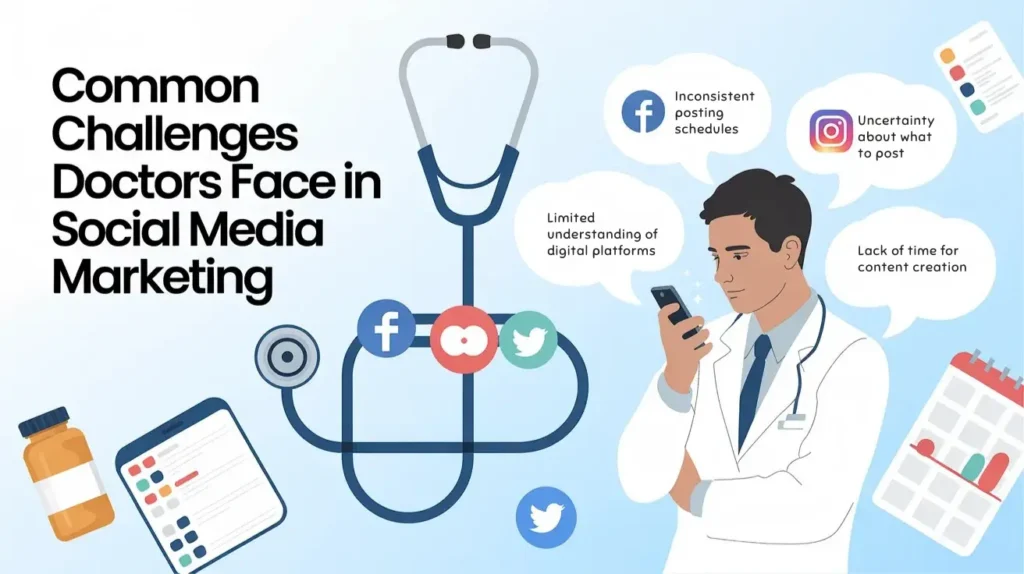
Despite the benefits, many doctors struggle with social media marketing due to several challenges.
Common issues include:
- Lack of time for content creation
- Uncertainty about what to post
- Concerns about ethical communication
- Inconsistent posting schedules
- Limited understanding of digital platforms
Based on industry experience, the biggest issue is not the lack of effort but the absence of a structured strategy.
How Doctors Can Build a Simple Social Media Strategy
A clear strategy helps doctors use social media effectively without overwhelming their schedules.
A simple approach includes:
- Selecting 1–2 relevant platforms
- Posting educational content regularly
- Sharing preventive health tips
- Creating short videos explaining common conditions
- Maintaining ethical communication standards
Consistency is more important than posting frequently across many platforms.
The Future of Social Media in Healthcare
Healthcare communication is increasingly moving toward digital channels. Social media will continue to play an important role in patient education and healthcare awareness.
Future healthcare social media trends may include:
- Increased use of video-based education
- Greater emphasis on preventive healthcare content
- AI-supported patient engagement tools
- Improved digital communication between doctors and patients
Doctors who adapt to these changes can strengthen their digital presence while continuing to provide trustworthy medical information.
Conclusion
Social media marketing for doctors is not about promotion; it is about education, communication, and trust building. By sharing accurate medical information and engaging responsibly with patients online, doctors can expand healthcare awareness and strengthen their professional credibility.
Social media marketing for doctors is one of the most powerful ways to build trust, improve visibility, and attract new patients online.
Related Blog:
Social Media Platforms for Healthcare |Social Media Platforms for Healthcare| Instagram Marketing for Doctors| Facebook Marketing for Clinics| Social Media Marketing Mistakes| LinkedIn Branding for Doctors| Facebook Ads for Clinics| YouTube Marketing for Healthcare
Healthcare professionals today are no longer evaluated only inside clinics or hospitals. Patients actively search online, review profiles, and assess credibility before choosing a doctor. Social media platforms for healthcare play a crucial role in shaping these decisions.
Simply being present online is not enough. Clinics, hospitals, and doctors must understand which social media platforms matter, why they matter, and how to use them responsibly. Ethical responsibility plays a crucial role in healthcare social media marketing services, where doctors and clinics communicate directly with patients through digital platforms. A well-planned and ethical approach ensures patient trust and long-term brand credibility.
This guide explains the most effective social media platforms for healthcare, their use cases, and how doctors can choose the right social networks without violating medical ethics.
Read More: Social Media for Healthcare
What Are Social Media Platforms for Healthcare?
Social media platforms for healthcare are digital networks used by doctors, clinics, and hospitals to communicate, educate, and engage with patients.
These platforms are not meant for diagnosis or aggressive promotion, but for awareness, trust-building, and patient education.
Social networks for doctors help:
- Improve online visibility
- Build professional credibility
- Educate patients at scale
- Strengthen doctor–patient trust
In real-world healthcare practices, patients are more comfortable choosing doctors who share clear and informative content online.
Why Choosing the Right Social Media Platforms Matters
Not all social media platforms serve the same purpose in healthcare. Each platform supports a different type of communication and audience behavior.
Choosing the right platforms helps:
- Avoid wasted time and effort
- Reach the right patient demographic
- Communicate medical information clearly
- Maintain ethical and professional standards
Based on industry experience, clinics that focus on 2–3 relevant social media platforms perform better than those trying to be active everywhere.
Professional healthcare social media marketing services focus on patient education, ethical communication, and platform-specific strategies rather than aggressive promotion.
Instagram as a Social Media Platform for Healthcare
Instagram is one of the most effective social media platforms for healthcare awareness and patient engagement. Its visual-first format makes it easier for clinics and doctors to simplify medical information and communicate with patients in a relatable way.

Best use cases:
- Short educational reels explaining common symptoms or conditions
- Health tips and preventive care posts
- Doctor introduction and clinic walkthrough videos
- Health awareness and observance campaigns
Instagram works well because patients prefer visual and easy-to-understand explanations rather than long text-based content.
In real-world healthcare practices, reels that answer common patient questions often receive higher engagement than static posts.
For clinics and specialists, Instagram helps humanize the doctor behind the practice, making patients feel more comfortable and informed even before their first visit.
Additionally, Instagram features such as stories, highlights, and pinned posts allow healthcare providers to organize important information like clinic timings, services offered, and FAQs.
When used consistently and ethically, Instagram becomes a powerful platform for building trust, improving recall, and supporting long-term patient relationships.
Facebook as a Social Network for Doctors and Clinics
Facebook continues to be a strong platform for local healthcare communication, especially for clinics and hospitals serving specific communities.

Its wide user base makes it effective for reaching patients across different age groups, particularly families and older demographics.
Best use cases:
- Clinic announcements and operational updates
- Community engagement and local health initiatives
- Health awareness and preventive care posts
- Patient education content in simple formats
For clinics serving local populations, Facebook supports visibility and works well alongside Google Business Profile activity.
In real-world healthcare practices, clinics that regularly post updates and educational content on Facebook often experience higher brand recall.
Features such as groups, events, and comment sections allow two-way interaction, helping clinics stay connected with their community while maintaining professional boundaries.
YouTube as a Healthcare Education Platform
YouTube is ideal for long-form medical education and in-depth patient guidance. It allows healthcare providers to explain complex medical topics without oversimplification, making it one of the most powerful platforms for building long-term trust.

Best use cases:
- Procedure and treatment explanations
- Condition-specific educational videos
- Pre- and post-treatment guidance
- Myth-busting and awareness content
Hospitals and multi-specialty clinics benefit greatly from YouTube because it allows doctors to speak directly to patients in a calm and informative manner.
Based on industry experience, patients who watch educational videos before consultations tend to ask more informed questions and feel more confident about treatment decisions.
Over time, a YouTube channel becomes a reliable knowledge library that supports both patient education and digital credibility.
LinkedIn for Hospitals and Medical Professionals
LinkedIn is a professional social network that supports authority, expertise, and institutional credibility in healthcare. While it is not primarily patient-focused, it plays a crucial role in strengthening professional reputation.
Best use cases:
- Hospital branding and institutional storytelling
- Doctor’s achievements, qualifications, and expertise
- Healthcare leadership insights and thought leadership
- Organizational updates and professional milestones
LinkedIn is especially useful for hospitals, senior doctors, and healthcare administrators who want to establish authority within the medical community.
Consistent, professional content on LinkedIn reinforces trust among peers, partners, and decision-makers. When used strategically, it complements patient-facing platforms by strengthening the overall credibility of healthcare brands.
Which Social Media Platforms Should Doctors Prioritize?
The best social media platforms for healthcare depend on multiple practical factors rather than popularity alone. Doctors and clinics should choose platforms based on where their patients spend time and how medical information can be communicated effectively.
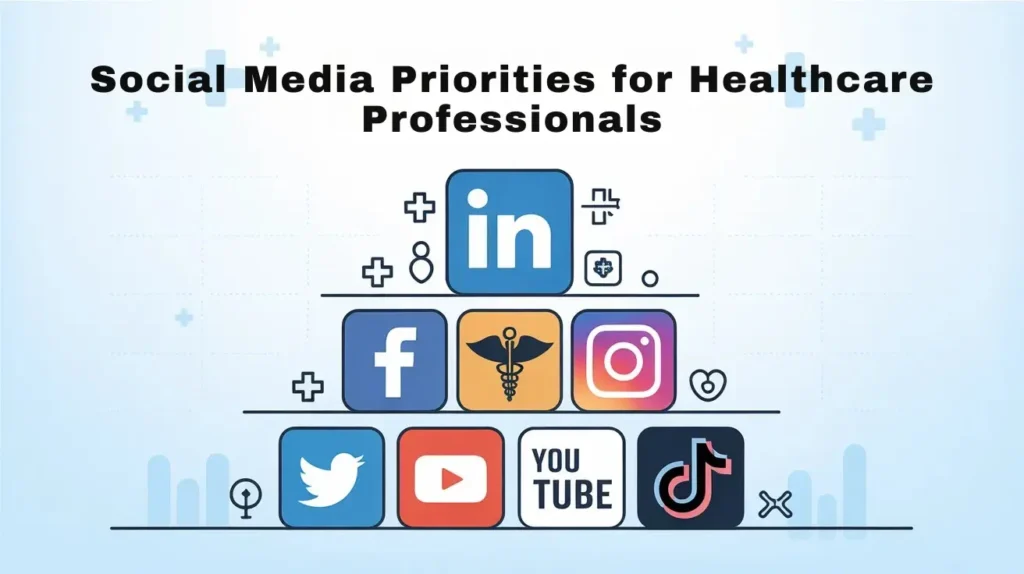
Key factors to consider include:
- Type of medical service offered
- Target patient age group and behavior
- Content format capability, such as video or text
General recommendations:
- Clinics: Instagram + Facebook for local awareness and engagement
- Hospitals: Instagram + YouTube + LinkedIn for education and authority
- Specialist doctors: Instagram + YouTube for focused patient education
Rather than following trends, doctors should prioritize consistency and clarity on selected platforms. In real-world healthcare practices, consistent posting on fewer platforms builds stronger trust than irregular activity across many channels.
How Social Media Platforms Support Healthcare Content Strategy
Social media platforms are most effective when aligned with a structured, purposeful content strategy. Each platform should have a defined role, rather than repeating the same content across all channels.
For example:
- Instagram → Awareness, reach, and engagement through short visual content
- YouTube → Education, depth, and detailed explanations
- Facebook → Community communication, updates, and patient interaction
When platforms work together strategically, they create a complete patient communication journey—from awareness to understanding. Based on industry experience, clinics that plan content according to platform strengths achieve better engagement, clearer messaging, and stronger long-term digital credibility.
Ethical Use of Social Networks for Doctors
Ethical responsibility is critical when using social networks in the healthcare industry. Unlike other businesses, doctors and clinics must maintain professional integrity while communicating online, as misinformation or careless content can directly impact patient health and trust.
Healthcare professionals should always:
- Avoid online diagnosis or treatment advice
Social media should be used for education and awareness, not for diagnosing conditions or prescribing treatments. Patients must be encouraged to consult a doctor in person for accurate medical advice. - Protect patient privacy and confidentiality
Never share patient details, images, or case studies without written consent. Even indirect identification should be avoided to stay compliant with medical ethics and data protection laws. - Avoid exaggerated or misleading claims
Promising “100% guaranteed results” or instant cures can mislead patients and damage credibility. All communication should be factual, evidence-based, and realistic. - Use disclaimers where required
Adding clear disclaimers such as “This content is for educational purposes only” helps set correct expectations and maintains transparency.
Ethical communication on social media not only ensures legal and professional compliance but also strengthens long-term patient trust. Clinics that follow ethical guidelines are perceived as reliable, responsible, and patient-centric.
Common Mistakes Clinics Make on Social Media Platforms
Many clinics struggle to see results from social media, not because of a lack of effort, but due to strategic mistakes that limit reach, engagement, and conversions.
Common mistakes include:
- Choosing platforms without understanding patient behavior
Not every platform suits every clinic. For example, Instagram works well for awareness and education, while Google and WhatsApp are more effective for conversions and appointments. Posting everywhere without a clear purpose often leads to poor results. - Posting the same content across all platforms
Each platform has a different audience and content format. Reposting identical content reduces effectiveness and fails to leverage platform-specific strengths. - Focusing only on promotions instead of education
Excessive promotional posts can turn audiences away. Patients engage more with educational content such as health tips, FAQs, myths vs facts, and preventive care guidance. - Stopping content due to low initial engagement
Social media growth takes time. Many clinics quit posting too early, expecting instant results. Consistency and data-driven optimization are key to long-term success. - Lack of branding and consistency
Irregular posting, inconsistent visuals, and unclear messaging confuse audiences and weaken brand recall.
Most clinics face these challenges because they lack a structured social media strategy—not because social media doesn’t work. With the right planning, ethical approach, and consistent execution, social media can become a powerful tool for patient education, trust-building, and clinic growth.
Conclusion
Social media platforms for healthcare are powerful tools when used with clarity, ethics, and purpose. By choosing the right social networks for doctors and clinics, healthcare providers can educate patients, build credibility, and maintain long-term visibility. A focused, platform-specific approach always delivers better results than scattered activity across multiple platforms.
Clinics often struggle with consistency, compliance, and engagement. This is where professional healthcare social media marketing services help by creating ethical, educational, and patient-focused content aligned with medical guidelines.
Related Blog
Social Media for Healthcare| Social Media Marketing for Doctors| Instagram Marketing for Doctors| Facebook Marketing for Clinics| Social Media Marketing Mistakes| LinkedIn Branding for Doctors| Facebook Ads for Clinics| YouTube Marketing for Healthcare
Introduction: Google Maps Ranking for Clinics & Hospitals Explained
When patients search for nearby medical care, Google Maps is often the first platform they use. For clinics and hospitals, appearing prominently in Google Maps results directly affects patient discovery, trust, and appointment decisions.
Google Maps ranking for clinics and hospitals determines which medical practices appear at the top of local results when users search for healthcare services. These rankings are not random—they are driven by specific local signals that Google evaluates continuously.
In real-world healthcare practices, strong Google Maps performance is closely tied to broader healthcare SEO services, which ensure accuracy, relevance, and trust across all local search touchpoints.
Read – Why Clinics Are Not Getting Patients (And What You Can Do About It)
What Is Google Maps Ranking for Clinics and Hospitals?
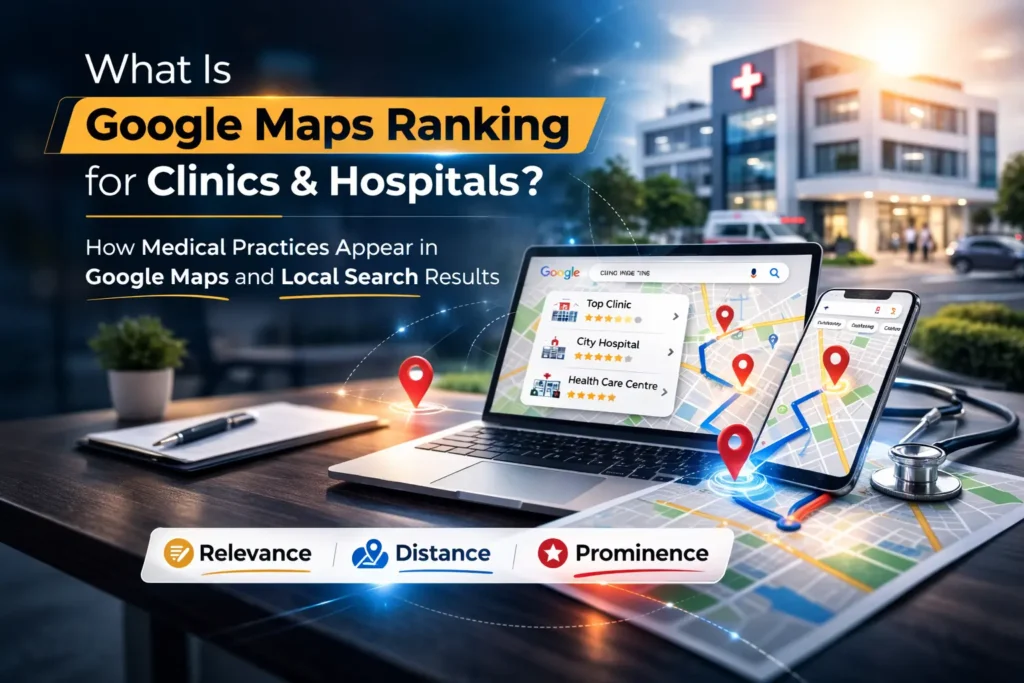
Google Maps ranking refers to how clinics and hospitals are positioned in local map results across:
- Google Maps
- Google Search Local 3-Pack
- “Clinic near me” and “hospital near me” searches
For healthcare providers, Google Maps often has a stronger impact than traditional website rankings because:
- Patients prioritize nearby care
- Mobile searches dominate medical discovery
- Maps results show reviews, directions, and contact actions instantly
In many medical local search results, patients never visit a website. This is why Google Maps optimization is a foundational component of healthcare SEO services.
How Google Maps Ranking for Clinics & Hospitals Works
Google Maps uses three core local ranking factors—often summarized as relevance, distance, and prominence. Together, these determine healthcare local rankings.
Relevance in Google Maps SEO for Healthcare

Relevance measures how closely a clinic or hospital matches a patient’s search intent.
Google evaluates relevance using:
- Primary and secondary medical categories
- Services and treatments listed
- Profile descriptions
- Keywords naturally appearing in patient reviews
Example:
A clinic accurately categorized as “Cardiology Clinic” is more relevant for cardiology searches than a general “Medical Center” listing.
Most clinics face this challenge: services exist, but relevance signals are weak. Improving relevance is a core focus area in Google Maps SEO for healthcare and professional healthcare SEO services.
Distance and Local SEO for Clinics
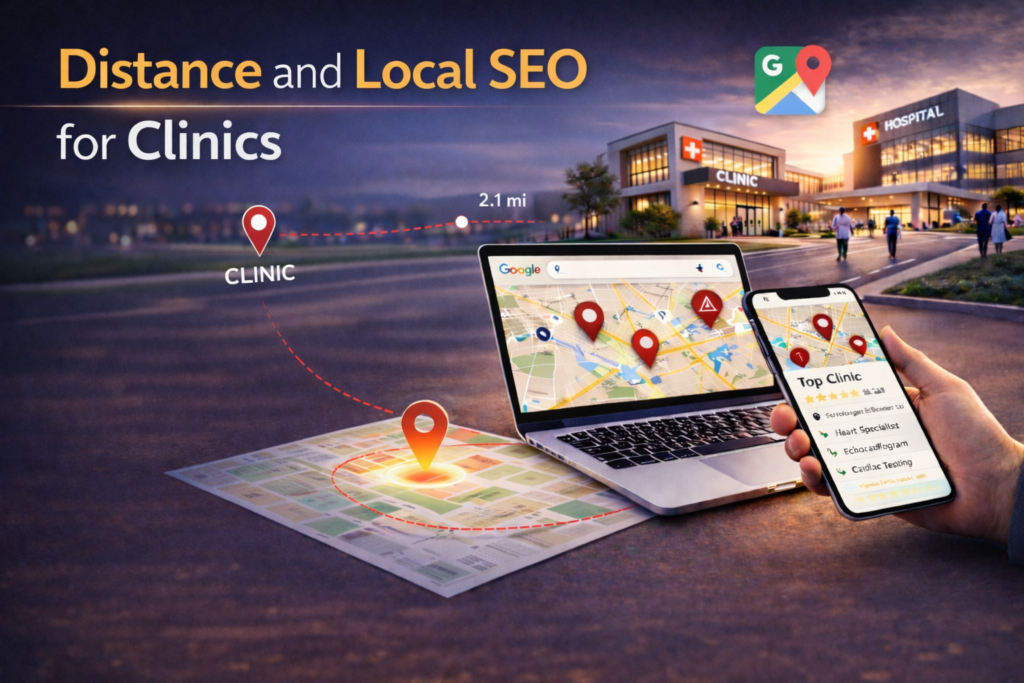
Distance refers to how close a clinic or hospital is to the user’s location at the time of the search.
Important points:
- Distance cannot be manipulated
- Accurate address data is essential
- Correct map pin placement matters
If a clinic’s address or pin is incorrect, Google may reduce clinic visibility on Google Maps, even if the practice is nearby.
Based on industry experience, distance-related errors are common in large hospitals and multi-location clinics and are frequently addressed during healthcare SEO services audits.
Prominence: Hospital Google Maps Ranking Factors
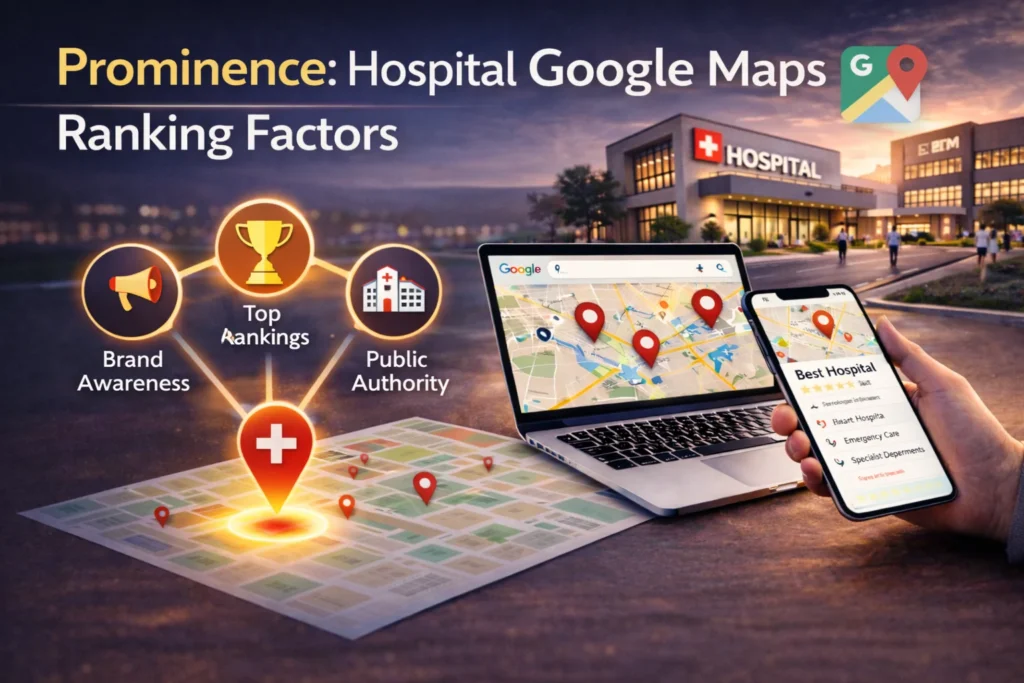
Prominence reflects how well-known and trusted a clinic or hospital appears online.
Google assesses prominence using:
- Volume and quality of patient reviews
- Review responses
- Profile completeness
- Mentions across trusted healthcare directories
- Overall digital reputation
In competitive cities, prominence becomes the deciding factor in hospital Google Maps ranking factors. Hospitals with strong offline reputations but weak digital signals often underperform.
Healthcare SEO services help align online prominence with real-world credibility.
Clinics looking for complete implementation can visit the official homepage of Raiseque Healthcare Digital Marketing to explore structured solutions for Google Maps ranking and local SEO.
Role of Google Business Profile for Clinics in Maps Ranking
A Google Business Profile for clinics is the primary data source Google uses for Maps rankings.
Google evaluates:
- Category accuracy
- Name, address, phone consistency
- Updated hours and attributes
- Photos and media
- Posts and profile activity
- Review engagement
Without an optimized Google Business Profile, even well-established clinics struggle in medical practice local search ranking.
Google Maps visibility improves significantly when healthcare providers follow structured Google Business Profile management practices. A detailed explanation of category selection, NAP consistency, review handling, and ongoing profile activity is covered in our dedicated guide on Google Business Profile Optimization for Healthcare, which explains how healthcare organizations can strengthen their presence on Google Maps step by step.
Why Clinics and Hospitals Struggle With Google Maps Rankings
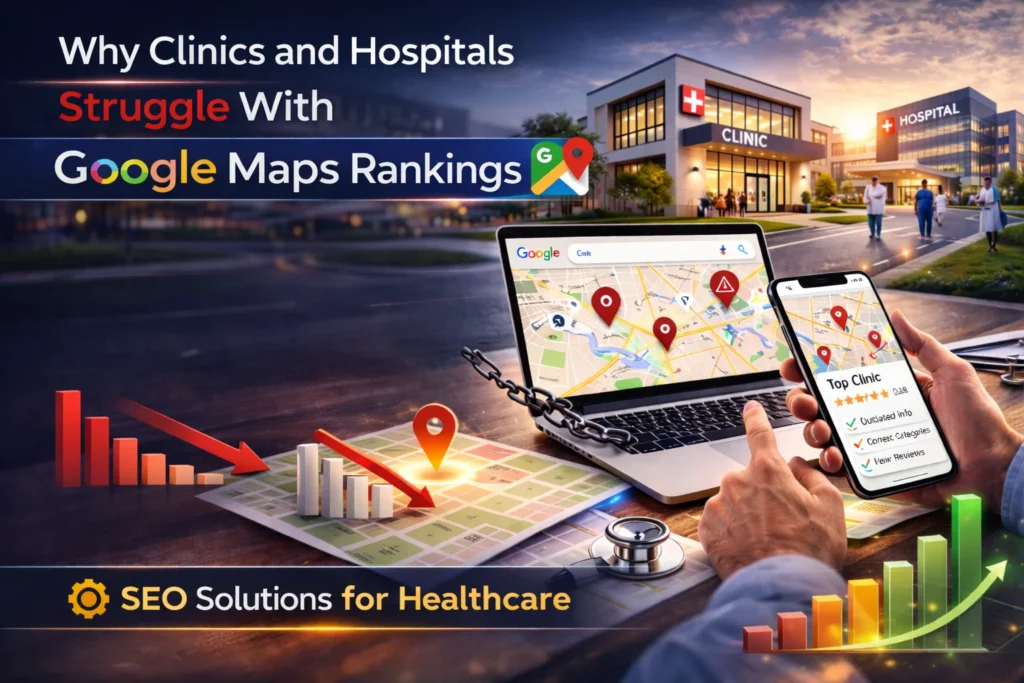
In real-world healthcare practices, ranking issues usually stem from small but compounding problems.
Common challenges include:
- Inconsistent NAP details
- Duplicate or unclaimed listings
- Incorrect categories
- Limited patient reviews
- Outdated profile information
These issues reduce Google’s confidence and weaken healthcare local rankings. Healthcare SEO services often begin by correcting these foundational gaps.
Google Local Pack Healthcare: Why Top Positions Matter
The Google Local Pack healthcare results capture the majority of patient attention.
Clinics appearing in the Local Pack benefit from:
- Higher visibility
- Increased calls and direction requests
- Stronger trust perception
Missing the Local Pack often means missing high-intent patient traffic, especially for hospital near me searches.
How Google Maps Rankings Influence Patient Decisions
Patients using Google Maps are typically ready to act. High-ranking clinics and hospitals see more:
- Direct calls
- Navigation requests
- Walk-in visits
Maps traffic represents high-intent users, not casual browsers. This is why healthcare SEO services prioritize Maps optimization as a conversion-focused channel.
How Google Maps Fits Into Healthcare SEO Services
Google Maps ranking does not work in isolation. It works as part of a broader local search ecosystem, which is explained in detail in our Local SEO Guide for Clinics and Doctors, covering everything from on-page SEO to local citations and trust signals.
It is closely connected with:
- Website content and on-page SEO
- Local citations and directories
- Review management
- Technical trust signals
When these elements align, clinics achieve consistent medical local search results across both Maps and organic listings.
For official guidance on managing listings, categories, verification, and profile updates, clinics and hospitals should refer to Google Business Profile Help, which outlines Google’s own recommendations for maintaining accurate and compliant healthcare listings.
To understand how Maps fits into a complete strategy, read our guide on : “Local SEO for Healthcare“
Read – Why New Clinics Fail in the First Year (And What Most Doctors Get Wrong)
FAQ Section
How does Google Maps ranking for clinics and hospitals work?
Google Maps ranking for clinics and hospitals is based on relevance, distance, and prominence.
Does Google Maps SEO for healthcare differ from normal SEO?
Yes. Google Maps SEO for healthcare relies more on location data, reviews, and profile signals than traditional SEO.
Why is Google Business Profile important for clinics?
It is the primary source Google uses to rank clinics in Maps and Local Pack results.
Do healthcare SEO services help with Maps rankings?
Yes. Healthcare SEO services align Maps optimization with website SEO, citations, and reviews.
How often should clinics update their Google Maps profile?
At least once or twice per month to maintain relevance and trust.