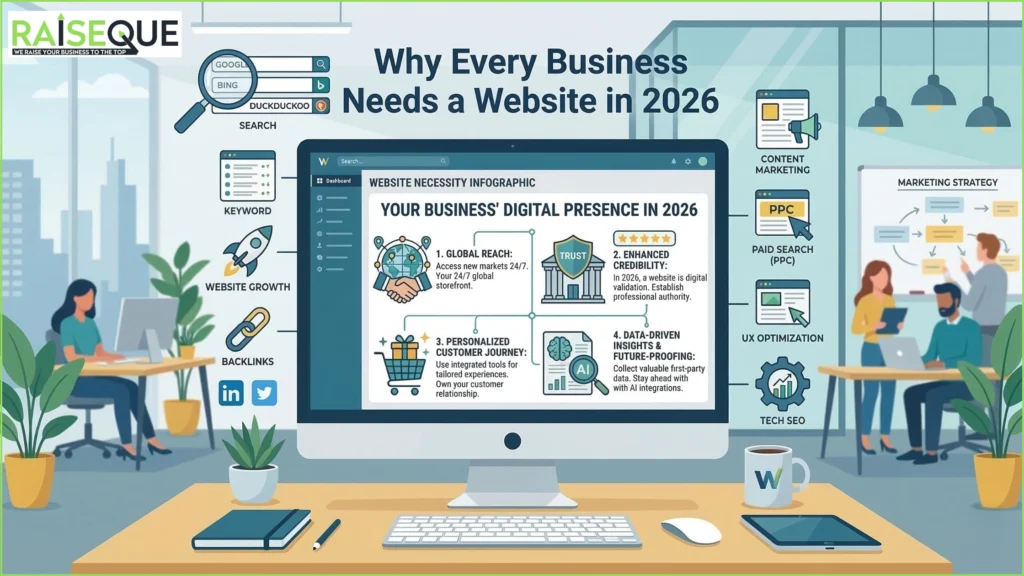
Why every business needs a website in 2026 is a question many entrepreneurs and business owners are asking as the digital economy continues to evolve. Today, customers rely heavily on the internet to research products, services, and companies before making purchasing decisions. If a business cannot be found online, potential customers may quickly move to competitors that provide accessible information through a website.
A professional website acts as the foundation of a company’s online presence. It allows businesses to present their brand, communicate their value, and attract customers through search engines. Platforms like Google have become primary tools for discovering services, making search visibility essential for modern businesses.
While social media platforms are valuable marketing tools, they cannot replace the stability and control offered by a website. Businesses that rely solely on social platforms often face limitations due to algorithm changes or reduced organic reach.
A well-optimized website supports Search Engine Optimization, content marketing, and customer engagement, helping companies reach new audiences and generate consistent leads.
In this guide, we will explore why websites remain essential for businesses in 2026 and how they contribute to credibility, visibility, and long-term growth.
Quick Summary
Every business needs a website in 2026 because it provides credibility, improves search visibility, and enables consistent lead generation. A website acts as the central hub for marketing activities, allowing businesses to control their brand message, attract customers through search engines, and build long-term digital authority.
Why Every Business Needs a Website in 2026
The digital landscape has transformed how customers interact with businesses. Most consumers now begin their purchasing journey by searching online for information.
A website ensures that a business can be discovered through online searches and provides customers with accurate information about products, services, and contact details.
Without a website, businesses risk losing visibility in search results. This limits their ability to attract customers who actively search for services in their industry.
A professional website also strengthens brand positioning by presenting:
- clear service descriptions
- pricing or product information
- testimonials and case studies
- contact details and location
Businesses that invest in professional website development services for businesses gain a strong foundation for digital marketing and customer engagement.
Importance of Website for Business Credibility
The importance of a website for business credibility is one of the strongest reasons companies invest in online platforms.
When potential customers search for a company and find a well-designed website, they perceive the brand as trustworthy and professional.
A business website allows organizations to showcase:
- client testimonials
- industry certifications
- portfolios and case studies
- company history and mission
These elements help demonstrate expertise and reliability.
Businesses without websites often struggle to establish trust with new customers. Many people assume that legitimate companies maintain a professional online presence.
A well-structured website therefore supports strong online branding strategies and enhances a company’s reputation.
Business Website Benefits for Online Visibility

One of the most significant benefits of a business website is improved online visibility.
Through Search Engine Optimization, businesses can optimize their website pages to rank for important search queries related to their industry.
For example, a dental clinic might rank for searches such as:
- dentist near me
- dental clinic services
- cosmetic dentistry treatments
When a website ranks in search engines, it attracts visitors who are already interested in the services offered.
Businesses that implement SEO content marketing strategies for businesses often generate consistent organic traffic without relying heavily on paid advertising.
Businesses that optimize their website and follow Google Business Profile guidelines can improve local search visibility and attract more nearby customers.
Over time, this traffic can lead to increased inquiries, appointments, and sales.
According to SEO research by Search Engine Journal, businesses that invest in search optimization often see consistent growth in organic traffic.
Website vs Social Media for Business
A common misconception among entrepreneurs is that social media profiles are enough to represent their business online.
However, comparing website vs social media for business growth reveals significant differences.
| Feature | Website | Social Media |
|---|---|---|
| Ownership | Fully owned asset | Platform controlled |
| Search visibility | Indexed in search engines | Limited discoverability |
| Content control | Complete control | Algorithm dependent |
| Data analytics | Detailed tracking | Limited insights |
Social media platforms are excellent for engagement and promotion. However, businesses do not control the algorithms that determine visibility.
A website acts as a stable digital platform where businesses maintain full control over their brand messaging.
Companies that combine social media with a strong website often achieve better results through integrated digital marketing strategies.
Websites Enable Lead Generation and Customer Acquisition
One of the most valuable business website benefits is the ability to generate leads.
Websites allow businesses to convert visitors into potential customers through features such as:
- contact forms
- appointment booking
- newsletter subscriptions
- downloadable resources
These tools support Lead Generation by capturing visitor information and enabling follow-up communication.
Businesses that optimize their websites for conversions often use techniques from Conversion Rate Optimization to improve customer acquisition.
This approach ensures that website traffic translates into measurable business growth.
Websites Provide Data and Marketing Insights
A major advantage of having a website is access to detailed performance data.
Using tools like Google Analytics, businesses can monitor:
- visitor demographics
- traffic sources
- user behavior
- conversion rates
These insights allow companies to understand how customers interact with their brand online.
Businesses can use this data to refine marketing campaigns, improve website performance, and identify opportunities for growth.
Organizations that consistently analyze website data often develop stronger data-driven marketing strategies.
Websites Support Long-Term Business Growth
A website is more than a marketing tool; it is a long-term digital asset.
Over time, businesses can expand their website to include:
- blogs and educational content
- service pages
- e-commerce stores
- customer support portals
Platforms like WordPress and Shopify allow businesses to scale their online presence as they grow.
Companies that invest in long-term SEO growth strategies for companies often build strong digital authority and attract customers consistently through search engines.
Conclusion
In today’s digital economy, having a website is no longer optional. Why every business needs a website in 2026 ultimately comes down to credibility, discoverability, and sustainable growth.
A professional website allows businesses to control their online presence, appear in search results, and engage with customers effectively.
While social media platforms remain valuable marketing channels, they cannot replace the stability and ownership provided by a website.
Businesses that invest in website development, SEO optimization, and content marketing are far better positioned to compete in the modern marketplace.