Patients no longer rely only on word-of-mouth to choose doctors.
They search online, check social media, and evaluate credibility before booking appointments.
Social media for healthcare helps doctors, clinics, and hospitals educate patients, build trust, and stay visible—without violating medical ethics. Social media for healthcare plays a critical role in how patients discover, trust, and choose medical providers today.
In simple terms:
👉 If your healthcare practice is not active on social media, patients may choose someone else who is.
What Is Social Media for Healthcare?
Social media for healthcare refers to the ethical and professional use of platforms like Instagram, Facebook, YouTube, and LinkedIn by doctors, clinics, hospitals, and diagnostic centers. The purpose is not aggressive promotion, but meaningful communication that supports patient awareness and trust.
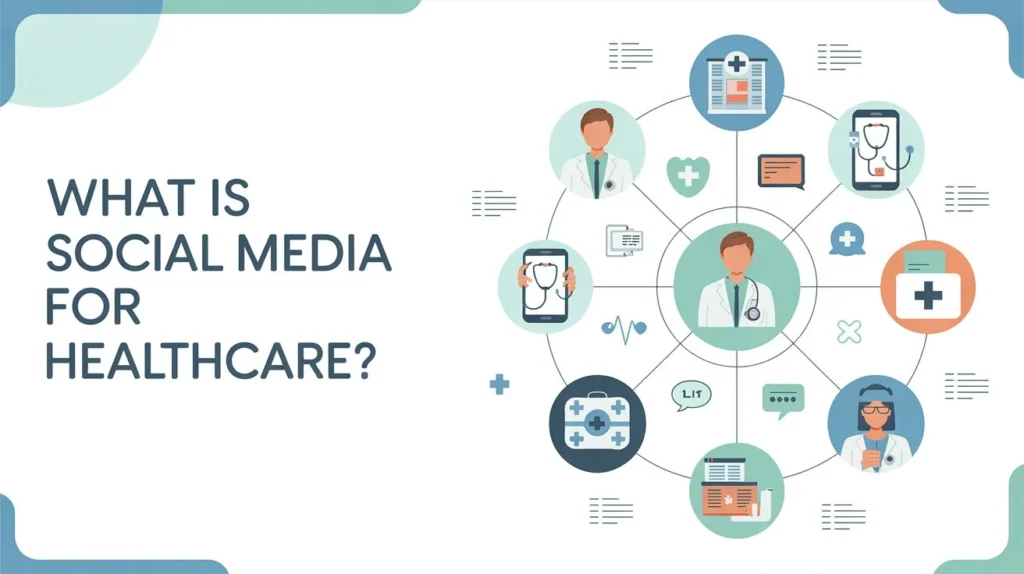
The primary objectives include:
- Patient education
- Awareness creation
- Trust building
- Community engagement
In real-world healthcare practices, patients respond more positively to informative and reassuring content than to direct marketing messages.
Why Is Social Media Important for Healthcare?
Patients today begin their healthcare journey online. Before booking an appointment, they often look for doctor profiles, clinic updates, and educational content to assess credibility. Social media plays a critical role in shaping these early impressions.
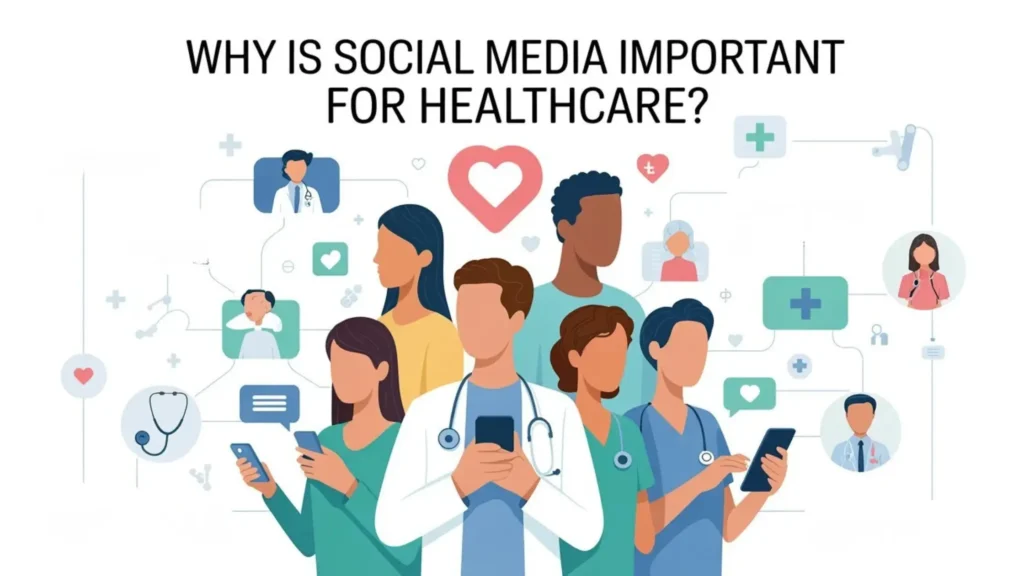
Social media has become an extension of the patient decision journey, where trust is built long before a clinic visit occurs. When healthcare providers consistently share accurate and easy-to-understand information, they position themselves as reliable sources rather than advertisers.
Based on industry experience, patients are more likely to choose doctors who communicate clearly and educate openly online, as this reduces uncertainty and increases confidence in the quality of care.
Which Social Media Platforms Are Best for Healthcare?
Different platforms serve different healthcare communication needs, and effectiveness depends on patient behavior rather than trends.
- Instagram: Ideal for short educational videos, reels, and visual trust-building
- Facebook: Useful for local visibility, community engagement, and clinic updates
- YouTube: Best for in-depth explanations, procedure education, and long-form guidance
- LinkedIn: Supports professional credibility, hospital branding, and peer networking
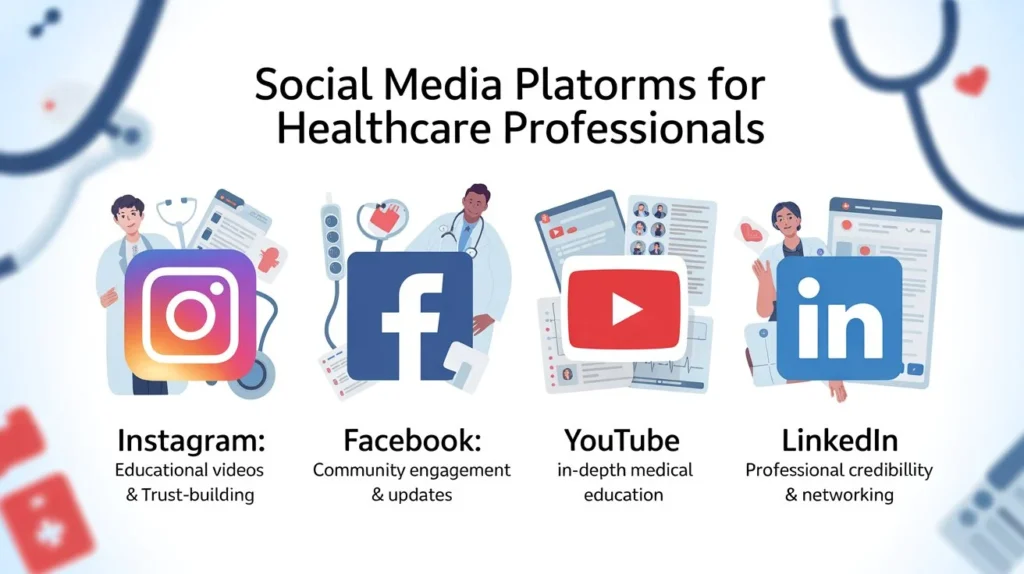
The effectiveness of a platform depends on how patients consume information. Visual and video-based platforms simplify complex medical topics, while text-driven platforms strengthen professional authority. Most clinics benefit more from consistent activity on one or two platforms rather than trying to manage all channels at once.
A well-planned social media for healthcare strategy focuses on education, ethical communication, and long-term trust building.
What Type of Content Works Best in Healthcare?
Healthcare audiences prefer content that is educational, ethical, and easy to understand. The focus should always be on patient value rather than promotion.
High-performing healthcare content includes:
- Symptom awareness posts
- Preventive care tips
- Patient FAQs
- Health awareness campaigns
- Doctor introduction videos
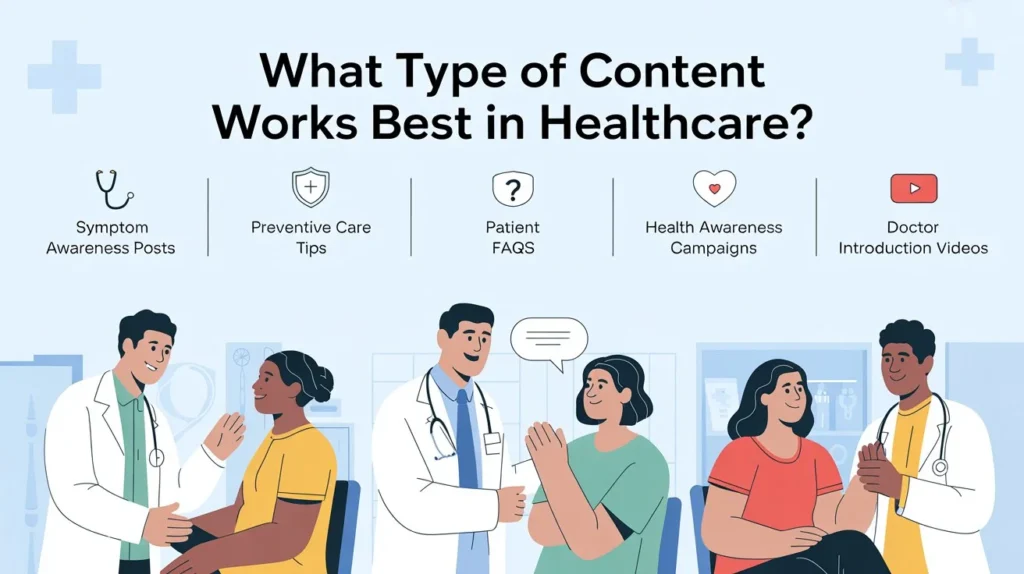
Healthcare audiences respond best to content that prioritizes clarity and reassurance. Educational posts that address real patient concerns help reduce fear and misinformation. In most clinics, reels and short videos perform better than static posts because patients find visual explanations more relatable and easier to follow.
Ethical Guidelines for Social Media in Healthcare
Ethics are non-negotiable in healthcare communication. Social media content must always respect patient safety, privacy, and professional boundaries.
Key ethical practices include:
- No online diagnosis
- No misleading or exaggerated claims
- No guaranteed treatment outcomes
- Patient consent for testimonials
- Clear medical disclaimers
Ethical content protects both patients and healthcare providers. Clinics that follow these guidelines not only comply with regulations but also earn long-term trust, as patients value transparency and responsibility over sensational messaging.
Common Mistakes Clinics Make on Social Media
Many healthcare providers struggle with social media, not because of a lack of intent, but because of a lack of strategy.
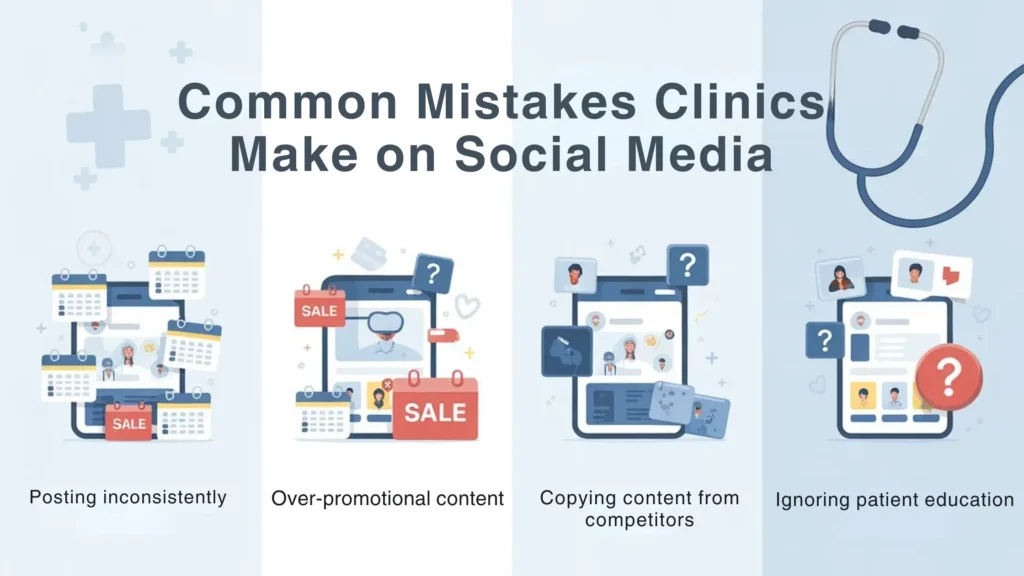
Common mistakes include:
- Posting inconsistently
- Over-promotional content
- Copying content from competitors
- Ignoring patient education
Most clinics face this challenge: they deliver excellent care offline but fail to communicate it effectively online.
How Social Media Supports Overall Healthcare Marketing
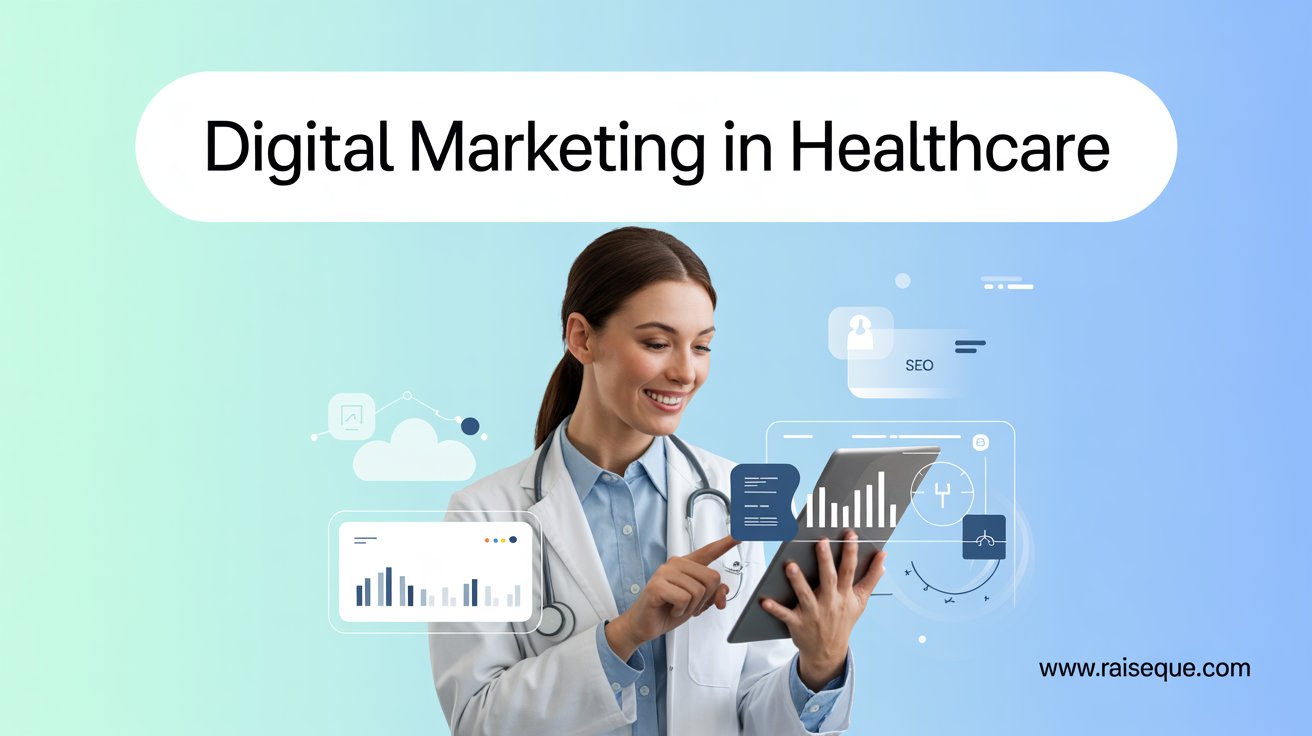
Social media strengthens the overall healthcare marketing ecosystem rather than working in isolation. It supports brand recall, reinforces credibility, and complements search visibility.
Social media serves as a supporting layer, enhancing SEO, Google Business Profile activity, and website engagement. When patients repeatedly see consistent educational content across platforms, trust increases naturally. Aligned correctly, social media helps create a unified and credible digital presence for healthcare practices.
Future of Social Media in Healthcare
Healthcare communication is rapidly evolving, and social media will continue to play a central role.
The future will focus on:
- Video-first education
- Patient-centric communication
- AI-driven content discovery
- Preventive health awareness
Short-form videos, personalized content, and technology-assisted engagement will define the next phase of healthcare social media. Doctors and clinics that adapt early—while maintaining ethical standards—will remain visible, trusted, and competitive in the digital healthcare landscape.
Conclusion
Social media for healthcare is no longer optional—it is a critical communication channel that shapes how patients discover, evaluate, and trust healthcare providers.
When used responsibly, social media for healthcare becomes a powerful tool for patient education and digital credibility.
When used responsibly, it allows doctors and clinics to educate patients, reduce misinformation, and build lasting credibility. As patient behavior continues to shift online, healthcare practices that invest in ethical, consistent social media communication will be better positioned to build trust and relevance both online and offline.