If you’re a clinic owner, showing up on Google Maps and local search results isn’t just a good idea—it’s critical to your patient flow. Whether you’re a dentist, dermatologist, or pediatrician, local SEO ensures that when someone searches for “clinic near me,” your name shows up.
This 2025 guide breaks down everything you need to know to improve your clinic’s visibility in Google Maps and Local Search. Let’s dive in!
Local Search and Google Maps Ranking for Clinics (2025 Guide)
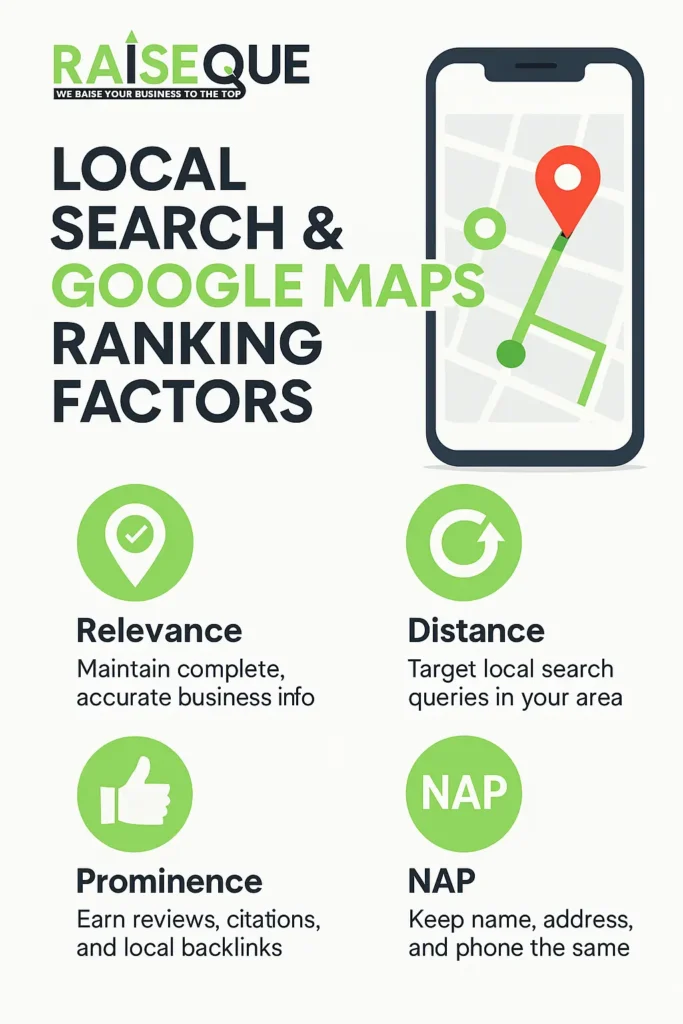
Local Ranking Factors
Google Maps rankings are determined by three primary factors: relevance, distance, and prominence. Relevance measures how well your business matches a searcher’s intent. Distance refers to how far your clinic is from the searcher. Prominence is based on how well-known your clinic is both online and offline. To boost rankings:
- Ensure your profile is complete and accurate, including business name, address, phone number (NAP), operating hours, categories, and services.
- Target common local queries such as “dentist near me” or “flu shot in [City]” to appear in discovery-based searches.
- Focus on gaining reviews, local citations, and backlinks to build your clinic’s prominence.
Embed Map and Schema Markup
Embedding a Google Map on your website’s contact page boosts your local relevance. Additionally, using local business schema (JSON-LD format) ensures that search engines understand your clinic’s NAP, specialties, hours, and services. This structured data enhances your chances of appearing in local search results and featured snippets.
NAP Consistency
Consistency in your Name, Address, and Phone Number (NAP) across all platforms is crucial. Discrepancies (like “St.” vs. “Street”) can confuse search engines and negatively impact rankings. Regularly audit your listings across directories, social media, and your website to ensure uniformity.
Google Business Profile (GBP) – Claim & Optimize
Claim and Verify
Start by claiming your Google Business Profile and completing the verification process. Verification may involve receiving a postcard, phone call, or video confirmation. Only verified profiles appear in local pack listings and are eligible for running Google Local Services Ads.
Business Name
Use your actual business name without adding keywords or marketing phrases. The name should match your signage and branding to maintain credibility and avoid penalties.
Primary and Secondary Categories
Choose the most specific category that defines your clinic, such as “Dental Clinic,” “Chiropractor,” or “Podiatrist.” You can add secondary categories for additional services like “Teeth Whitening Service” or “Sports Medicine Physician.” Accurate categorization helps match your profile to more relevant queries.
Attributes
Fill out all applicable attributes such as “Wheelchair Accessible,” “Telehealth Available,” “Women-led,” or “Veteran-led.” Google has also introduced new attributes in 2024–2025, such as “carbon-neutral” or “sign language available,” which improve visibility in filtered searches.
Business Description
Write a clear and concise description (around 300–500 characters) focusing on your services and location. Avoid keyword stuffing. Include 1–2 naturally placed local keywords that define your offerings.
Services and Products
List all primary services you offer like “Dental Implants,” “Vaccinations,” or “Chiropractic Adjustments.” If applicable, list products such as supplements or medical devices. Descriptions should be keyword-optimized and updated as needed.
Visual Content: Photos & Videos
High-Quality Photos
Add professional and authentic images of your clinic, including the exterior, waiting area, staff, and equipment. Ensure the resolution is at least 1080×1080 pixels. Avoid using stock photos—Google favors real, engaging visuals. Regularly update these to reflect changes or seasonal updates.
Videos and Virtual Tours
Upload short videos (up to 30 seconds) highlighting your clinic’s services or environment. Virtual tours or 360-degree views help potential patients feel more comfortable. Categorize photos into interior, exterior, staff, and services for better indexing.
Google Posts & Customer Engagement
Regular Posting
Keep your Google Business Profile active by posting weekly updates on promotions, healthcare tips, or news. Each post should include a relevant image, a clear CTA like “Book Now” or “Call Today,” and focus on local keywords. Posts expire after approximately three months, so maintain a content calendar.
Messaging and Q&A
Enable messaging so patients can contact you directly through Maps. Set up auto-replies for common queries. Monitor and respond to user-submitted questions in the Q&A section promptly. Active engagement boosts your visibility and builds trust.
Google Local Services Ads (LSAs)
If eligible, clinics should leverage LSAs, which appear at the top of Google search results. LSAs require a fully verified GBP and often include enhanced verification steps such as submitting utility bills or business licenses. Clinics offering services like dentistry, dermatology, or general practice can benefit greatly from LSAs by attracting high-intent local traffic.
Reviews & Reputation Management
Encourage and Respond
Patient reviews are a major ranking factor. Encourage satisfied patients to leave feedback through direct links. Respond to all reviews—thank positive feedback and address negative comments professionally. Frequent, authentic reviews signal activity and credibility.
Review Keywords
Include keywords naturally in your replies, such as “Thank you for choosing [Clinic Name] for your physical therapy session.” Keyword-optimized reviews enhance search relevance.
Monitor Third-Party Listings
Stay active on other healthcare directories like Healthgrades, Zocdoc, and RateMDs. While Google weighs GBP reviews more heavily, consistency across platforms boosts trust and authority.
On-Page SEO & Website Factors
Location-Specific Pages
If your clinic operates in multiple locations, create a unique page for each with localized content. Include the address, phone number, hours, and services specific to that branch. Use regional keywords to improve local SEO.
Homepage and Meta Content
Optimize your homepage title tag and meta description to include your primary specialty and location. Implement schema markup on each page to enhance search visibility.
Mobile Optimization and Page Speed
Most local searches happen on mobile. Ensure your site is mobile-responsive, loads quickly, and features click-to-call and click-to-map buttons. Mobile usability affects both user experience and search rankings.
Citations and Local Backlinks
Consistent Citations
List your clinic in trusted directories such as Yelp, Bing Places, Apple Maps, and local business chambers. Ensure all listings match your GBP’s NAP exactly. Use citation tools to audit and fix inconsistencies.
Backlink Strategy
Acquire backlinks from local media, health associations, and event sponsorships. Hosting health fairs or partnering with local organizations can lead to valuable links that boost local authority.
Maintain active social profiles on platforms like Facebook, Instagram, and LinkedIn. Share health tips, clinic updates, and testimonials. Press releases or articles in local news also add credibility and can generate backlinks.
Google Business Profile Updates (2024–2025)
Verification Requirements
Stricter verification measures are in place, including document uploads and video checks. Ensure your profile is verified and kept up to date, especially before running LSAs.
AI and Clickless Search Trends
With Google’s move towards AI-driven and zero-click search results, your GBP must be treated as a dynamic asset. Update posts, services, and Q&A regularly to feed the algorithm fresh content.
Profile Completeness
Complete every available field in your profile. New attributes, services, and categories are introduced periodically. Profiles with maximum completeness are more likely to appear in high-visibility placements.
Visual Standards
Google has raised visual requirements. Use high-resolution images (1080×1080 pixels) and authentic videos. Well-captioned media improves your clinic’s engagement rate and discoverability.
Analytics and Tracking Tools
Use the GBP Insights dashboard to track how users find and interact with your profile. Link your website to Google Analytics and Google Search Console to analyze referral traffic and on-site behavior. Consider call tracking software to monitor appointment inquiries from GBP.
Case Studies
A national sports medicine clinic increased calls by over 350% in just seven months by standardizing and optimizing its GBP across 170 locations. Similarly, a local dental practice achieved top rankings for “Invisalign in [City]” by focusing on targeted location pages and accumulating patient reviews.
Future Trends and Best Practices
- Voice Search: Optimize for voice queries using natural language keywords like “Where can I get a flu shot near me?”
- AI Chat Integration: Be ready for generative search tools. Structured Q&A and detailed service descriptions may power chatbot responses.
- Trust Signals: Display credentials, certifications, and affiliations prominently on your website and GBP.
- Engagement: Google favors businesses with high user interaction. Promptly respond to messages and reviews, and utilize features like virtual tours and appointment links.
Analytics, Tracking & Tools for Clinic SEO
Google Insights & Analytics
Monitor your clinic’s visibility and performance using the Google Business Profile (GBP) Insights dashboard. Track key metrics such as:
- Search impressions
- Map views
- Website clicks
- Call volumes
Analyze the search queries patients use to find your clinic and update your content and keywords accordingly. Connect your website to Google Analytics and Google Search Console to track referral traffic from Maps and measure user behavior on your site.
Local Rank Tracking Tools
Use local SEO tools like BrightLocal, Whitespark, or Moz Pro to:
- Monitor your Google Maps rankings
- Audit your local citations
- Benchmark your clinic against competitors
- Identify missing or incorrect listings
These tools help maintain your clinic’s visibility and discover opportunities for local SEO growth.
Review Management
Automate and streamline review collection using tools such as BirdEye, Podium, or Grade.us. These platforms help you:
- Request reviews via SMS or email
- Track sentiment and response trends
- Alert you to new feedback in real time
Ensure the platform you choose adheres to healthcare privacy regulations and avoids asking for sensitive patient information.
Call & Appointment Tracking
Implement call-tracking software (e.g., Ringostat, Liine) to measure the effectiveness of your local SEO and Google Maps presence. Benefits include:
- Tracking calls generated from Maps and website visits
- Identifying which keywords or campaigns lead to bookings
- Understanding patient behavior and improving ROI
Use this data to optimize your messaging and advertising strategies.
Case Studies & Success Examples
Multi-Location Clinic Growth
A national sports medicine clinic increased call volume by over 350% within seven months by:
- Centralizing its online presence
- Correcting GBP categories across 170+ locations
- Enhancing business descriptions
- Posting updates and responding to Q&A regularly
This coordinated approach significantly improved their map visibility.
Local Clinic Visibility Boost
A dental clinic improved its Google Maps ranking by focusing on:
- Acquiring Google reviews using keywords like “Invisalign in [City]”
- Creating city-specific service pages with optimized content
These local content strategies and positive review signals helped them reach the top of the local map pack for high-intent search terms like “service near me.”
SEO Trends & Best Practices in 2025
Mobile & Voice Search Optimization
Optimize for voice commands such as, “Hey Google, find a nearby pediatrician,” by:
- Using conversational, long-tail keywords
- Keeping your GBP and website fully updated
- Including FAQs that reflect real patient queries
AI-Powered Search & Chat
Google is rolling out AI-based responses for local searches. Clinics should:
- Include structured FAQs on websites and profiles
- Keep business information current and accurate
- Prepare for zero-click and chat-like search results
Health & YMYL Content Standards
As a healthcare provider, ensure your content:
- Is factually accurate and medically reviewed
- Follows HIPAA/compliance standards
- Displays your qualifications and medical credentials
Trustworthiness is critical for local search visibility in the health space.
Patient Engagement Signals
Google increasingly rewards businesses that offer strong engagement. Boost your profile by:
- Enabling virtual tours and patient check-ins
- Responding to messages and reviews promptly
- Updating posts regularly to show activity
Stay Ahead with Local SEO Updates
The local SEO landscape evolves quickly. Keep your strategy up to date by monitoring:
- Google Business Profile updates
- SEO and digital marketing blogs
- Forums and communities focused on local search
Adapting to changes early ensures your clinic remains competitive.
Final Thoughts
Optimizing your clinic’s Google Business Profile is no longer optional—it’s essential. A well-maintained and strategically updated profile can significantly increase visibility, build patient trust, and drive consistent traffic to your clinic. By staying ahead of algorithm updates and embracing new GBP features, clinics can ensure long-term success in local search.
Frequently Asked Questions
1. How long does it take to rank in Google Maps?
It can take 2–8 weeks depending on competition, profile completeness, and consistency of citations.
2. Is a website necessary if I have a GBP?
Yes! A website builds trust, supports SEO, and allows deeper optimization with schema, service pages, and blogs.
3. What’s the difference between Google Maps and organic search results?
Google Maps shows localized businesses with a map. Organic search includes broader content like blog posts and directories.
4. Can I rank in multiple nearby cities?
Yes, by creating unique landing pages and GBP service areas for each city.
5. Are paid ads necessary for local SEO?
Not required, but Local Services Ads and Google Ads can boost visibility alongside strong organic performance.