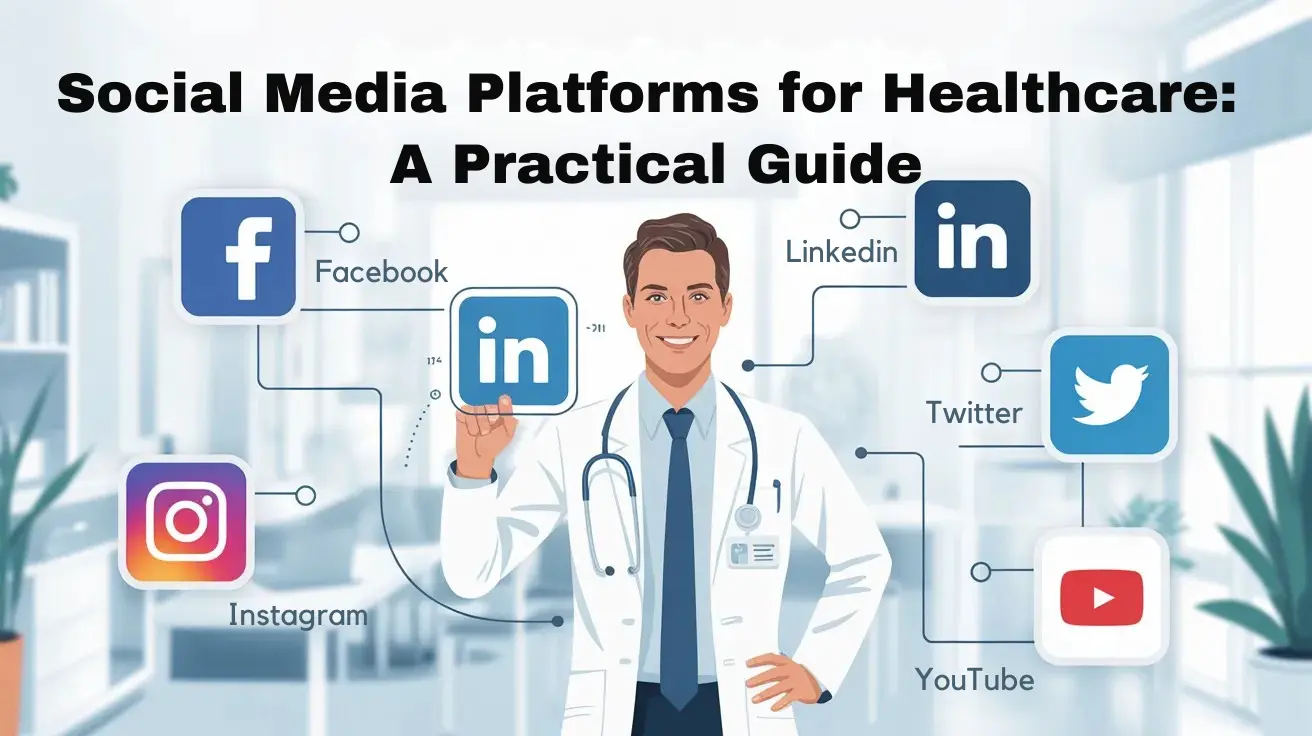
Healthcare professionals today are no longer evaluated only inside clinics or hospitals. Patients actively search online, review profiles, and assess credibility before choosing a doctor. Social media platforms for healthcare play a crucial role in shaping these decisions.
Simply being present online is not enough. Clinics, hospitals, and doctors must understand which social media platforms matter, why they matter, and how to use them responsibly. Ethical responsibility plays a crucial role in healthcare social media marketing services, where doctors and clinics communicate directly with patients through digital platforms. A well-planned and ethical approach ensures patient trust and long-term brand credibility.
This guide explains the most effective social media platforms for healthcare, their use cases, and how doctors can choose the right social networks without violating medical ethics.
Read More: Social Media for Healthcare
What Are Social Media Platforms for Healthcare?
Social media platforms for healthcare are digital networks used by doctors, clinics, and hospitals to communicate, educate, and engage with patients.
These platforms are not meant for diagnosis or aggressive promotion, but for awareness, trust-building, and patient education.
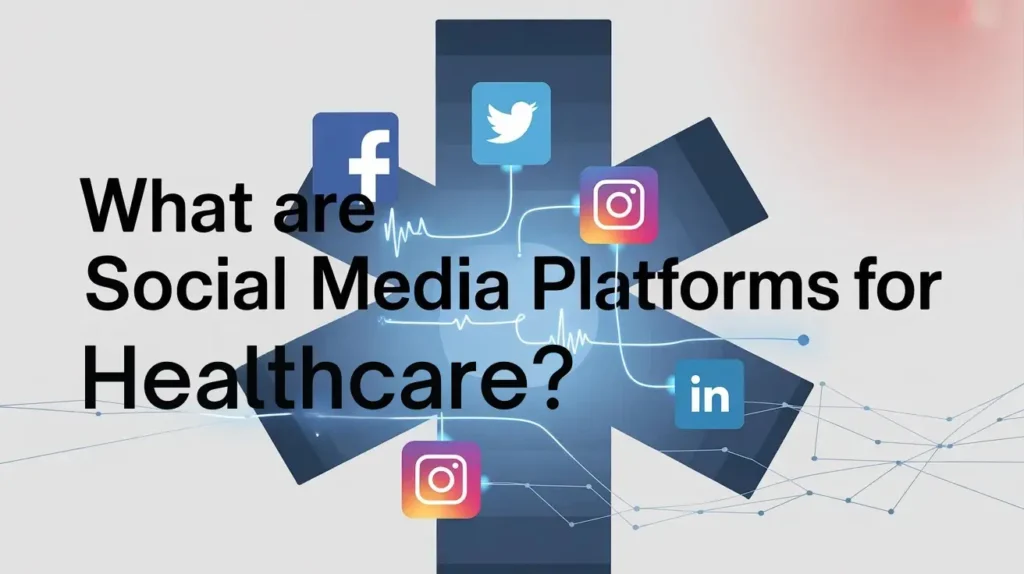
Social networks for doctors help:
- Improve online visibility
- Build professional credibility
- Educate patients at scale
- Strengthen doctor–patient trust
In real-world healthcare practices, patients are more comfortable choosing doctors who share clear and informative content online.
Why Choosing the Right Social Media Platforms Matters
Not all social media platforms serve the same purpose in healthcare. Each platform supports a different type of communication and audience behavior.
Choosing the right platforms helps:
- Avoid wasted time and effort
- Reach the right patient demographic
- Communicate medical information clearly
- Maintain ethical and professional standards
Based on industry experience, clinics that focus on 2–3 relevant social media platforms perform better than those trying to be active everywhere.
Professional healthcare social media marketing services focus on patient education, ethical communication, and platform-specific strategies rather than aggressive promotion.
Instagram as a Social Media Platform for Healthcare
Instagram is one of the most effective social media platforms for healthcare awareness and patient engagement. Its visual-first format makes it easier for clinics and doctors to simplify medical information and communicate with patients in a relatable way.
Best use cases:
- Short educational reels explaining common symptoms or conditions
- Health tips and preventive care posts
- Doctor introduction and clinic walkthrough videos
- Health awareness and observance campaigns
Instagram works well because patients prefer visual and easy-to-understand explanations rather than long text-based content.
In real-world healthcare practices, reels that answer common patient questions often receive higher engagement than static posts.
For clinics and specialists, Instagram helps humanize the doctor behind the practice, making patients feel more comfortable and informed even before their first visit.
Additionally, Instagram features such as stories, highlights, and pinned posts allow healthcare providers to organize important information like clinic timings, services offered, and FAQs.
When used consistently and ethically, Instagram becomes a powerful platform for building trust, improving recall, and supporting long-term patient relationships.
Facebook as a Social Network for Doctors and Clinics
Facebook continues to be a strong platform for local healthcare communication, especially for clinics and hospitals serving specific communities.
Its wide user base makes it effective for reaching patients across different age groups, particularly families and older demographics.
Best use cases:
- Clinic announcements and operational updates
- Community engagement and local health initiatives
- Health awareness and preventive care posts
- Patient education content in simple formats
For clinics serving local populations, Facebook supports visibility and works well alongside Google Business Profile activity.
In real-world healthcare practices, clinics that regularly post updates and educational content on Facebook often experience higher brand recall.
Features such as groups, events, and comment sections allow two-way interaction, helping clinics stay connected with their community while maintaining professional boundaries.
YouTube as a Healthcare Education Platform
YouTube is ideal for long-form medical education and in-depth patient guidance. It allows healthcare providers to explain complex medical topics without oversimplification, making it one of the most powerful platforms for building long-term trust.

Best use cases:
- Procedure and treatment explanations
- Condition-specific educational videos
- Pre- and post-treatment guidance
- Myth-busting and awareness content
Hospitals and multi-specialty clinics benefit greatly from YouTube because it allows doctors to speak directly to patients in a calm and informative manner.
Based on industry experience, patients who watch educational videos before consultations tend to ask more informed questions and feel more confident about treatment decisions.
Over time, a YouTube channel becomes a reliable knowledge library that supports both patient education and digital credibility.
LinkedIn for Hospitals and Medical Professionals
LinkedIn is a professional social network that supports authority, expertise, and institutional credibility in healthcare. While it is not primarily patient-focused, it plays a crucial role in strengthening professional reputation.
Best use cases:
- Hospital branding and institutional storytelling
- Doctor’s achievements, qualifications, and expertise
- Healthcare leadership insights and thought leadership
- Organizational updates and professional milestones
LinkedIn is especially useful for hospitals, senior doctors, and healthcare administrators who want to establish authority within the medical community.
Consistent, professional content on LinkedIn reinforces trust among peers, partners, and decision-makers. When used strategically, it complements patient-facing platforms by strengthening the overall credibility of healthcare brands.
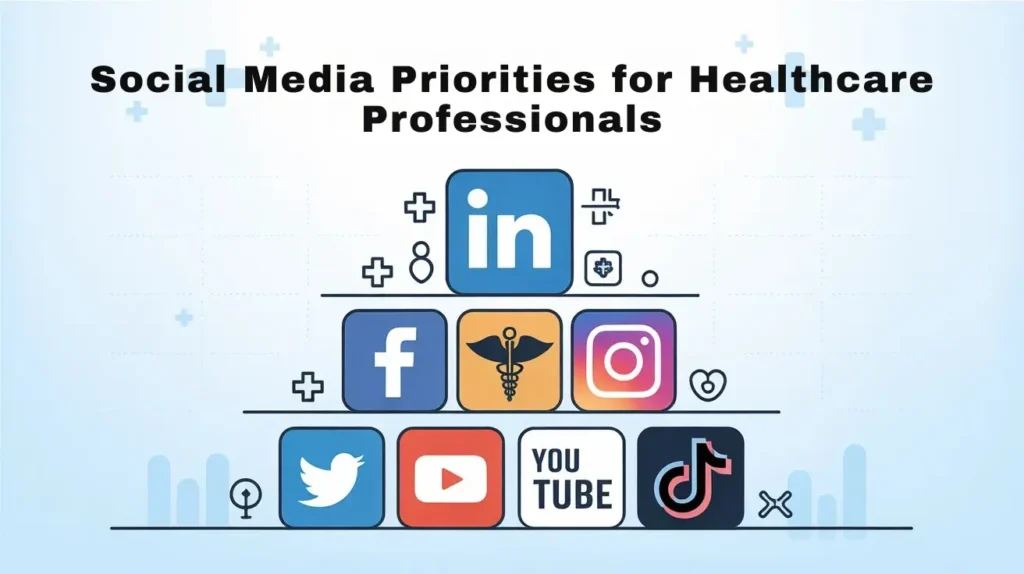
Which Social Media Platforms Should Doctors Prioritize?
The best social media platforms for healthcare depend on multiple practical factors rather than popularity alone. Doctors and clinics should choose platforms based on where their patients spend time and how medical information can be communicated effectively.
Key factors to consider include:
- Type of medical service offered
- Target patient age group and behavior
- Content format capability, such as video or text
General recommendations:
- Clinics: Instagram + Facebook for local awareness and engagement
- Hospitals: Instagram + YouTube + LinkedIn for education and authority
- Specialist doctors: Instagram + YouTube for focused patient education
Rather than following trends, doctors should prioritize consistency and clarity on selected platforms. In real-world healthcare practices, consistent posting on fewer platforms builds stronger trust than irregular activity across many channels.
How Social Media Platforms Support Healthcare Content Strategy
Social media platforms are most effective when aligned with a structured, purposeful content strategy. Each platform should have a defined role, rather than repeating the same content across all channels.
For example:
- Instagram → Awareness, reach, and engagement through short visual content
- YouTube → Education, depth, and detailed explanations
- Facebook → Community communication, updates, and patient interaction
When platforms work together strategically, they create a complete patient communication journey—from awareness to understanding. Based on industry experience, clinics that plan content according to platform strengths achieve better engagement, clearer messaging, and stronger long-term digital credibility.
Ethical Use of Social Networks for Doctors
Ethical responsibility is critical when using social networks in the healthcare industry. Unlike other businesses, doctors and clinics must maintain professional integrity while communicating online, as misinformation or careless content can directly impact patient health and trust.
Healthcare professionals should always:
- Avoid online diagnosis or treatment advice
Social media should be used for education and awareness, not for diagnosing conditions or prescribing treatments. Patients must be encouraged to consult a doctor in person for accurate medical advice. - Protect patient privacy and confidentiality
Never share patient details, images, or case studies without written consent. Even indirect identification should be avoided to stay compliant with medical ethics and data protection laws. - Avoid exaggerated or misleading claims
Promising “100% guaranteed results” or instant cures can mislead patients and damage credibility. All communication should be factual, evidence-based, and realistic. - Use disclaimers where required
Adding clear disclaimers such as “This content is for educational purposes only” helps set correct expectations and maintains transparency.
Ethical communication on social media not only ensures legal and professional compliance but also strengthens long-term patient trust. Clinics that follow ethical guidelines are perceived as reliable, responsible, and patient-centric.
Common Mistakes Clinics Make on Social Media Platforms
Many clinics struggle to see results from social media, not because of a lack of effort, but due to strategic mistakes that limit reach, engagement, and conversions.
Common mistakes include:
- Choosing platforms without understanding patient behavior
Not every platform suits every clinic. For example, Instagram works well for awareness and education, while Google and WhatsApp are more effective for conversions and appointments. Posting everywhere without a clear purpose often leads to poor results. - Posting the same content across all platforms
Each platform has a different audience and content format. Reposting identical content reduces effectiveness and fails to leverage platform-specific strengths. - Focusing only on promotions instead of education
Excessive promotional posts can turn audiences away. Patients engage more with educational content such as health tips, FAQs, myths vs facts, and preventive care guidance. - Stopping content due to low initial engagement
Social media growth takes time. Many clinics quit posting too early, expecting instant results. Consistency and data-driven optimization are key to long-term success. - Lack of branding and consistency
Irregular posting, inconsistent visuals, and unclear messaging confuse audiences and weaken brand recall.
Most clinics face these challenges because they lack a structured social media strategy—not because social media doesn’t work. With the right planning, ethical approach, and consistent execution, social media can become a powerful tool for patient education, trust-building, and clinic growth.
Conclusion
Social media platforms for healthcare are powerful tools when used with clarity, ethics, and purpose. By choosing the right social networks for doctors and clinics, healthcare providers can educate patients, build credibility, and maintain long-term visibility. A focused, platform-specific approach always delivers better results than scattered activity across multiple platforms.
Clinics often struggle with consistency, compliance, and engagement. This is where professional healthcare social media marketing services help by creating ethical, educational, and patient-focused content aligned with medical guidelines.
Related Blog
Social Media for Healthcare| Social Media Marketing for Doctors| Instagram Marketing for Doctors| Facebook Marketing for Clinics| Social Media Marketing Mistakes| LinkedIn Branding for Doctors| Facebook Ads for Clinics| YouTube Marketing for Healthcare